



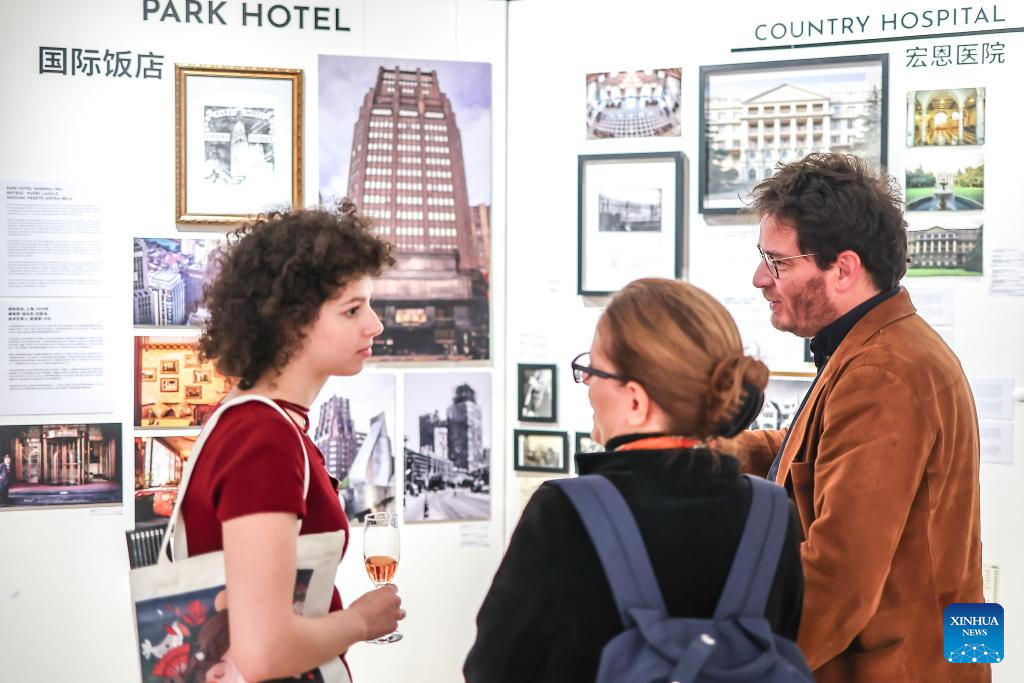
Visitors communicate at the exhibition "Timeless Modernity -- The Shanghai Legacy of Hungarian Architects" in Budapest, Hungary, Dec. 1, 2025. The exhibition opened in Budapest on Monday, highlighting the contributions of Hungarian architects to Shanghai's urban development in the first half of the 20th century. Jointly organized by the China Cultural Center in Budapest and the Hungarian-Chinese Friendship Association, the exhibition showcases the architectural achievements of four Hungarian architects, including Laszlo Hudec, Karoly Gonda, Bela Matrai, and Rudolf Somjen. Through photographs, films, archival documents, models, and installations, it illustrates how their modernist designs became integrated into the evolution of Shanghai's urban landscape. (Photo by David Balogh/Xinhua)
BUDAPEST, Dec. 1 (Xinhua) -- An exhibition, titled "Timeless Modernity -- The Shanghai Legacy of Hungarian Architects," opened in Budapest on Monday, highlighting the contributions of Hungarian architects to Shanghai's urban development in the first half of the 20th century.
Jointly organized by the China Cultural Center in Budapest and the Hungarian-Chinese Friendship Association, the exhibition showcases the architectural achievements of four Hungarian architects, including Laszlo Hudec, Karoly Gonda, Bela Matrai, and Rudolf Somjen. Through photographs, films, archival documents, models, and installations, it illustrates how their modernist designs became integrated into the evolution of Shanghai's urban landscape.
In his opening speech, Istvan Jakab, deputy speaker of the Hungarian National Assembly, said the exhibition is "not a simple showcase, but a milestone in the history of Hungarian-Chinese cultural relations." He noted that the works on display "represent a true cultural bridge between the two nations."
Jakab noted that a century ago, the creativity, professional commitment and vision of Hungarian architects left a deep imprint on Shanghai's urban landscape. Today, he said, China has become an important driving force in global scientific and technological innovation. He expressed the hope that the exhibition will "further enhance mutual respect, understanding and cooperation between Hungary and China."
Chinese Ambassador Gong Tao compared the exhibition to "a cultural encounter spanning a century," calling it an important moment in which "the emotions and creativity of China and Hungary meet again today."
He said the exhibition not only embodies the value of inclusive coexistence and mutual learning among different civilizations, but will also promote a deeper understanding and emotional connection between the people of the two countries.
Judit Eva Nagy, president of the Hungarian-Chinese Friendship Association, said the works created by Hungarian architects in Shanghai a century ago have become "a shared story between China and Hungary," continuing to inspire curiosity, respect, and closer cultural ties.
Hungary's Chief Architect Rego Lanszki highlighted the cultural significance of the architects' legacy. The exhibition, he said, shows that architecture is "not only spatial design, but also a way of thinking," demonstrating how these architects forged a link between two cultures that were only beginning to understand each other at the time.
The exhibition brings together knowledge, research findings, and personal archival materials collected over the past 15 years by researchers, journalists, historians, cultural diplomats, museum professionals, and family members of he architects from both countries.
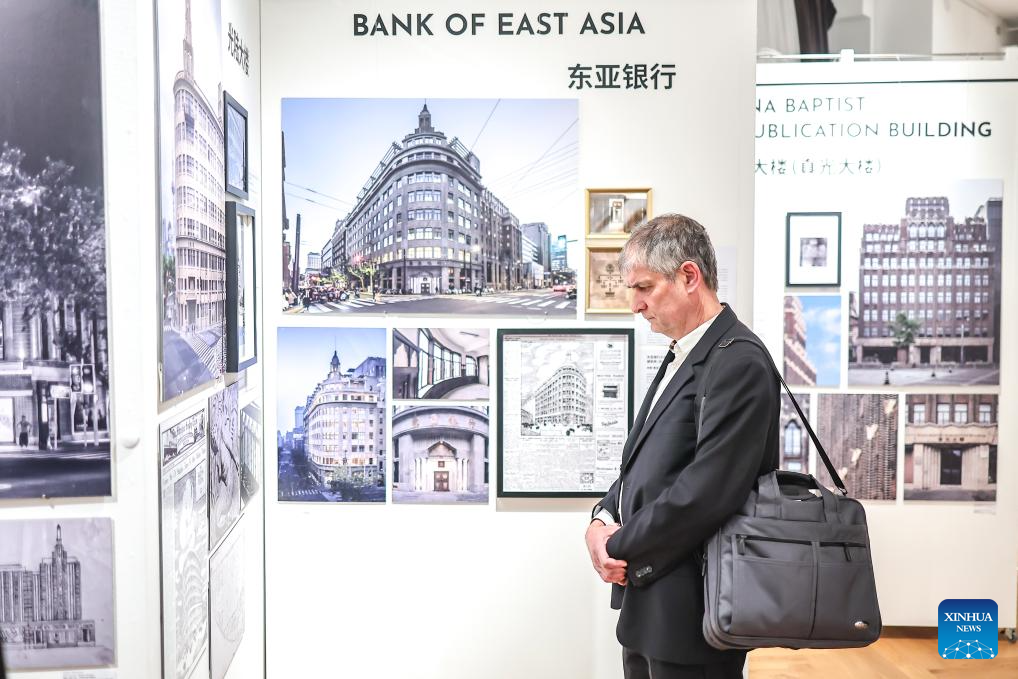
A man visits the exhibition "Timeless Modernity -- The Shanghai Legacy of Hungarian Architects" in Budapest, Hungary, Dec. 1, 2025. The exhibition opened in Budapest on Monday, highlighting the contributions of Hungarian architects to Shanghai's urban development in the first half of the 20th century.
Jointly organized by the China Cultural Center in Budapest and the Hungarian-Chinese Friendship Association, the exhibition showcases the architectural achievements of four Hungarian architects, including Laszlo Hudec, Karoly Gonda, Bela Matrai, and Rudolf Somjen. Through photographs, films, archival documents, models, and installations, it illustrates how their modernist designs became integrated into the evolution of Shanghai's urban landscape. (Photo by David Balogh/Xinhua)
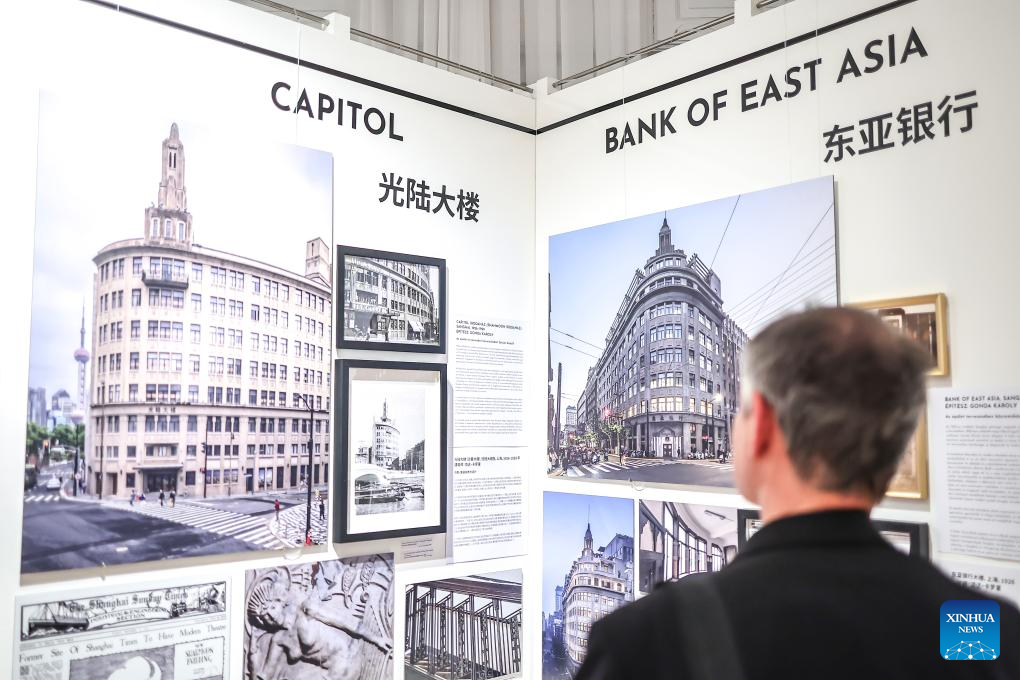
A man visits the exhibition "Timeless Modernity -- The Shanghai Legacy of Hungarian Architects" in Budapest, Hungary, Dec. 1, 2025. The exhibition opened in Budapest on Monday, highlighting the contributions of Hungarian architects to Shanghai's urban development in the first half of the 20th century.
Jointly organized by the China Cultural Center in Budapest and the Hungarian-Chinese Friendship Association, the exhibition showcases the architectural achievements of four Hungarian architects, including Laszlo Hudec, Karoly Gonda, Bela Matrai, and Rudolf Somjen. Through photographs, films, archival documents, models, and installations, it illustrates how their modernist designs became integrated into the evolution of Shanghai's urban landscape. (Photo by David Balogh/Xinhua)
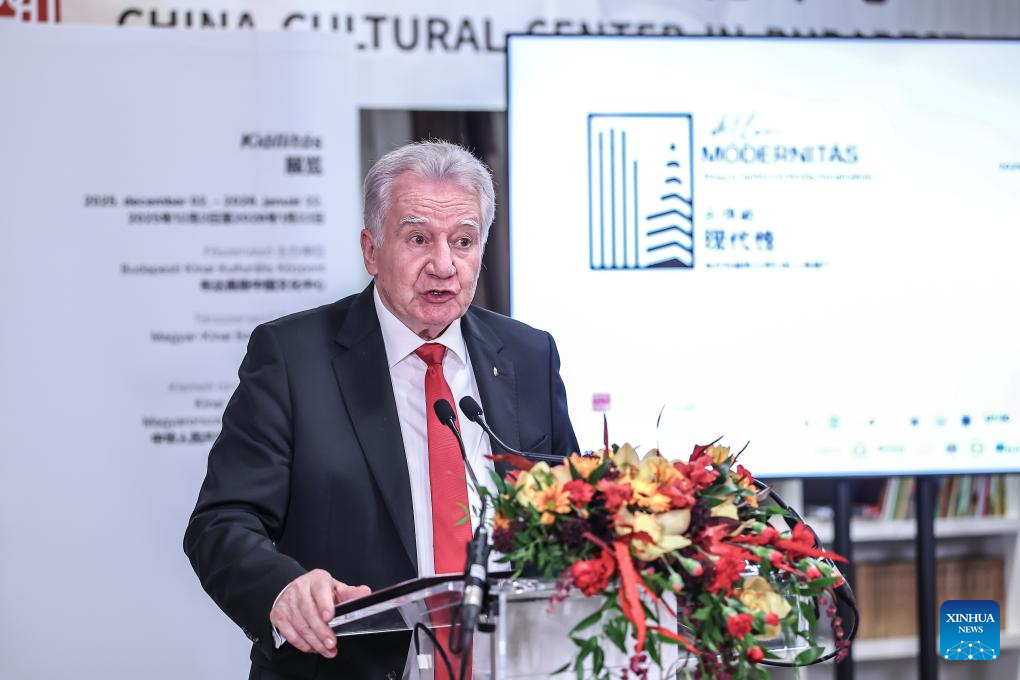
Istvan Jakab, deputy speaker of the Hungarian National Assembly, speaks at the opening ceremony of the exhibition "Timeless Modernity -- The Shanghai Legacy of Hungarian Architects" in Budapest, Hungary, Dec. 1, 2025. The exhibition opened in Budapest on Monday, highlighting the contributions of Hungarian architects to Shanghai's urban development in the first half of the 20th century.
Jointly organized by the China Cultural Center in Budapest and the Hungarian-Chinese Friendship Association, the exhibition showcases the architectural achievements of four Hungarian architects, including Laszlo Hudec, Karoly Gonda, Bela Matrai, and Rudolf Somjen. Through photographs, films, archival documents, models, and installations, it illustrates how their modernist designs became integrated into the evolution of Shanghai's urban landscape. (Photo by David Balogh/Xinhua)
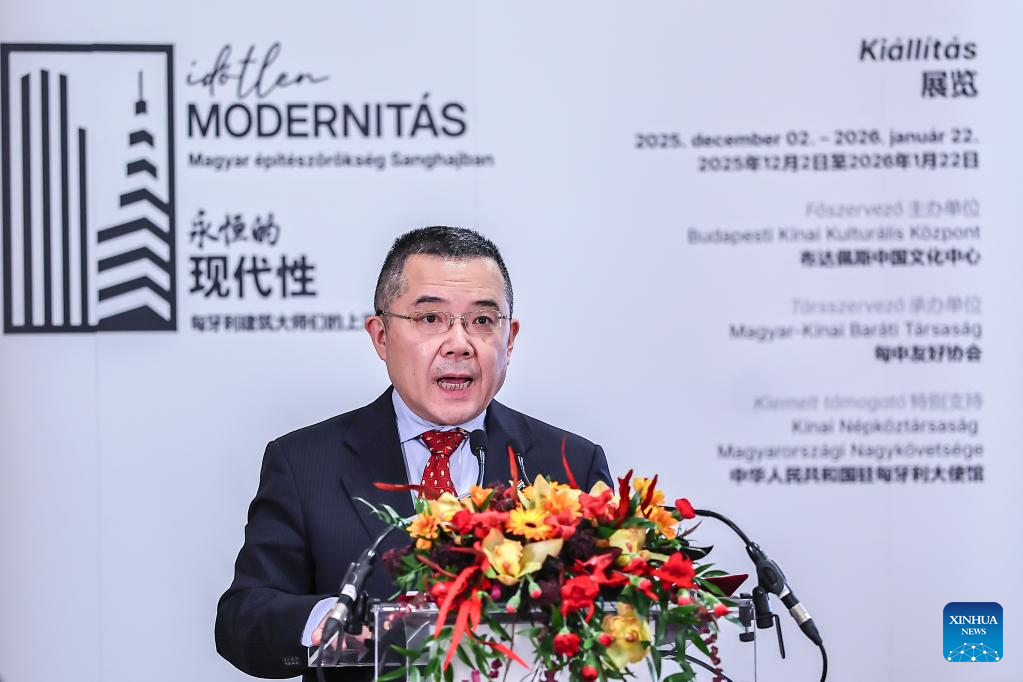
Chinese Ambassador to Hungary Gong Tao speaks at the opening ceremony of the exhibition "Timeless Modernity -- The Shanghai Legacy of Hungarian Architects" in Budapest, Hungary, Dec. 1, 2025. The exhibition opened in Budapest on Monday, highlighting the contributions of Hungarian architects to Shanghai's urban development in the first half of the 20th century.
Jointly organized by the China Cultural Center in Budapest and the Hungarian-Chinese Friendship Association, the exhibition showcases the architectural achievements of four Hungarian architects, including Laszlo Hudec, Karoly Gonda, Bela Matrai, and Rudolf Somjen. Through photographs, films, archival documents, models, and installations, it illustrates how their modernist designs became integrated into the evolution of Shanghai's urban landscape. (Photo by David Balogh/Xinhua)
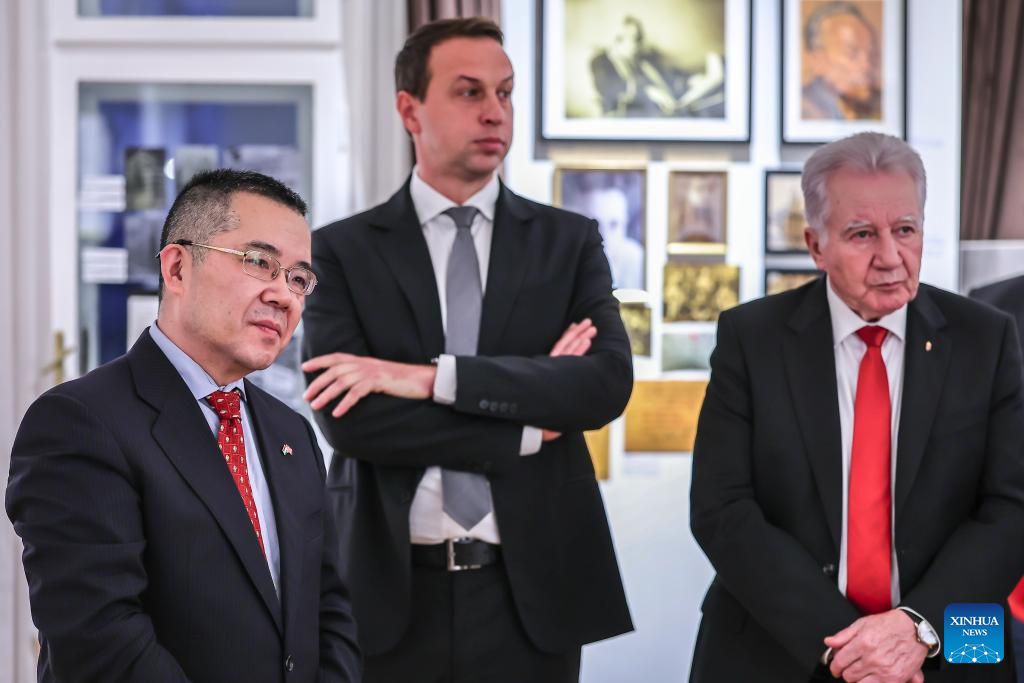
Istvan Jakab (1st R), deputy speaker of the Hungarian National Assembly, and Chinese Ambassador to Hungary Gong Tao (1st L) visit the exhibition "Timeless Modernity -- The Shanghai Legacy of Hungarian Architects" in Budapest, Hungary, Dec. 1, 2025. The exhibition opened in Budapest on Monday, highlighting the contributions of Hungarian architects to Shanghai's urban development in the first half of the 20th century.
Jointly organized by the China Cultural Center in Budapest and the Hungarian-Chinese Friendship Association, the exhibition showcases the architectural achievements of four Hungarian architects, including Laszlo Hudec, Karoly Gonda, Bela Matrai, and Rudolf Somjen. Through photographs, films, archival documents, models, and installations, it illustrates how their modernist designs became integrated into the evolution of Shanghai's urban landscape. (Photo by David Balogh/Xinhua)

Judit Eva Nagy, president of the Hungarian-Chinese Friendship Association, speaks at the opening ceremony of the exhibition "Timeless Modernity -- The Shanghai Legacy of Hungarian Architects" in Budapest, Hungary, Dec. 1, 2025. The exhibition opened in Budapest on Monday, highlighting the contributions of Hungarian architects to Shanghai's urban development in the first half of the 20th century.
Jointly organized by the China Cultural Center in Budapest and the Hungarian-Chinese Friendship Association, the exhibition showcases the architectural achievements of four Hungarian architects, including Laszlo Hudec, Karoly Gonda, Bela Matrai, and Rudolf Somjen. Through photographs, films, archival documents, models, and installations, it illustrates how their modernist designs became integrated into the evolution of Shanghai's urban landscape. (Photo by David Balogh/Xinhua)
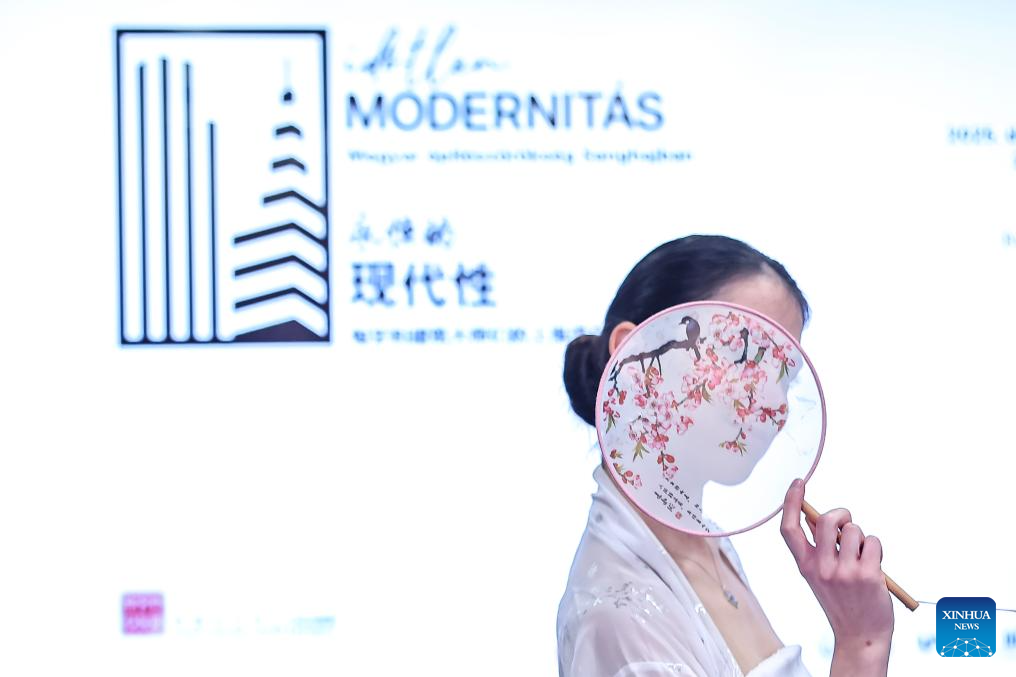
A performer dressed in traditional Chinese costumes dances at the opening ceremony of the exhibition "Timeless Modernity -- The Shanghai Legacy of Hungarian Architects" in Budapest, Hungary, Dec. 1, 2025. The exhibition opened in Budapest on Monday, highlighting the contributions of Hungarian architects to Shanghai's urban development in the first half of the 20th century.
Jointly organized by the China Cultural Center in Budapest and the Hungarian-Chinese Friendship Association, the exhibition showcases the architectural achievements of four Hungarian architects, including Laszlo Hudec, Karoly Gonda, Bela Matrai, and Rudolf Somjen. Through photographs, films, archival documents, models, and installations, it illustrates how their modernist designs became integrated into the evolution of Shanghai's urban landscape. (Photo by David Balogh/Xinhua)
 A single purchase