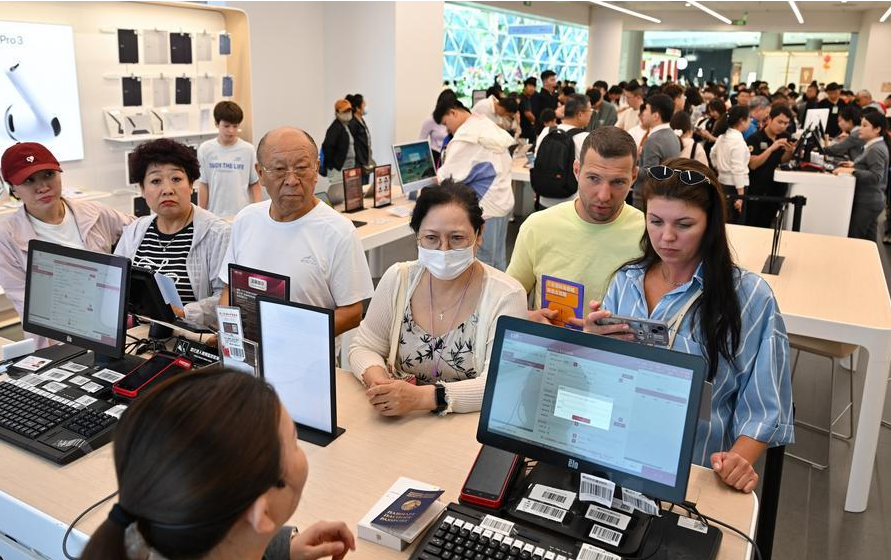



Customers shop at the Sanya International Duty Free City in Sanya, south China's Hainan Province, on Jan. 10, 2026. (Xinhua/Guo Cheng)
BEIJING, Feb. 14 (Xinhua Silk Road) -- As inbound travel policies continue to be optimized, "spending the Spring Festival holiday in China" is becoming a new trend in global cultural and tourism consumption.
The festive atmosphere across the country, combined with the cultural heritage, technological sophistication, and high quality of domestic products, is increasingly driving the consumption desires of inbound tourists.
As a critical link in the inbound consumption, duty-free shops are evolving from their traditional role at ports as a traveler's "last stop" into "new growth poles" for domestic demand as they expand into core urban areas through improved policy frameworks and accelerated downtown layouts.
-- Stimulating consumption potential
At a downtown duty-free shop in Shenzhen, Chen Qiming, a young man of Chinese descent from Singapore, asked the staff members about the features of a domestic camera. As a technology enthusiast, Chen noted that he had long wanted to experience the product and was surprised to find the specific model in a downtown duty-free store.
This reflects a growing trend among inbound consumers. Data from the Fliggy, a China's leading online travel platform, on Jan. 30 showed that flight bookings by foreigners for the Spring Festival period surged by more than 400 percent year on year.
The most popular destinations include Shanghai, Guangzhou, Hong Kong, Beijing, and Chengdu, with the top source countries being Thailand, South Korea, Malaysia, Vietnam, and Singapore.
In the past, consumers preferred purchasing international luxury brands at duty-free shops. But nowadays, China's high-tech domestic goods are now becoming "new favorites" on many inbound travelers' shopping lists.
At a counter in Shenzhen's downtown duty-free shop, experience zones for products like DJI drones and Honor foldable smartphones are highly popular. A South Korean tourist showed her shopping list featuring various China's domestic beauty and electronic products, noting that these items are highly recommended on South Korean social media.
Cultural consumption is also thriving, with many overseas travelers stopping at intangible cultural heritage zones to select handmade gifts. A staff member at a duty-free shop in Shenzhen noted that the "China Chic" section has seen rising popularity since its launch, serving as an important window for overseas travelers to perceive Chinese culture.
Similar scenes are unfolding in Beijing, where duty-free shops are decorated with "Horse" and "Auspicious Snow" themes for the Spring Festival holiday. According to the staff members there, in addition to high-tech products, intangible cultural heritage-inspired cultural and creative items and beauty products with modern designs are selling well, as foreign customers seek "unique Chinese gifts".
-- Chinese brands going global
The rise of domestic goods in duty-free channels is the result of precise policy support and corporate initiatives.
In October 2025, five government departments, including the Ministry of Finance, issued a notice to improve duty-free shop policies. The notice requires that the area dedicated to selling domestic products in port and downtown duty-free shops should, in principle, account for no less than one-fourth of the total business area.
Consequently, the Chinese duty-free market is undergoing a profound transformation from "the last stop for tourists" to "new urban consumption landmarks," with stores in core business districts of Guangzhou, Chengdu, and Shenzhen changing the logic of traditional duty-free consumption.
As one of the first pilot cities for the duty-free policy, Shenzhen's innovative initiatives are particularly representative. Lv Hong, assistant general manager of a Shenzhen downtown duty-free shop, said the store took immediate action after the policy announcement. On Nov. 20, 2025, it added five dedicated electronic counters in the duty-free area for high-quality domestic smartphones and tech products. The move aims to broaden the display of domestic goods and help them reach more international travelers.
In Hainan, domestic brands are also becoming more active in the offshore duty-free market. Following a policy adjustment on Nov. 1, 2025, certain domestic products including apparel, ceramics, silk scarves, coffee, and tea are now permitted for duty-free sale.
These measures support the expansion of domestic sales channels and provide consumers with more choices, further releasing consumption potential.
Today, duty-free shops have become a vital window for Chinese brands to go global, showcasing the charm of Chinese culture and the quality of Chinese innovation to the world.
(Edited by Tian Shenyoujia with Xinhua Silk Road, tianshenyoga0524@163.com)
 A single purchase