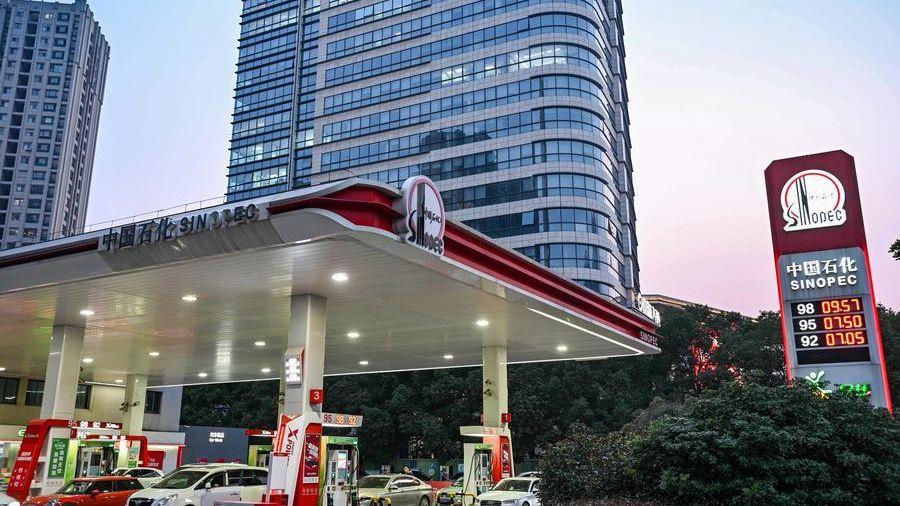



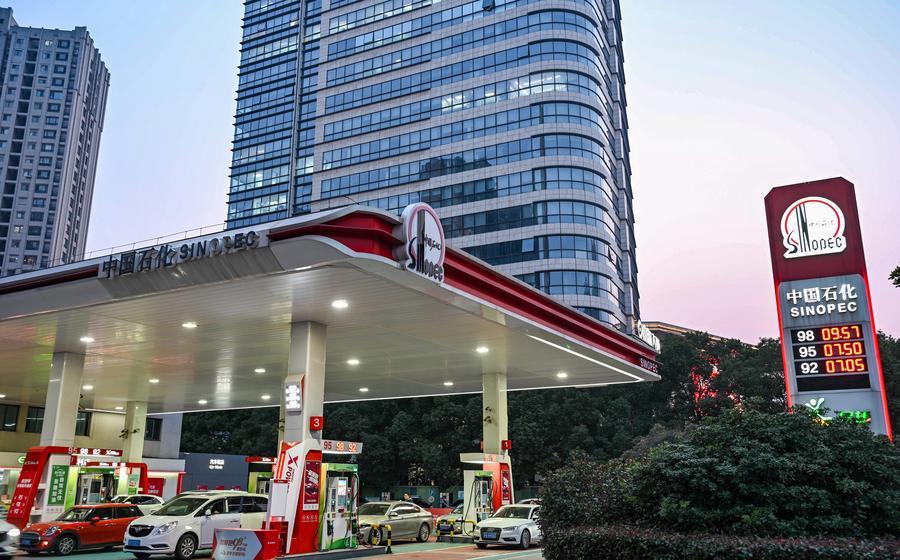
This photo taken on March 9, 2026 shows vehicles getting refueled at a gas station in Nanjing, east China's Jiangsu Province. (Photo by Yang Suping/Xinhua)
BEIJING, April 7 (Xinhua) -- China will continue to implement control measures regarding retail prices of gasoline and diesel from Wednesday, aiming to mitigate the impact of rising international oil prices on its domestic market, the country's top economic planner said on Tuesday.
Since the adjustment of domestic oil prices in late March, international crude oil prices have experienced significant fluctuations, the National Development and Reform Commission (NDRC) said in a statement.
Under China's current pricing mechanism, the prices of domestic refined oil products are adjusted based on fluctuations in international crude oil prices. Due to increases in international oil prices, China announced on March 23 that it would implement temporary control measures for gasoline and diesel prices.
Gasoline and diesel prices would have risen by 800 yuan (about 116 U.S. dollars) and 770 yuan per tonne, respectively. Thanks to the control measures, these prices will from Wednesday increase by 420 yuan and 400 yuan per tonne, respectively.
Preliminary estimates indicate that car owners will spend about 15 yuan less than expected to fill a tank of fuel after the control measures take effect, while truck drivers will save between 150 and 200 yuan per tank, according to Lyu Zhichen, an official with the NDRC.
Dong Xiucheng, a professor with the University of International Business and Economics, noted that China's regulation of refined oil prices takes multiple factors into account, including market supply security and the downstream sector's capacity to bear additional costs.
Efforts are required to prevent excessive price volatility that could severely affect downstream users, while appropriately easing pressure from crude oil import costs to help ensure a stable supply of refined oil, Dong said.
China's three biggest oil companies, namely China National Petroleum Corporation, China Petrochemical Corporation and China National Offshore Oil Corporation, as well as other refineries, have been directed to maintain production and facilitate transportation to ensure stable supplies.
Relevant authorities should intensify their market supervision and inspection efforts. They should implement strict measures to crack down on activities that violate national pricing policies to ensure market order, the NDRC said.
 A single purchase