Xinhua Silk Road - Belt and Road Portal, China's silk road economic belt and 21st Century Maritime Silk Road Website Xinhua Silk Road - Belt and Road Portal, China's silk road economic belt and 21st Century Maritime Silk Road Website
Subscribe CustomBlackClose

Belt & Road Weekly Subscription Form

download_pop

Research ReportCustomBlackClose

The full edition of the report is available at Xinhua Silk Road Database. You can click the “Table of Content” to have a general understanding of it.

Click on the button below to create your account and get immediate access to thousands of articles.

Start a Free Trial

Xinhua Silk Road Database
Search result Sorting by relevance

  • New Opportunities of China-Laos Economic and Trade Cooperation in New Era

    The report mainly presents the fruitful results achieved in bilateral economic and trade cooperation, the key cooperation construction projects between the two countries, and the vast opportunities for bilateral cooperation in the future.

    December08,2023


  • Climate

    July13,2015


  • Germany's Agriculture Minister rejects plastic bag ban

    Germany's Agriculture Minister Julia Klöckner rejects a ban on plastic bags. "Only a ban, as the Greens want it, without having an alternative," is something that the citizens are not satisfied with, the deputy leader of the Christian Democratic Union (CDU) said on Monday in Berlin

    August15,2019


  • Xinjiang2

    April26,2016


  • Chinese consortium holds high-speed railway exhibition in Malaysia

    A Chinese consortium led by China Railway Corporation (CRC), which has announced its intention to build the upcoming Kuala Lumpur-Singapore High Speed Rail (HSR), started its bidding efforts by holding an experience exhibition on Monday in Kuala Lumpur.

    January17,2017


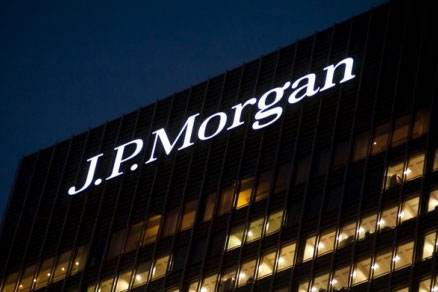
  • China opens doors to JP Morgan

    Chinese financial market lowers its threshold to foreign banks, which will be able to operate with majority controlled subsidiaries.

    December23,2019


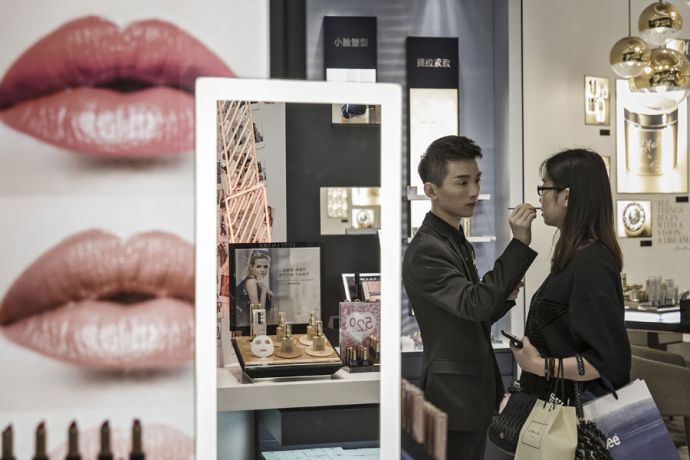
  • Beauties revive cosmetics brands

    High-end cosmetics are seeing a resurgence in the China market on the back of a consumption upgrade among newly affluent, image-conscious Chinese female consumers, particularly university students, professional women and middle-aged homemakers with risin

    February23,2018


  • Project Brief

    Project Brief

    July20,2017


  • Beijing8

    March21,2016


  • Business Brief

    Business Brief

    July20,2017


  • Industry

    July09,2015


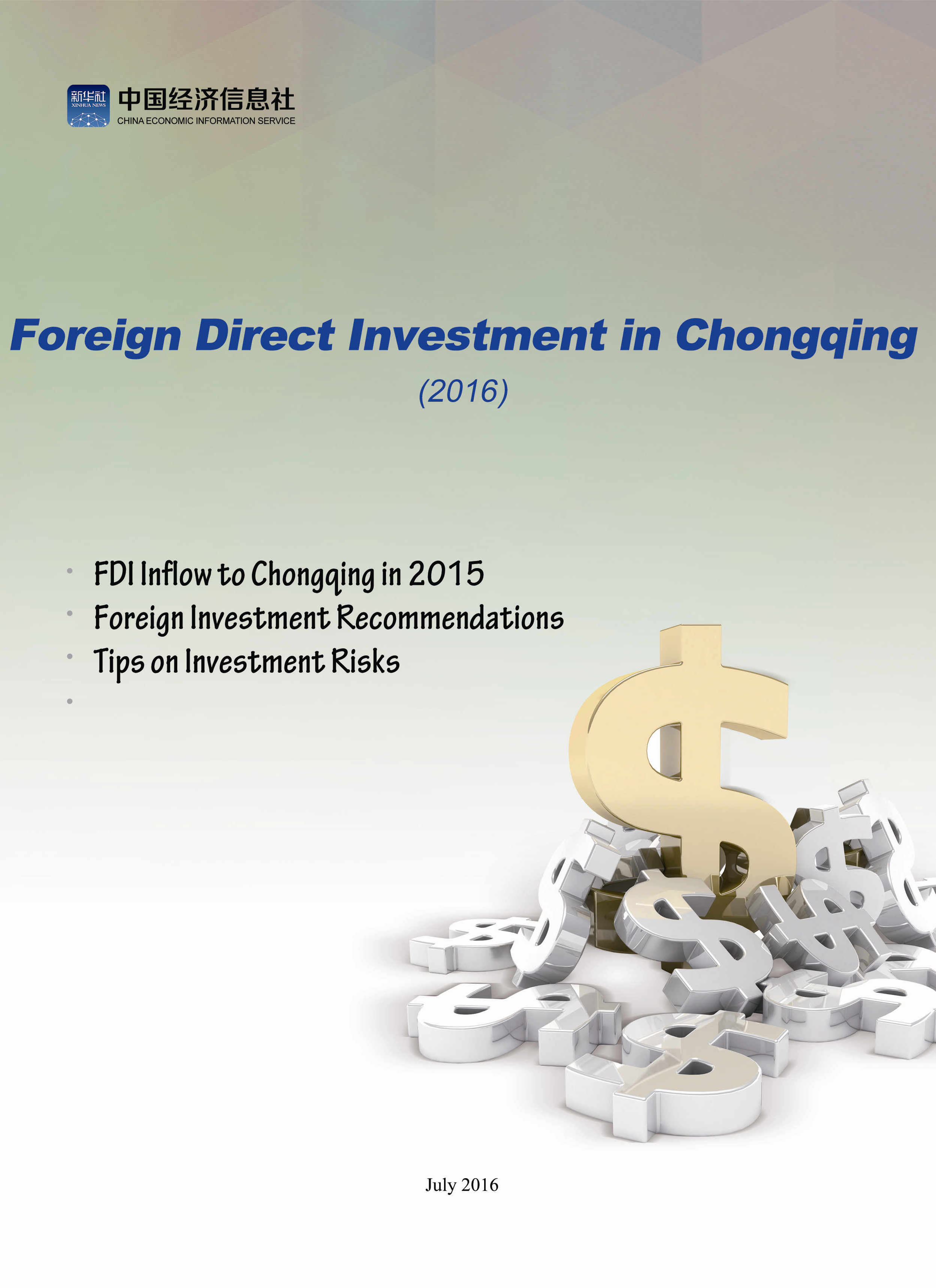
  • FDI in Chonqging (2016)

    The amount of foreign capital actually used in Chongqing was 10.765 billion US dollars in 2015, up 1.3% year on year. This included 3.77 billion US dollars of foreign direct investment, which fell 10.9% from a year ago, according to the municipal Foreign Trade and Economic Relation Commission. It was the fifth consecutive year for Chongqing to report the actual use of foreign capital topping 10 billion US dollars. The inflow of overseas capital in the first quarter of this year shows that Asian enterprises were major investors in Chongqing, with enterprises from Hong Kong, the Republic of Korea and Japan making up 69.6% of the newly-established overseas-funded firms in the municipality, and wholesale and retail, leasing and business service and manufacturing remained major targets for overseas investment, accounting for 65.2% of the newly-established overseas-funded firm.

    August31,2016


  • Heilongjiang8

    April20,2016


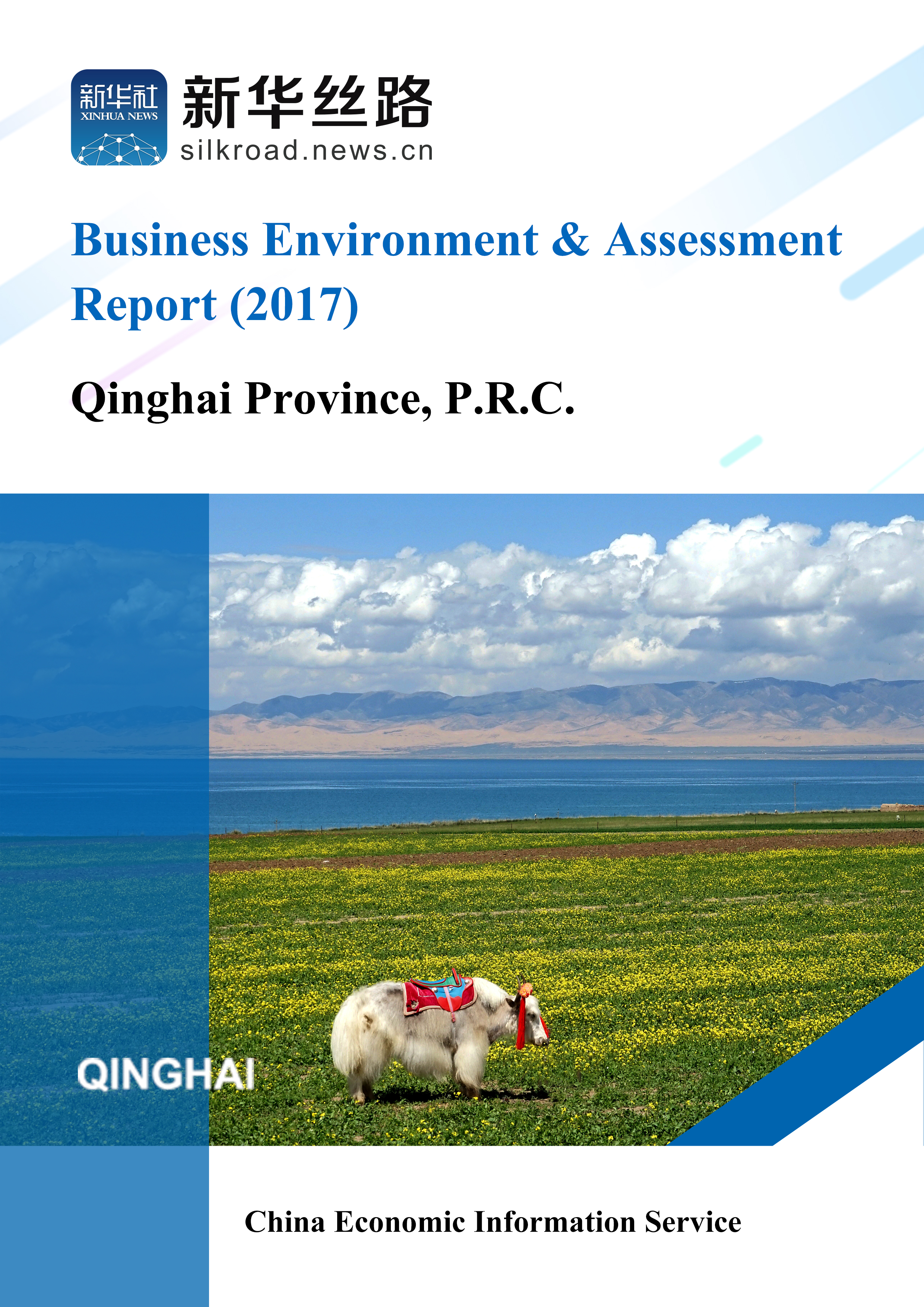
  • Qinghai Business Environment Assessment Report (2017)

    Though Qinghai is one of the largest provinces of China by area, it has the third smallest population. As a multi-ethnic province, Qinghai is home to 43 ethnic minority groups, including Tibetan, Hui, Mongol, Tu and Salar, accounting for 47 percent of the province’s total population. Qinghai, though a less developed economy, is endowed with abundant solar, wind, oil, gas, and grassland resources. It has the largest deposits of lithium, potassium and magnesium ores in China.

    June22,2018


  • Catalogue of Priority Industries for Foreign Investment in C

    The Catalogue of Priority Industries for Foreign Investment in China’s Central and Western Regions (2017 Revision), which took effect as from March 20, 2017, lists 639 items of priority industries for foreign investment in China’s central and western regions. The catalogue is organized by provinces, municipalities and regions, covering 22 out of the 31 provincial-level administrative divisions in Chinese mainland.

    April07,2017


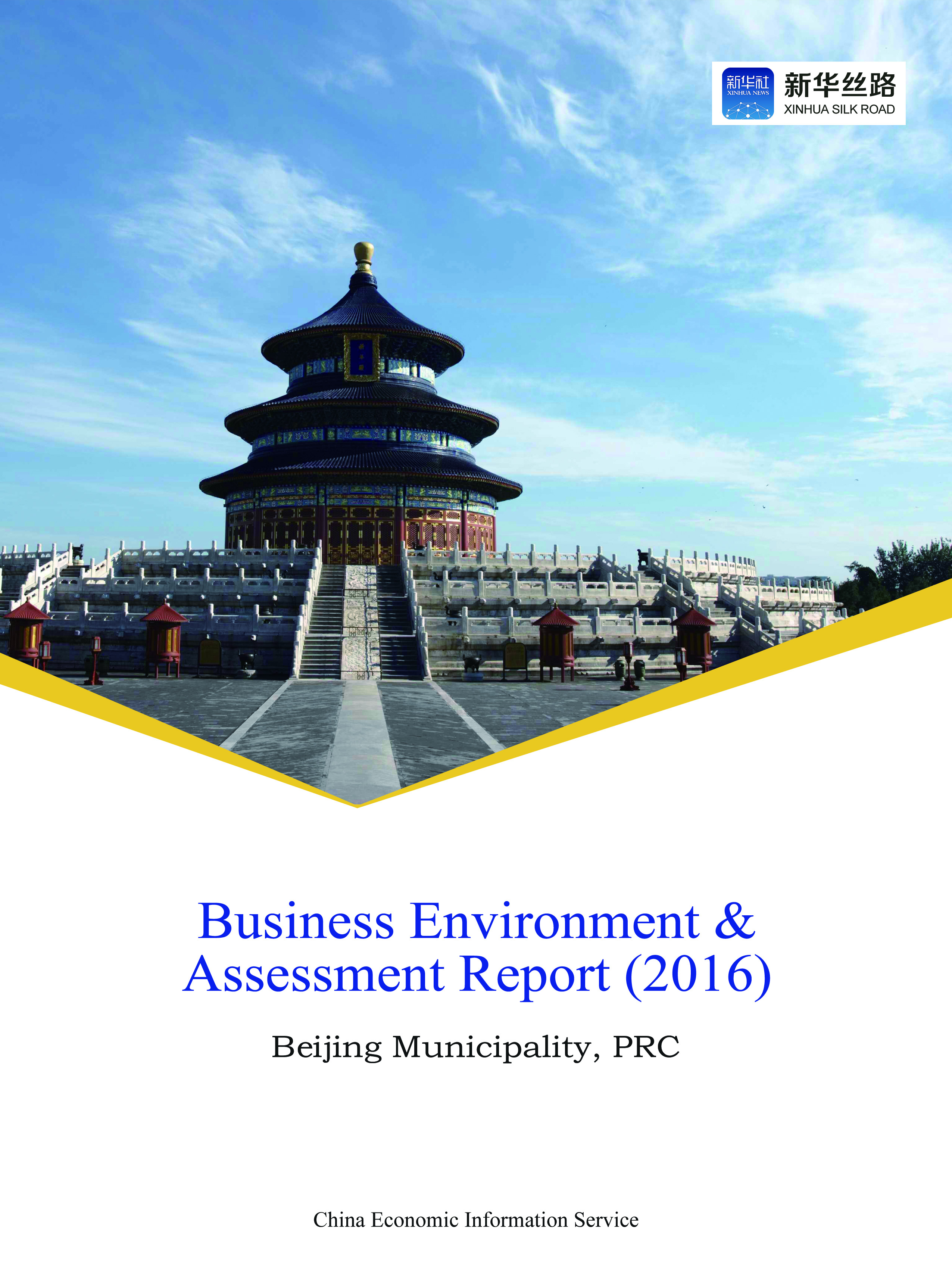
  • Beijing Business Environment & Assessment Report(2016)

    Beijing is the capital of the People’s Republic of China and one of the most populous cities in the world. The metropolis, located in north China, is governed as one of the four municipalities directly under Chinese central government. <br></br> Covering an area of 16,410.54 square km, Beijing lies on the north end of the North China Plain that is surrounded by mountains to its west, north and northeast. To its southeast is a plain that slopes gradually to Bohai Sea. <br></br> By the end of 2015, Beijing had a permanent population of 21.7 million, of which 37.9% were migrants. Residents over the age of 65 accounted for 10.3% of the total permanent population in Beijing, and residents under the age of 15 accounted for 10.1%. <br></br> As the nation’s political, cultural and educational centre, Beijing is home to headquarters of most of the country’s major state-owned companies, as well as 52 of the Fortune Global 500 companies, and is a major hub for national highway, expressway, railway and high-speed rail networks. The Beijing Capital International Airport is the second busiest in the world in terms of passenger traffic. <br></br> According to the Beijing Municipal Bureau of Statistics, Beijing's gross domestic product (GDP) amounted to 2.297 trillion yuan in 2015, up 6.9% from the previous year. Its per capita GDP was 106,284 yuan (17,064 U.S. dollars).

    September30,2016


  • Qinghai Business Environment Assessment Report (2018)

    Accounting for one thirteenth of the total land area of China, Qinghai is ranked fourth-largest among all the provincial-level administrative divisions in China in terms of land area, after Xinjiang Uygur Autonomous Region, Tibet Autonomous Region and Inner Mongolia Autonomous Region. Though Qinghai is one of the largest provinces of China by area, it has the third smallest population. Qinghai, though a less developed economy, is endowed with abundant solar, wind, oil, gas, and grassland resources. It has the largest deposits of lithium, potassium and magnesium ores in China.

    June27,2018


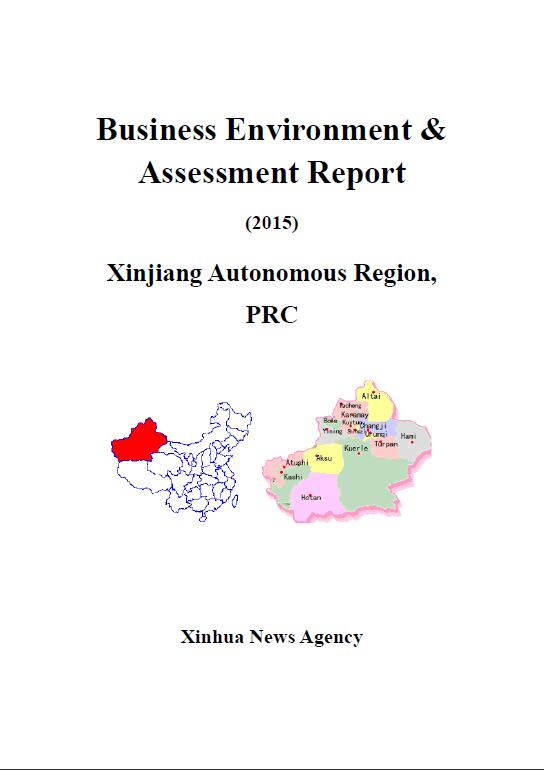
  • Xinjiang Business Environment & Assessment Report (2015)

    Called "Xin" for short, Xinjiang Uygur Autonomous Region is located in northwestern China. Largest in area in all the province-level administrative regions of China, Xinjiang Uygur Autonomous Region covers an area of 1.66 million square kilometers, one sixth of China's territory. Situated in the hinterland of Eurasian continent, Xinjiang borders eight countries including Russia, Kazakhstan, Kirghiziastan, Tajikistan, Pakistan, Mongolia, India and Afghanistan. The geographic position of Xinjiang makes it important strategically. In the past, Xinjiang served as the key section of the well-known Silk Road, while now it is an unavoidable part of the railway leading to the second Eurasia Continental Bridge. Xinjiang, called Western Region in ancient times, has been an inalienable part of China from ancient times. In 60 B.C., Xinjiang officially became a part of China's territory for that year central government of the Western Han Dynasty founded the West Region Frontier Command here. In 1884, the government of the Qing Dynasty established Xinjiang Province. In 1949, Xinjiang was liberated through peaceful means. October 1, 1955 saw the establishment of the Xinjiang Uygur Autonomous Region. The local economy of Xinjiang has been witnessing constant improvements over the past few years. The gross regional product of Xinjiang totalled 926.41 billion yuan in 2014, a rise of 10.0 percent from 2013 based on comparable prices.

    June30,2016


  • Sample2

    Another sample of Laws & Rules product. For more samples, please contact us.

    January01,2016


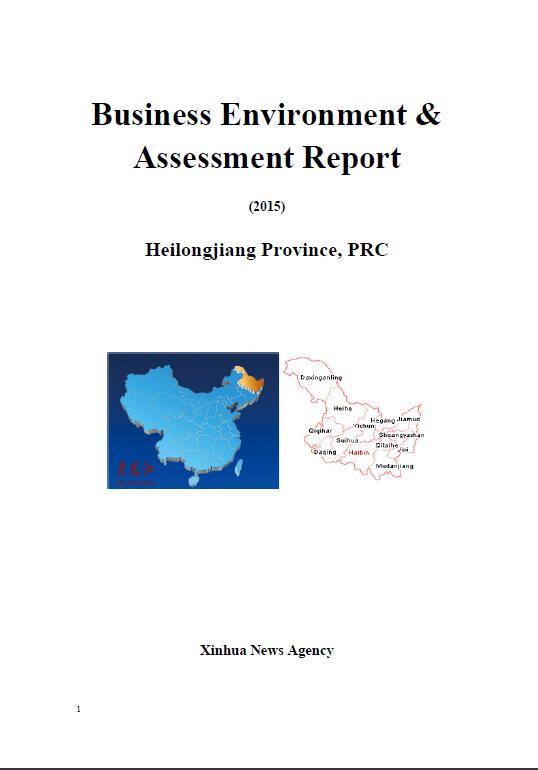
  • Heilongjiang Business Environment & Assessment Report (2015)

    Sitting at the highest latitudes and the northernmost end of China, Heilongjiang Province is one of the renowned heavy industry bases in China and serves as a major portal for trade with Russia. Heilongjiang is widely known as the cradle of China's modern industry, with its Daqing oilfield, Greater Hinggan Mountains and Xiao Hinggan Mountains, China First Heavy Industries (CFHI), two machinery giants, three power equipment producers, four large coal cities, and 10 military industry enterprises enjoying high popularity. Nowadays, the province is echoing the state northeast China old industry base boosting strategy and invigorating its heavy industry and expediting development of its strategic emerging industries including tourism- and modern services-centered tertiary industry for broader achievements. It boasts a border line of 3,045 kilometers, 25 Class A ports and 10 areas for mutual trade among inhabitants, making it an important channel linking Asia and Pacific Region with Russia and the Continent. By the end of 2012, the province had 38.34 million residents. Its gross domestic product (GDP) edged up 5.6 percent year on year to 1.50 trillion yuan in 2014.

    June30,2016


  • Ask Us A Question belt & road login close

    If you have any questions, please enter them in the box below.

    Identifying code Reload

    Write to Us belt & road login close

    Do you want to be a contributor to Xinhua Silk Road and tell us your Belt & Road story? Send your articles to silkroadweekly@xinhua.org and share your stories with more people.

    Click on the button below to create your account and get im http://img.silkroad.news.cn/templates/silkroad/en2017te access to thousands of articles.

    Start a Free Trial