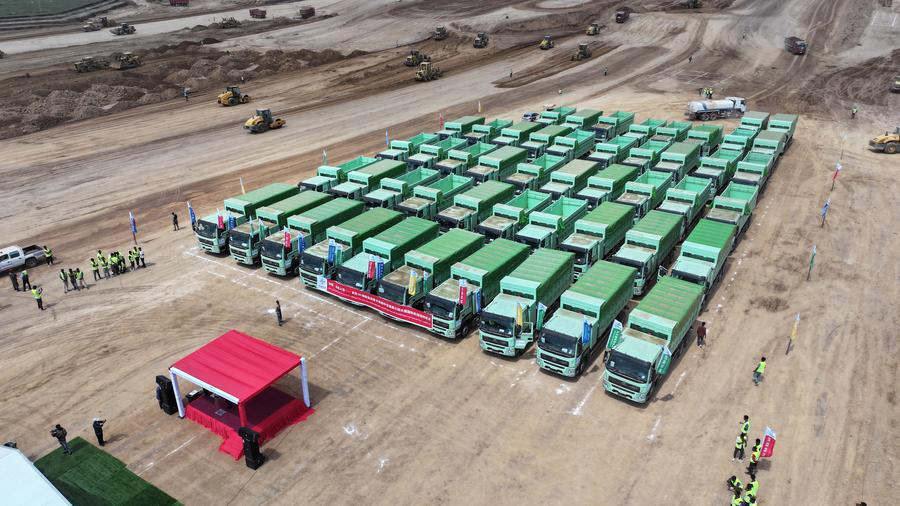



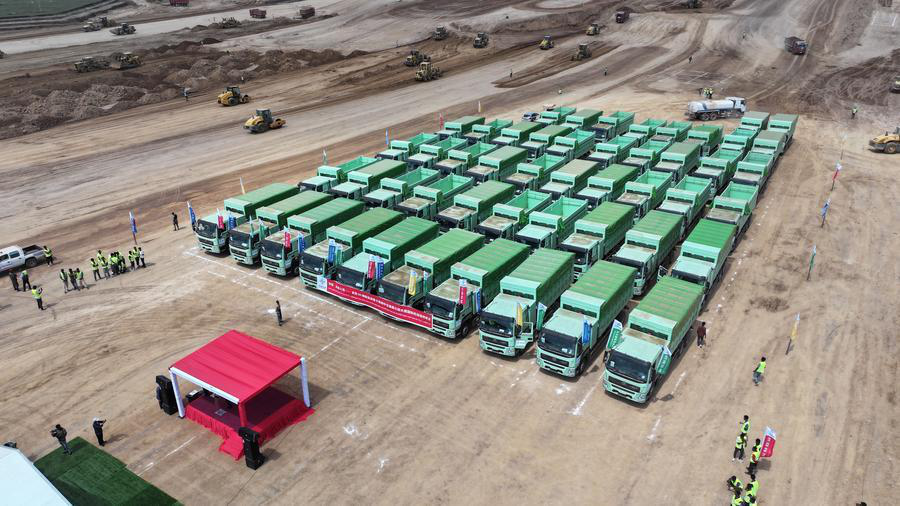
An aerial photo taken on April 29, 2026, shows electric heavy-duty trucks at the construction site of the Bishoftu International Airport, near Bishoftu town in the Oromia regional state of Ethiopia. (CCCC/Handout via Xinhua)
In recent years, the Belt and Road Initiative (BRI) has become an important platform for international cooperation, connecting countries through infrastructure, trade, and shared development goals.
When viewed through real experiences and visible changes, the impact of the large-scale projects under the framework of BRI becomes much more meaningful and tangible.
In my country, Ethiopia, the presence of Belt and Road projects can be clearly seen in different sectors, especially in transportation, industry, and energy, which are not only transforming the economy but also influencing everyday life in ways that people can directly feel. Roads are improving, logistics systems are becoming more efficient, and new opportunities are emerging for businesses and individuals alike. These changes may not always be dramatic at first glance, but over time, they create a strong foundation for long-term growth.
One of the most significant examples is the Ethiopia-Djibouti standard gauge railway. This modern electric railway connects Addis Ababa with the Port of Djibouti, creating a faster and more reliable route for the movement of goods. In the past, transporting products over long distances required more time, higher costs, and complex logistics arrangements. Delays were common, and businesses often had to deal with uncertainty in delivery schedules.
Today, the railway has improved efficiency, reduced delays, and strengthened trade connections. Goods can move faster between production areas and export routes, which supports both local industries and international trade. This has made it easier for Ethiopian products to reach global markets and for imported goods to arrive more efficiently. The railway also supports regional integration by connecting different areas and improving accessibility.
Beyond economic benefits, the railway represents a shift toward modernization. It introduces new standards in transportation, encourages the use of advanced technology, and creates opportunities for skills development. The presence of such infrastructure inspires confidence in future development and shows how investment in connectivity can reshape a country's economic landscape.
Another visible outcome of Belt and Road cooperation in Ethiopia is industrial growth, particularly through the Eastern Industrial Zone. This industrial park has become a center for manufacturing activities, attracting investment and creating employment opportunities. Factories in the zone produce a variety of goods, including textiles, construction materials, and consumer products, contributing to both domestic supply and exports.
The development of industrial zones plays a key role in economic diversification. By expanding beyond traditional sectors, Ethiopia is building a more balanced and resilient economy. At the same time, industrial parks help introduce new technologies, management experiences, and production methods, which can improve overall productivity.
What makes this especially meaningful is the human impact behind these developments. Many young people now have access to stable jobs, where they can gain experience and develop new skills. Families benefit from regular income, and communities begin to see improvements in living conditions. Small businesses also benefit from increased economic activities, creating a wider network of growth and opportunity.
Sustainable development is another important area where Belt and Road cooperation is making a difference. The Adama Wind Farm is a strong example of how renewable energy projects contribute to long-term progress. As energy demand continues to grow, reliable and clean energy sources become increasingly important.
Projects like the Adama Wind Farm help reduce dependence on traditional energy sources while supporting environmentally friendly development. They also contribute to energy security, ensuring that industries and households have access to stable electricity. This is especially important for supporting industrial growth, as factories and businesses rely on consistent power supply to operate efficiently.
In addition, renewable energy projects reflect a forward-looking approach to development. They show that economic progress and environmental responsibility can go hand in hand. This balance is essential for ensuring that growth is sustainable and beneficial for future generations.
Experiencing these developments from both local and international perspectives offers a deeper understanding of their significance. As an international student observing the progress in Ethiopia while living in China, I have gained a special perspective about the connection between different environments and approaches to development. It highlights how cooperation between countries can lead to shared learning and mutual benefit.
This perspective also brings greater awareness of how the BRI translates into local realities. What may have begun as a policy or agreement at a high level could eventually become something like concrete railways, factories, energy systems that people interact with in their daily lives. This transformation from idea to reality is one of the most compelling aspects of the BRI.
At the same time, it is important to recognize that large-scale projects also come with challenges. Ensuring long-term effectiveness, strengthening local capacity, and maximizing benefits for communities are all areas that require continuous attention. Infrastructure needs proper maintenance, industries need skilled workers, and development projects need to remain inclusive.
Addressing these challenges is essential for achieving lasting success. It encourages better planning, stronger cooperation, and more effective implementation. By focusing on both achievements and areas for improvement, it is possible to create a more balanced and realistic understanding of development.
To me, what stands out most about the BRI is the way it connects people and opportunities. It brings together different countries with shared goals and creates pathways for development that extend beyond individual projects. These connections are not only economic but also cultural and social, encouraging greater understanding between nations.
Looking forward, the continued development of BRI projects in Ethiopia holds strong potential. Expanding infrastructure networks, supporting industrial growth, and investing in sustainable energy can further contribute to national development. At the same time, strengthening local participation and knowledge sharing will ensure that these benefits are widely distributed and long-lasting.
In conclusion, the BRI represents more than infrastructure and investment. In Ethiopia, it can be seen in railways that improve transportation, industries that create opportunities, and energy projects that support sustainable growth. These developments reflect a broader vision of cooperation and shared progress. Through real changes in everyday life, they also bring something equally important -- hope for a better and more connected future.
Editor's Note: This article is written by Mathewos Getachew from Ethiopia, who is now studying at the Belt and Road School of Beijing Normal University. The views expressed in this article are those of the author and do not necessarily reflect the positions of the Belt and Road Portal or Beijing Normal University.
 A single purchase