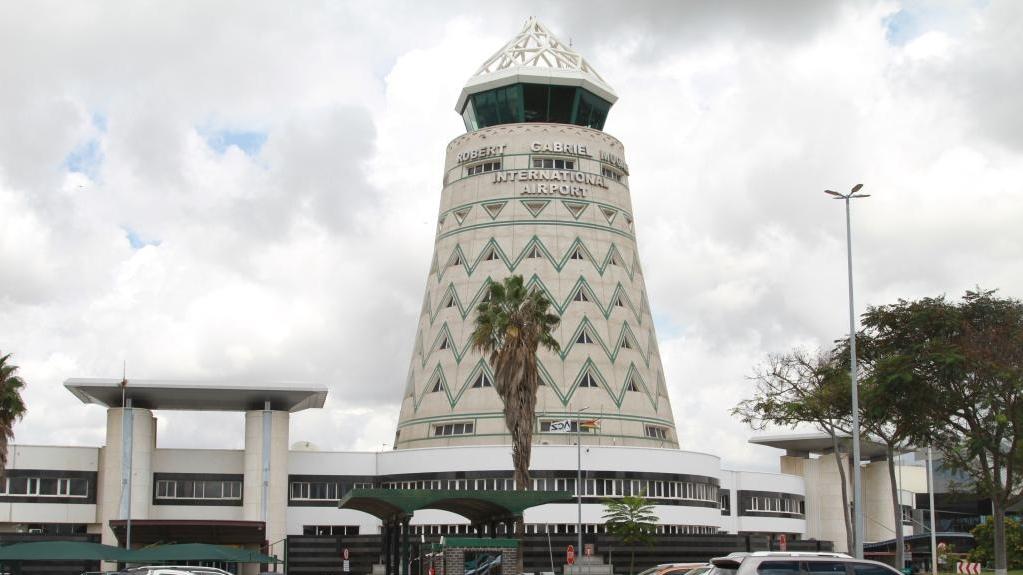



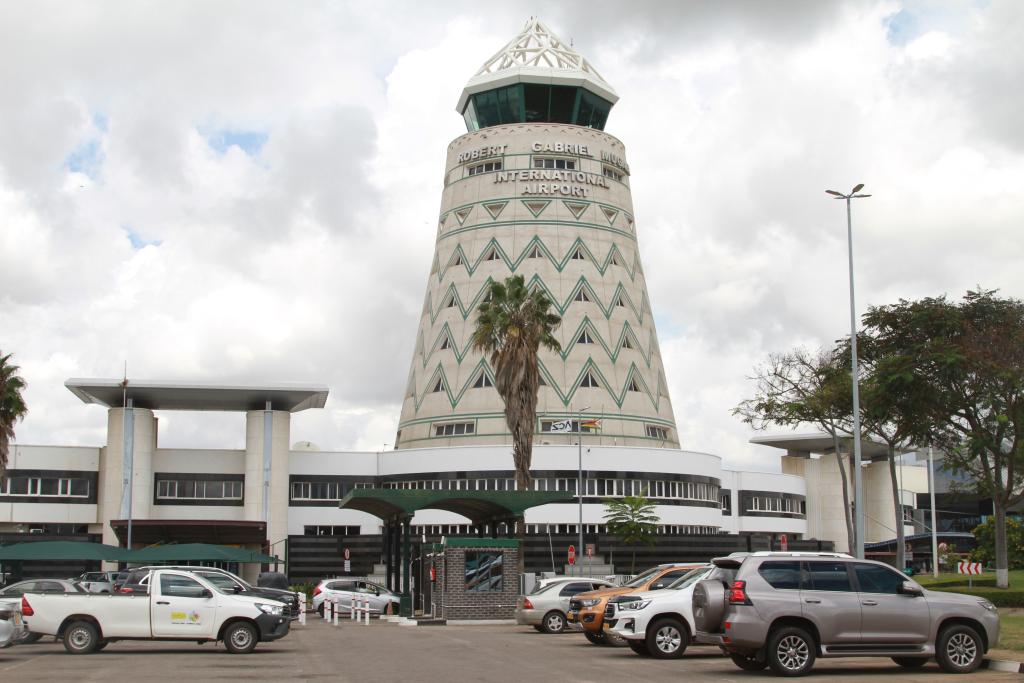
Photo taken on March 5, 2026, shows the facade of Robert Gabriel Mugabe International Airport in Harare, Zimbabwe. (Photo by Tafara Mugwara/Xinhua)
As an international student in China, the experiences of participating in various activities under the theme of the Belt and Road Initiative (BRI) allowed me to connect my academic learning with real-world development practices, helping me reflect on what the BRI means for developing countries like Zimbabwe, where I have spent over a decade working in governance, regulatory processes, and cross-border cooperation.
My journey started to cross ways with China long before I arrived in Beijing. Through my professional work under Zimbabwe's Ministry of Home Affairs, I frequently interacted with Chinese authorities and companies in my line of duty. These interactions made me realize the importance of understanding the language, culture, and development philosophy behind China's global partnerships. This motivated me to begin studying basic Chinese language and eventually pursue further studies in China. Living and studying in China has given me firsthand exposure to how development is planned, executed, and sustained over long periods. It has also shown me how China integrates infrastructure, technology, and policy to drive national progress.
-- Understanding co-construction: a shared journey
In my view, the BRI is far more than a collection of infrastructure projects. It serves as an international cooperation platform that encourages all countries to enhance connectivity, advance development, and build a community with a shared future for humanity.
The idea of co-construction is especially meaningful. It emphasizes that the BRI is not a one-sided model, but a shared journey where participating countries contribute, benefit, and grow together. For developing countries, this represents a shift toward a more inclusive global system, in which they are not passive recipients of development assistance, but active partners shaping their own future.
In my view, co-construction reflects a more interconnected world, where collaboration is essential for addressing shared challenges such as climate change, energy shortages, and technological transformation. It also highlights the importance of mutual respect, cultural understanding, and long-term cooperation.
-- Tangible achievements: what I see in Africa
From my professional experience and observations, the BRI has already delivered visible and tangible benefits across Africa. These achievements are not abstract -- they are real improvements that affect daily life and economic opportunity.
Infrastructure development has been one of the most significant contributions. Roads, airports, and energy projects supported by Chinese partners have strengthened regional connectivity and improved access to markets. In Zimbabwe, for example, Chinese-supported power generation and transport projects have played a critical role in addressing long-standing development constraints such as energy shortages and limited industrial capacity.
Trade expansion is another important achievement. The BRI has opened new routes and logistics channels that make it easier for African countries to access global markets. This has supported the growth of exports, improved supply chains, and created new opportunities for businesses.
Technology and investment flows have also increased. Sectors such as telecommunications, energy, and construction have benefited from new partnerships, knowledge transfer, and investment. These developments are essential for building the foundation of long-term economic growth.
For countries like Zimbabwe, which face persistent challenges in energy, infrastructure, and industrialization, these achievements are not just welcomed, they are transformative.
-- Learning from China's green development path
One of the most impactful experiences for me was the study tour to the Sustainability Solutions Showcase themed "ESG for a Shared Future: Global Collaboration and Innovation" in March 2026. This exhibition showcased China's green development solutions across multiple thematic areas such as green investment and financing, renewable energy, low carbon transportation and green infrastructure.
Walking through the exhibition, I was struck by how China has integrated sustainability into its development model. The displays demonstrated not only technological innovation but also the policy frameworks and management systems that support green transformation. For example, the renewable energy section highlighted how China has scaled up solar and wind power to reduce carbon emissions while meeting growing energy demands.
For Zimbabwe and other African countries, these solutions are highly relevant. Many African nations face energy deficits, climate vulnerabilities, and agricultural challenges. The green development models showcased in the exhibition offer practical and replicable approaches that can support sustainable growth. They also highlight the importance of long-term planning, investment in innovation, and the integration of environmental considerations into development strategies.
-- Next decade of BRI: quality, sustainability, and people-centered cooperation
Looking ahead, the next decade of the BRI will remain committed to the philosophy of high-quality, sustainable and inclusive development. As the world undergoes rapid changes, the BRI is well-positioned to offer Chinese wisdom to the global community.
Green development should be a top priority. Climate change is a global challenge, and countries must work together to promote renewable energy, climate resilient infrastructure, and sustainable resource management.
Digital connectivity is another critical area. The Digital Silk Road offers opportunities for cooperation in digital infrastructure, e-commerce, and technology. For African countries, digital transformation can unlock new economic opportunities, improve public services, and support innovation.
Local empowerment is essential for ensuring that development projects create long-term benefits. This includes skills transfer, job creation, and community participation. When local people are involved in planning and implementation, projects become more sustainable and impactful.
Balanced partnerships are also important. Transparency, mutual understanding, and respect for local needs are key to building trust and ensuring that cooperation benefits all parties.
As an international student in China, I see my role clearly. I want to serve as a bridge between China and Zimbabwe, contributing to meaningful, sustainable, and people-centered cooperation. Our generation has a responsibility to ensure that global initiatives translate into real development outcomes. We must promote cooperation that is inclusive, transparent, and aligned with the needs of local communities. I am committed to contributing my experience, insight, and dedication to this effort.
In conclusion, the BRI has already reshaped global development in profound ways. Its true impact will be further measured in the next decade, through the quality of cooperation, the sustainability of projects, and the opportunities created for ordinary people.
I am grateful to be part of this journey, learning from China's development experience and exploring how such knowledge can support Africa's future. As I continue my studies and professional work, I remain committed to promoting cooperation that delivers real value, strengthens partnerships, and supports long-term development.
Editor's Note: This article is written by Itai Sibanda from Zimbabwe, who is now studying at the Belt and Road School of Beijing Normal University. The views expressed in this article are those of the author and do not necessarily reflect the positions of the Belt and Road Portal or Beijing Normal University.
 A single purchase