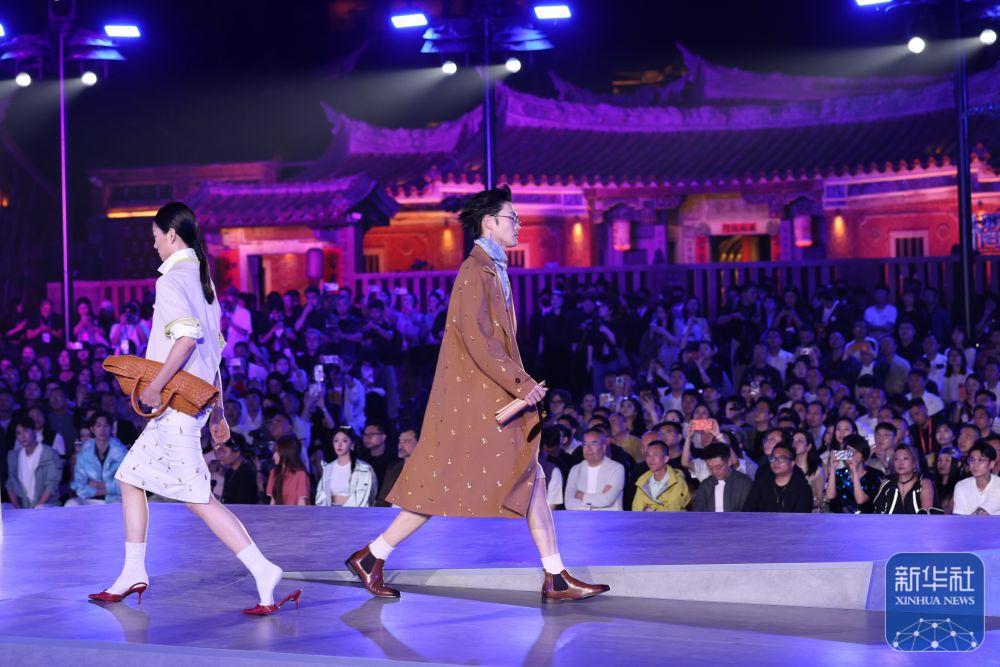



Quanzhou, a historical city in southeast China's Fujian Province, has been promoting its transformation from a "manufacturing powerhouse" to a "fashion capital" by advancing the integrated development of "world cultural heritage + fashion".
Quanzhou was one of the world's largest ports along the historic Maritime Silk Road, particularly in ancient China's Song Dynasty (960-1279) and Yuan Dynasty (1271-1368). "Quanzhou: Emporium of the World in Song-Yuan China" was inscribed on the World Heritage List in July 2021.
Within this world heritage city, 22 heritage sites, such as Kaiyuan Temple and Luoyang Bridge, weave together the bustling memories of the "largest port in the East" in the period of Song and Yuan dynasties. Based on that legacy, the city has emerged as a premier destination of cultural and tourism industry with total tourist arrivals reaching 112 million in 2025.
By leveraging its unique advantages, Quanzhou has set up a working group dedicated to integrating its profound cultural heritage with the development of the city's fashion industry so as to propel its transformation from a manufacturing city to a fashion city.
Quanzhou boasts a cluster of 13,000 textile, garment and footwear enterprises, with its 2025 industrial output surpassing 700 billion yuan. The city has nurtured numerous leading brands including Anta, Xtep, Septwolves, 361°, and Peak. Building on that, Quanzhou has become an important landmark of Chinese fashion manufacturing landscape.
From the largest port in the East in Song and Yuan dynasties, to the rise of modern industrial clusters worth hundreds of billions of yuan, Quanzhou has shaped its fashion identity with its industrial confidence. By forging a synergy of world cultural heritage and modern trends, the city has embarked on a high-quality development path that empowers industries with fashion and connects the world through trade. (Edited by Liu Liangyi, Li Xueqing with Xinhua Silk Road, lixueqing@xinhua.org)
 A single purchase