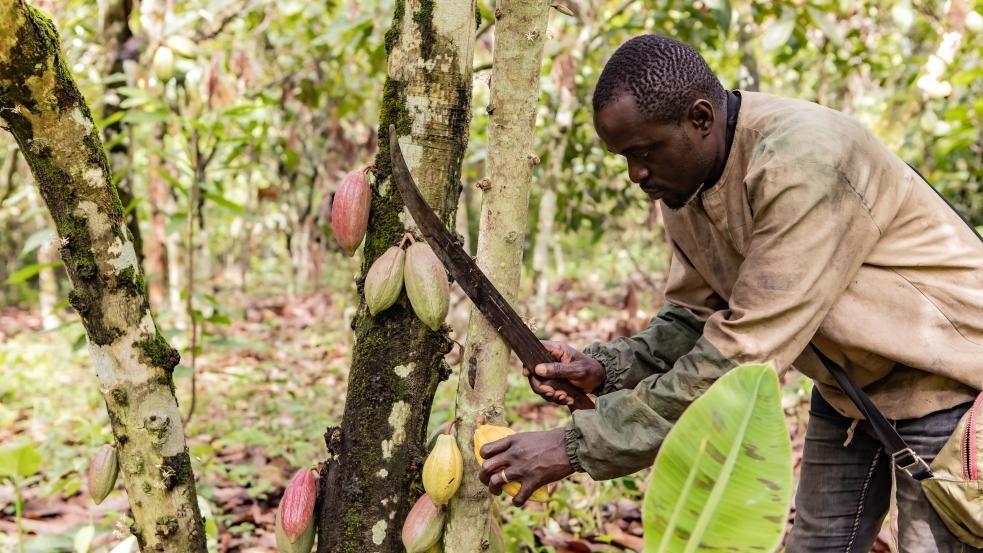



Sekiss Enyeh Bayere harvests a cocoa pod at his plantation on the outskirts of Buea, capital of the Southwest Region of Cameroon, April 8, 2026. (Photo by Muleng Timngum/Xinhua)
by Arison Tamfu, Wang Ze
YAOUNDE, April 28 (Xinhua) -- As the sun rises in Mondoni, a village in southwestern Cameroon, Sekiss Enyeh Bayere, a cocoa farmer, is already deep among his trees.
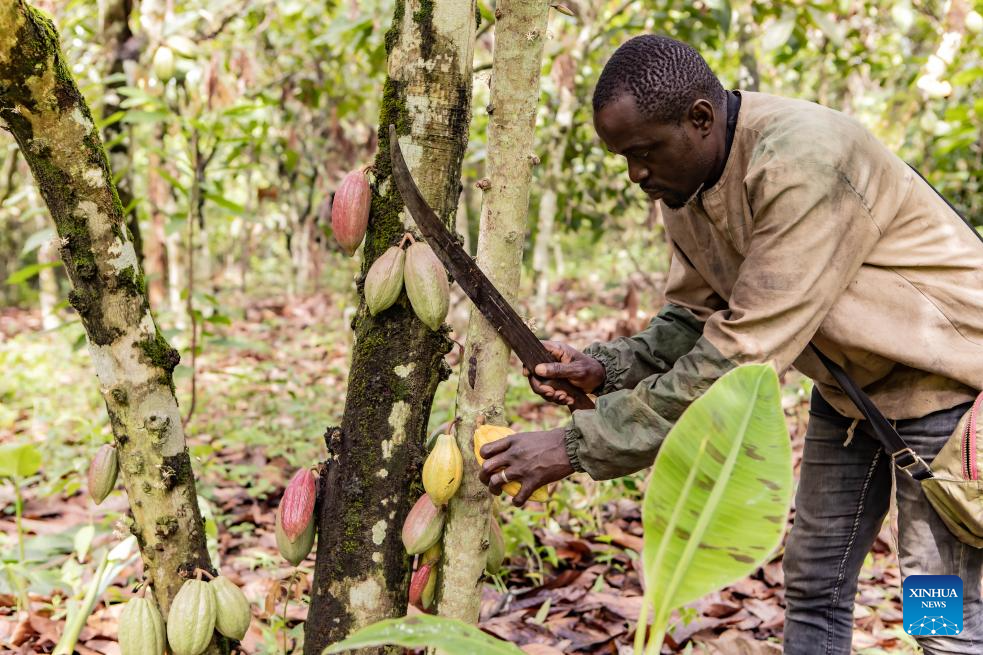
Clad in worn boots and carrying a razor-sharp machete and a long-handled hook, he moves carefully through the trees. This is the peak of the harvest, and the tree trunks are studded with pods that look like colorful jewels -- vibrant yellows, deep oranges, and rich purples.
"For us farmers, cocoa is gold," said the 35-year-old.
As one of the world's top five producers of high-quality cocoa, Cameroon regards cocoa as a pillar of its agricultural exports and overall economy.
Producing over 300,000 tonnes annually, the industry employs over 500,000 farmers, according to the Ministry of Agriculture and Rural Development.
Farmers like Bayere rely on cocoa to cater to the needs of their families, but cocoa prices in the country, affected by a global surplus and market stabilization, have fallen as much as 75 percent as of early 2026, leading to farmer fatigue and fears of a sector collapse.
But there is good news on the horizon.
Starting May 1, China will roll out its zero-tariff policy for all 53 African countries with diplomatic relations. The move is expected to create new opportunities for Cameroonian agricultural products, particularly cocoa, by facilitating access to a high-potential market.
"It is a great opportunity," Bayere said. "It is going to affect and influence our financial budget for the year so positively."
"BEST NEWS"
"This is the best news for us as farmers," said George Wambo Cornyu, a respected cocoa producer in Cameroon's Southwest Region. "This is going to solve the problem of our price issue, because... to sit in your house and sell cocoa in China without spending any money on tariffs is going to boost the price."
Cornyu's family has relied on cocoa farming for generations, but the combination of poor prices and a prolonged armed separatist conflict in the region has left him discouraged.
China's zero-tariff policy has reignited his hope.
"The farmers will be very happy to hear that we are going to sell our produce at zero tariff. That has never happened," he said.
Running a cooperative for cocoa farmers in the region's Masoka and Ikata villages, Cornyu said he will rally farmers to tap into the opportunities from the "very big and vast" Chinese market.
"We can bring our produce together and then ship it to China on free tariff," he said. "We will have excellent prices."
"China has brought us a golden opportunity, and I don't think that we can miss this," Cornyu said.
In a small makeshift factory in Buea, capital of Cameroon's Southwest region, several farmers were being trained on how to transform cocoa beans into high-value finished products.
The training, a new initiative of the region, will be enhanced by China's zero-tariff policy, he said, adding that improved export conditions would support local industrial development.
"It's also going to encourage our domestic processing and also value addition. In this way, it is going to trigger industrialization in our own sector like what we have been doing here in this place.
"Working with China, we would be able to change our produce locally and market to them our locally made products," Cornyu said.
For 43-year-old Sandra Mbah, a second-generation cocoa farmer, also sees China's upcoming zero-tariff policy as a major opportunity.
"Lower tariffs mean more jobs for young people, more income. For us who are trying to transform cocoa beans into other products, it will reduce costs for companies, leading to several benefits," she said.
Local authorities share this optimism.
Solomon Malu, an official with the Ministry of Agriculture and Rural Development, said: "With the zero-tariff policy, our cocoa beans will access the vast and broader Chinese market. This will definitely improve the livelihoods of farmers and, in a way, improve the country's economy."
Daniel Yando, president of the China-Cameroon Business Association, said that China's zero-tariff treatment will boost Cameroon's agricultural development while also enhancing intra-continental trade.
"This is a great opportunity and a way to allow Africans to participate in agriculture, which is truly an engine of growth for our country," he said.
"SHARED FUTURE"
Agricultural products entering the Chinese market tariff-free will provide Chinese consumers with a rich variety of produce, said Cornyu, the cocoa producer.
"The zero tariff is going to be beneficial to both China and Africa," he said. "It is a shared future. China will be happy just like us."
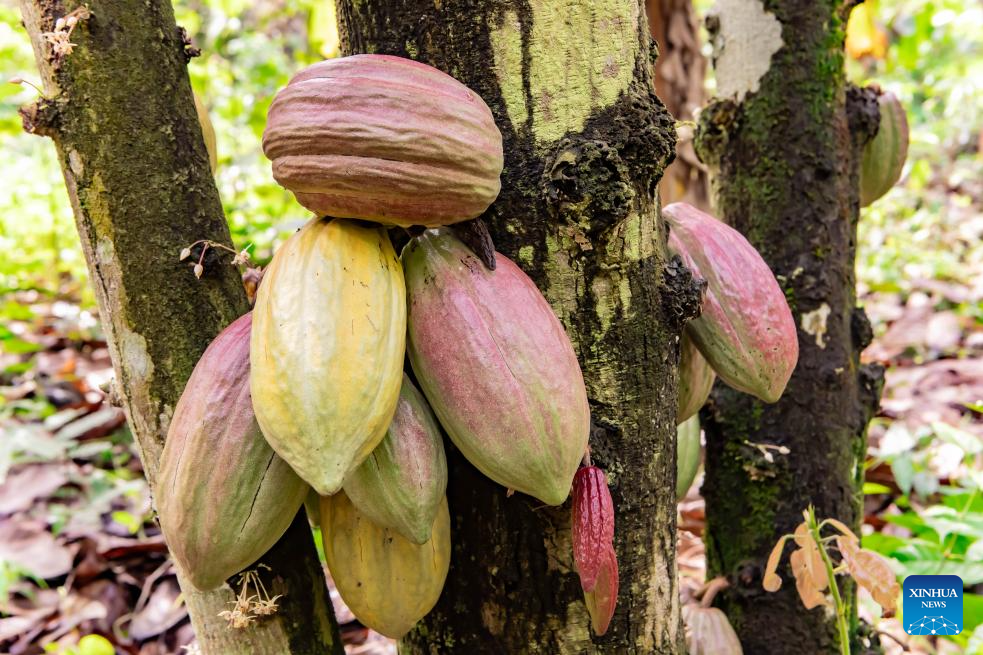
This photo taken on April 8, 2026 shows cocoa pods at a plantation on the outskirts of Buea, capital of the Southwest Region of Cameroon. (Photo by Muleng Timngum/Xinhua)
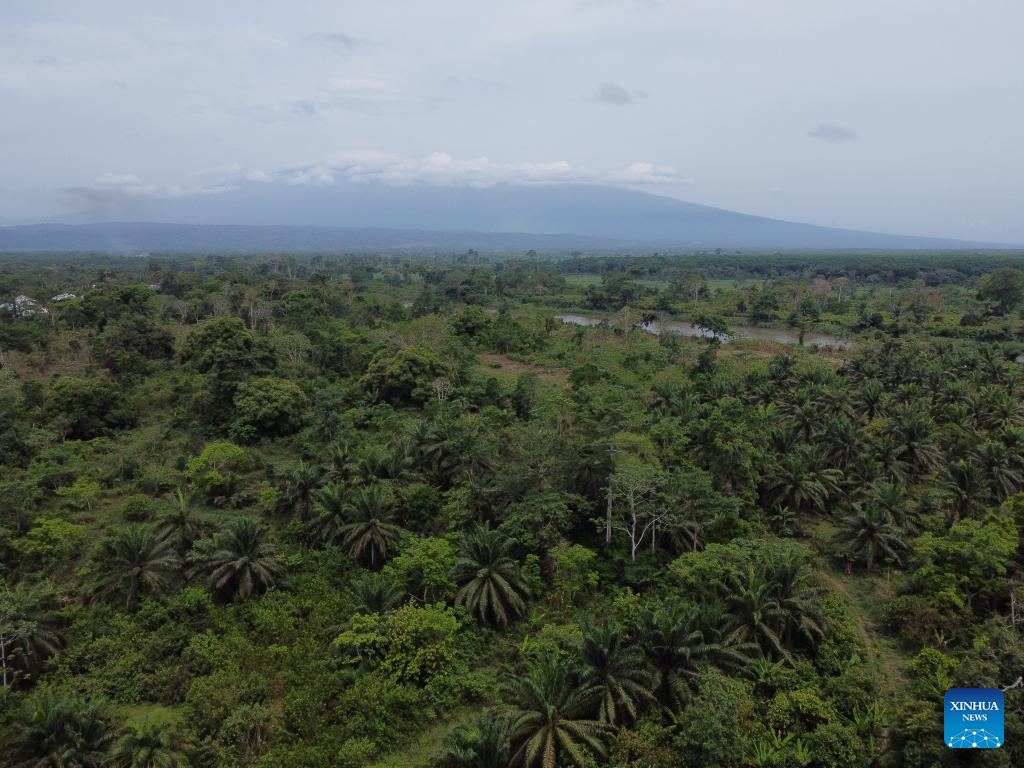
An aerial drone photo taken on April 8, 2026 shows a view of a cocoa plantation on the outskirts of Buea, capital of the Southwest Region of Cameroon. (Photo by Muleng Timngum/Xinhua)
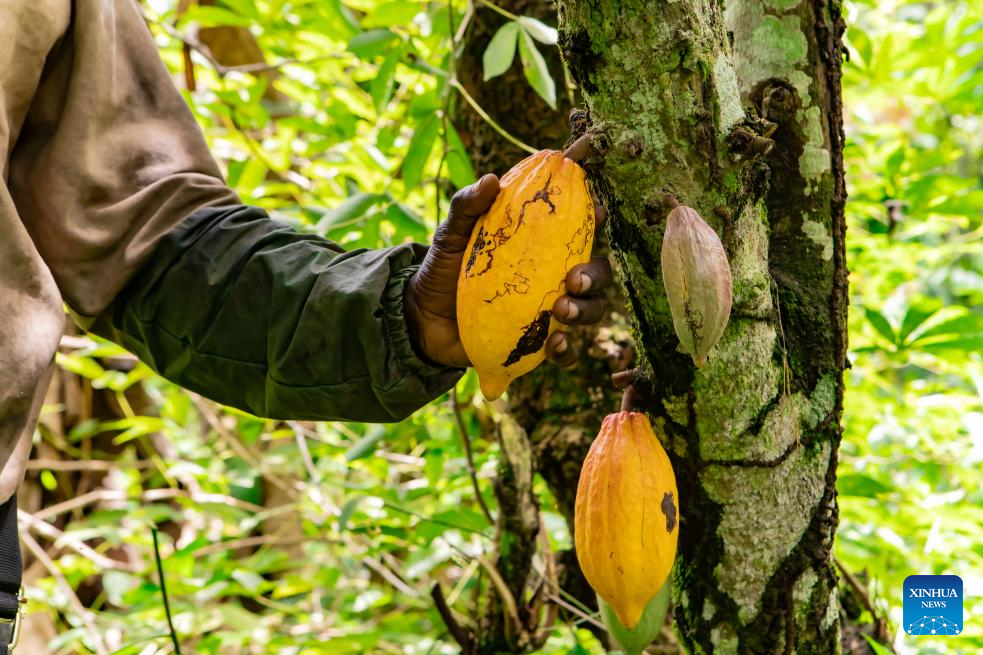
Sekiss Enyeh Bayere checks a ripe cocoa pod at his plantation on the outskirts of Buea, capital of the Southwest Region of Cameroon, April 8, 2026. (Photo by Muleng Timngum/Xinhua)
 A single purchase