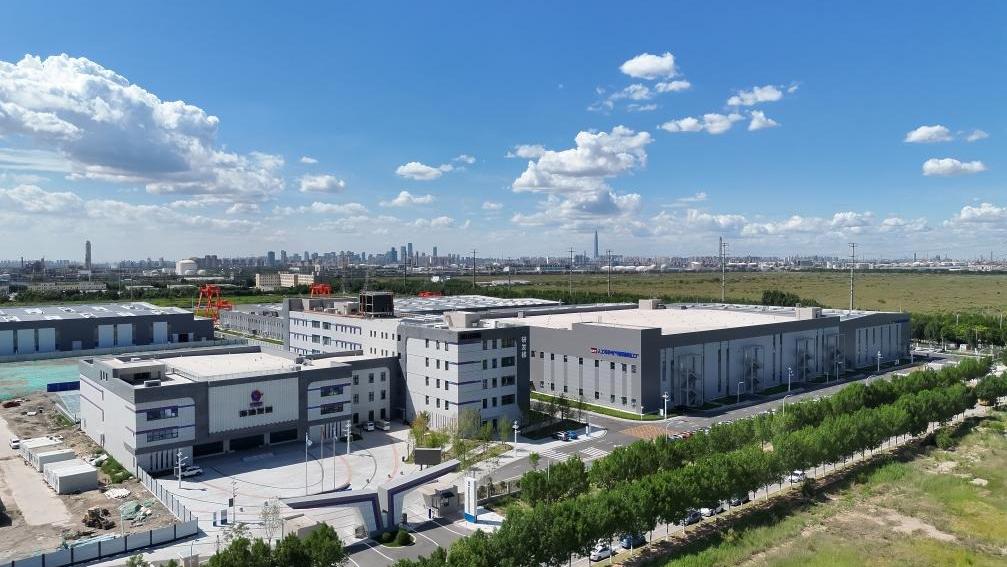



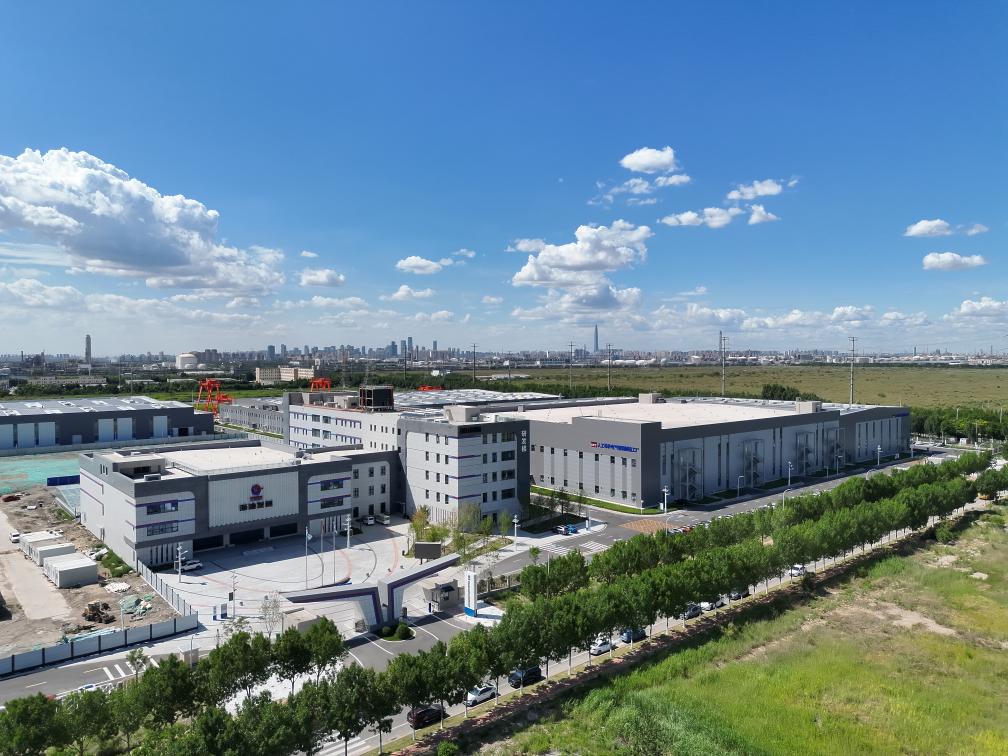
This photo taken in August, 2025 shows a view of the Cener Tech Tianjin Offshore Equipment Intelligent Manufacturing Base, operated by the state-owned China National Offshore Oil Corporation (CNOOC) Energy Technology & Services Limited, in Tianjin, north China. (Xinhua)
TIANJIN, April 13 (Xinhua) -- Manufacturing has long been synonymous with a heavy carbon footprint, but across China's industrial landscape, some factories are attempting to rewrite that equation.
The Cener Tech Tianjin Offshore Equipment Intelligent Manufacturing Base, commissioned in June 2025 in northern China's port city of Tianjin, has been certified by local authorities as a "zero-carbon factory," a tag that would have seemed improbable for a heavy equipment plant until recently.
The facility, operated by the state-owned China National Offshore Oil Corporation (CNOOC) Energy Technology & Services Limited, mainly produces oil casing pipes -- steel tubes ranging from several to a dozen meters in length that support wellbore walls.
Traditionally, their manufacture has been energy-intensive. At this facility, however, the process has been fundamentally reengineered.
At the heart of the transformation is a digital twin system, a virtual replica of the 20,000-square-meter plant that draws real-time data from every machine. A wall-sized screen in the oil casing workshop tracks each pipe's location, processing status and energy consumption as it moves through production.
"The system reads equipment parameters around the clock," said Shen Guohua, who leads the intelligent manufacturing project. "Remote diagnostics cut downtime. Real-time bottleneck identification improves efficiency. Both contribute to reducing emissions."
QR codes on every pipe enable automated tracking at each processing stage. Consequently, the entire workshop runs with just six workers monitoring screens and responding to emergencies.
Zhang Weiming, project manager, said that technological innovation, structural adjustments and management optimization are the three main mechanisms for achieving the facility's zero-carbon status.
An "energy cockpit" serves as the control center, analyzing data to recommend efficiency improvements. Solar panels blanket the roof, feeding clean power into the grid alongside green electricity purchased through market trading.
Dozens of smart lamp posts harvest wind and solar energy while monitoring temperature, humidity and air quality. They save an estimated 19,000 kWh annually and feed data into an intelligent climate system that makes dynamic adjustments instead of relying on fixed-temperature heating and cooling, cutting energy use by roughly 30 percent. Rainwater collection follows the country's "sponge city" principles.
For the small share of residual emissions that cannot be eliminated, the factory purchases certified voluntary emission reductions through carbon markets to achieve its zero-carbon status.
The project comes as China accelerates its broader push toward a green transition. In early 2026, five ministries issued guidelines to promote the development of zero-carbon factories across industrial sectors.
China's current Five-Year Plan (2026-2030) targets a 17 percent reduction in carbon dioxide emissions per unit of GDP. The country has also vowed to reduce economy-wide net greenhouse gas emissions by 7 to 10 percent from peak levels by 2035.
In March, the country's top legislature passed the landmark Ecological and Environmental Code. It is designed to advance carbon reduction, pollution control, green expansion and economic growth in a coordinated way, ensuring that development and conservation are no longer in competition, but in harmony.
Driven by this national momentum, Chinese enterprises are transforming carbon reduction from a compliance burden into a competitive edge.
"Low-carbon is not an addition to costs but a multiplier of efficiency," Zhang said. "The zero-carbon design was planned, implemented and delivered alongside production upgrades."
He added that the investment in high-efficiency equipment and digital infrastructure reflects long-term strategic planning for sustainable, high-quality growth.
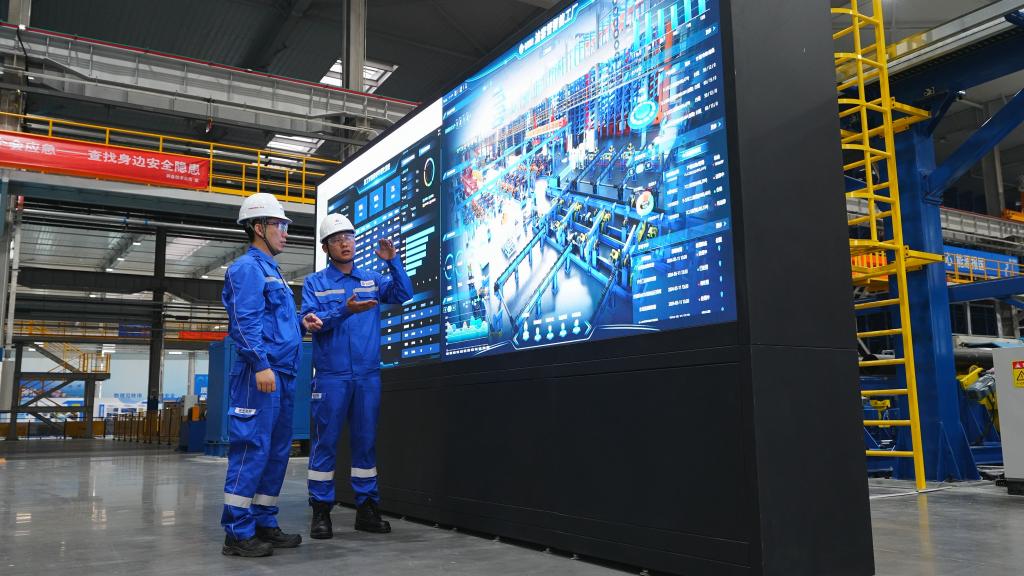
This photo taken in March 2026 shows staff members communicating at the smart oil casing workshop of the Cener Tech Tianjin Offshore Equipment Intelligent Manufacturing Base, operated by the state-owned China National Offshore Oil Corporation (CNOOC) Energy Technology & Services Limited, in Tianjin, north China. (Xinhua)
 A single purchase