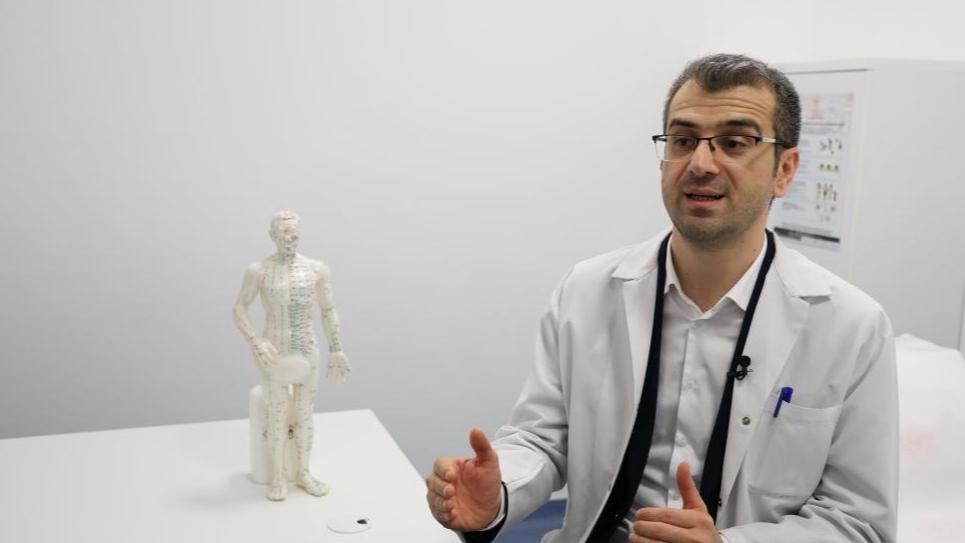



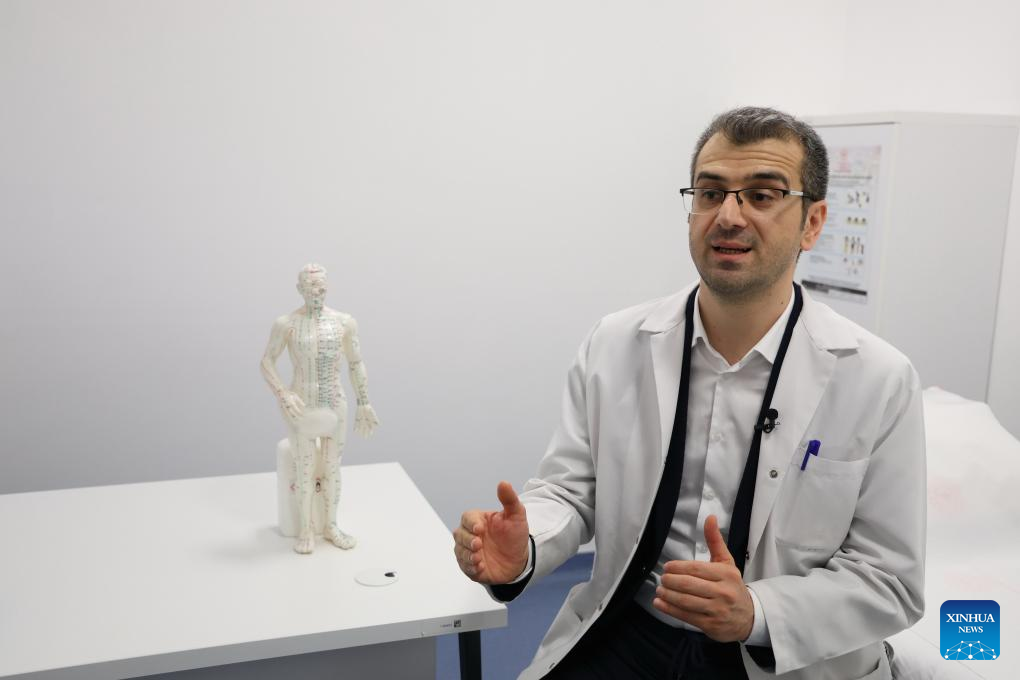
Dr. Mustafa Ciftci, vice president of the Türkiye Acupuncture Association, receives an interview with Xinhua at his clinic in Ankara, Türkiye, Feb. 17, 2026. (Mustafa Kaya/Handout via Xinhua)
ANKARA, Feb. 24 (Xinhua) -- In a sleek clinic tucked into one of the modern neighborhoods of Türkiye's capital Ankara, thin needles are helping Turkish patients recover balance, mobility and relief from chronic pain.
The therapy, acupuncture, as a key component of traditional Chinese medicine (TCM) dating back thousands of years, is drawing growing interest across Türkiye, supported by expanding scientific research, institutional recognition and deepening exchanges with China.
"The future of acupuncture in Türkiye is very bright," Dr. Mustafa Ciftci, vice president of the Türkiye Acupuncture Association, told Xinhua at his Ankara clinic.
Originating in China more than two millennia ago, acupuncture involves inserting fine needles into specific points on the body to regulate the flow of energy in accordance with TCM theory.
Ciftci said Türkiye's growing engagement with China has contributed to the field's development.
Turkish associations maintain professional cooperation with Chinese institutions, exchanging expertise and participating in joint academic activities, he said.
"There is a serious exchange between us. We are open to both educational and scientific cooperation," he noted.
Ciftci said Türkiye has embraced acupuncture with a regulation on traditional and complementary medicine introduced in 2014, consolidating its legal and institutional framework.
"Especially in the last 10 years, with the support of the Ministry of Health, there has been a very strong interest in traditional and complementary medicine, particularly acupuncture," he noted.
Ciftci added that acupuncture is not positioned as an alternative to modern medicine, but as a complementary therapy. "While continuing their existing modern medical treatments, patients come to receive acupuncture support," he said.
Among his patients is 46-year-old nurse Oznur Selvi, who suffered a crippling brain hemorrhage and turned to acupuncture as part of her recovery.
"I was coming here accompanied by three people because I had a serious balance problem," she recalled.
"After starting treatment, there was a significant reduction in these problems. I began to embrace acupuncture even more seriously," she said.
Selvi said she experienced gradual but tangible improvements.
"With acupuncture, my sense of taste began to return, and there was improvement in my speech ability," she said. "I have benefited greatly. I am a personal example of this."
Learning that the method was rooted in ancient Chinese medicine deepened her appreciation.
"I recommend it to everyone, and I hope it becomes more widespread in Türkiye," she added.
Ciftci noted that acupuncture is widely used in neurological rehabilitation, particularly in the recovery phase following strokes and other serious conditions.
Demand is also rising among patients suffering from chronic pain and rheumatic conditions.
Emre Kazli, 29, sought treatment at the clinic for rheumatism and fibromyalgia, both of which often associated with persistent pain and fatigue.
"After six months of treatment, my pain completely disappeared," Kazli said.
The growing acceptance of acupuncture in Türkiye, he believes, is also linked to cultural factors and a renewed openness to holistic approaches to health.
Meanwhile, scientific research on acupuncture in Türkiye has intensified in recent years, with more academic studies examining its mechanisms and clinical outcomes.
Looking ahead, Ciftci expects acupuncture to gain even stronger academic footing in the country. "Perhaps in the coming period, acupuncture chairs and main scientific departments will be established at universities," he said.
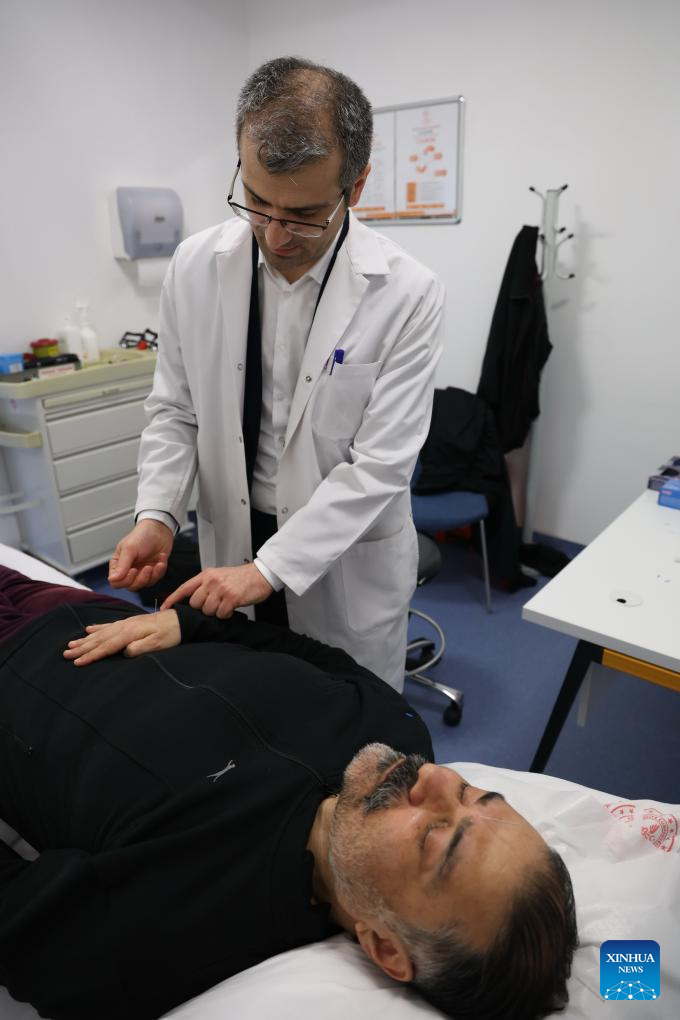
Dr. Mustafa Ciftci, vice president of the Türkiye Acupuncture Association, operates acupuncture treatment on a patient at his clinic in Ankara, Türkiye on Feb. 17, 2026. (Mustafa Kaya/Handout via Xinhua)
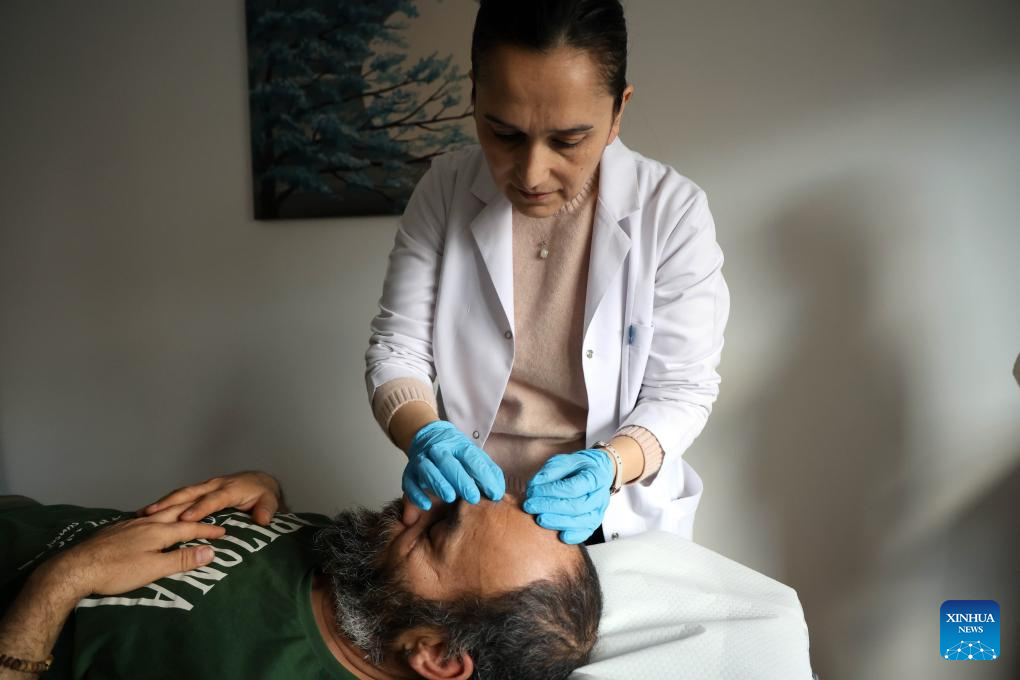
A Turkish acupuncturist operates acupuncture treatment on a patient at her clinic in Ankara, Türkiye on Feb. 23, 2026. (Mustafa Kaya/Handout via Xinhua)
 A single purchase