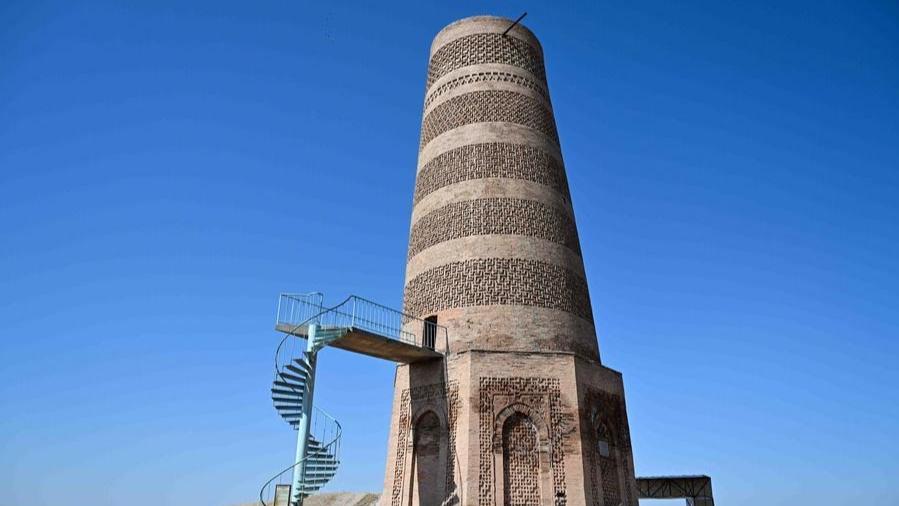



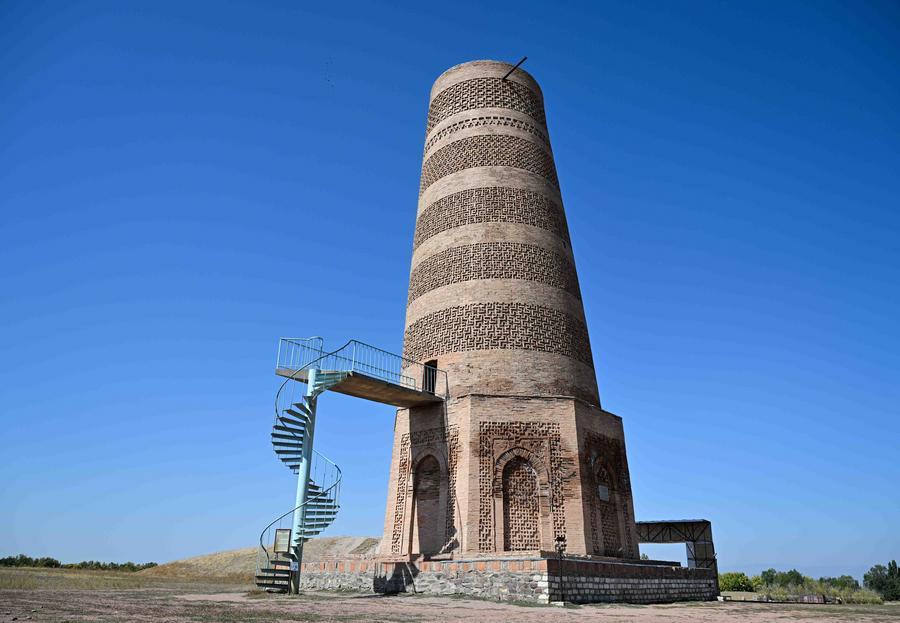
This photo taken on Sept. 20, 2025 shows a view of the Burana Tower in Chui Region, Kyrgyzstan. (Xinhua/Li Renzi)
The cultural heritage of the ancient Silk Road holds profound significance for Kyrgyzstan, which continues to strengthen its cooperation with China and other countries in this field, a Kyrgyz expert has said.
BISHKEK, Feb. 5 (Xinhua) -- The cultural heritage of the ancient Silk Road holds profound significance for Kyrgyzstan, which continues to strengthen its cooperation with China and other countries in this field, a Kyrgyz expert has said.
In a recent interview with Xinhua, Mars Sariev, a political scientist and expert on Central Asian issues from Kyrgyzstan, said that the ancient Silk Road serves as a universal cultural language in international cooperation, bridging countries with diverse political and economic systems around shared historical and cultural values. He noted that Kyrgyzstan's collaboration with China and other nations along the ancient Silk Road in cultural heritage preservation has been developing steadily.
He pointed to the UNESCO World Heritage Site "the Silk Roads: the Routes Network of Chang'an-Tianshan Corridor" as an important example of a transnational nomination, which has witnessed joint archaeological research, academic consultations and exchanges, as well as collaboration between specialists from China, Kazakhstan and other countries.
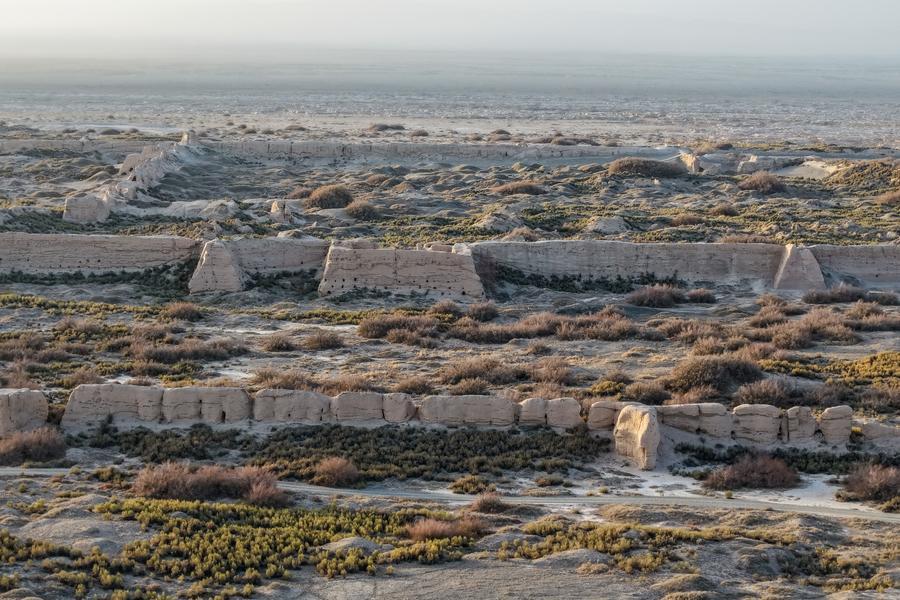
A drone photo taken on Nov. 18, 2025 shows the Suoyang City site in Guazhou County, Jiuquan City, northwest China's Gansu Province. (Xinhua/Lang Bingbing)
"The cultural heritage of the ancient Silk Road is of fundamental importance to Kyrgyzstan, both in historical and cultural terms and in contemporary social and international dimensions," Sariev emphasized, adding that historically, the territory of modern Kyrgyzstan was a key hub for transcontinental routes linking China, Central Asia, the Middle East, and Europe. Ancient centers such as Suyab, Burana, and Osh were spaces of intense cultural, religious and technological exchange.
"In contemporary social development, the Silk Road legacy contributes to strengthening intercultural tolerance, shaping the regional identity of Central Asia, developing cultural tourism and creative industries, and enhancing Kyrgyzstan's soft power on the international stage," he noted.
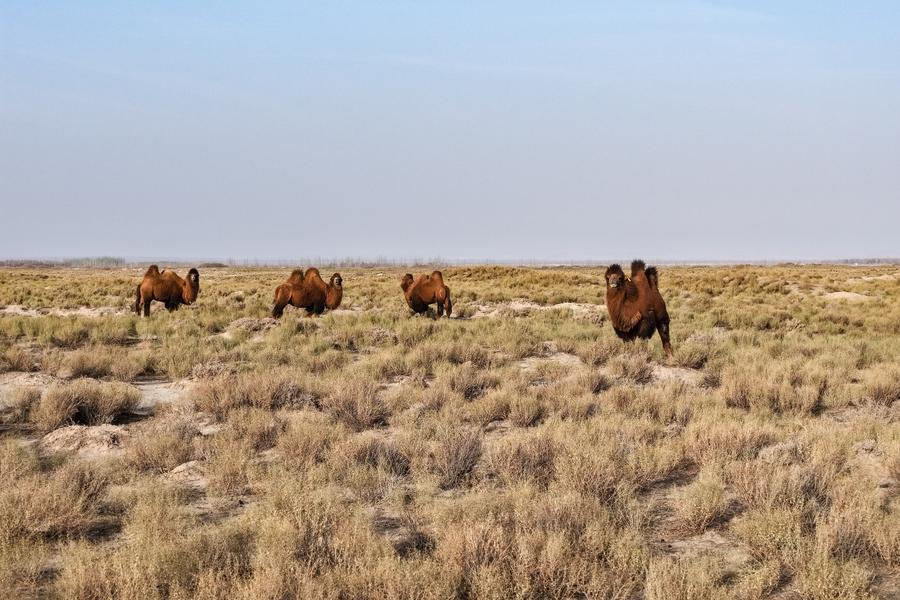
A drone photo taken on Nov. 18, 2025 shows a herd of camels foraging outside the ruins of Suoyang City in Guazhou County, Jiuquan City, northwest China's Gansu Province. (Xinhua/Lang Bingbing)
Nowadays, the use of modern technologies -- remote sensing, 3D modeling, artificial intelligence, virtual and augmented reality -- has opened new opportunities for preserving and promoting the Silk Road heritage, Sariev added.
"These technologies enable non-invasive archaeological research, the creation of digital copies of monuments, the modeling of lost sites and historical landscapes, and the broader accessibility of cultural heritage to global audiences, including young people and the international community," he stressed.

Customers experience smart glasses at the inno100 flagship store in Nanshan District of Shenzhen, south China's Guangdong Province, Jan. 18, 2026. (Xinhua/Mao Siqian)
Regarding the "Silk Road spirit," whose core values are peace and cooperation, openness and inclusiveness, mutual learning and mutual benefit, Sariev expressed his belief that modern forms of heritage interpretation, including interactive museums, digital exhibitions and VR routes, will play a significant role.
"Therefore, the Silk Road's cultural heritage can become not only an object of protection, but also a living resource for shaping the values of the future through knowledge, technology and international cooperation," he said.
 A single purchase