



Prime Minister of the United Kingdom (UK) Keir Starmer speaks at the 10 Downing Street garden in London, Britain, on Aug. 27, 2024. (Simon Dawson/No. 10 Downing Street/Handout via Xinhua)
China stands ready to take this visit as an opportunity to enhance political mutual trust with Britain, deepen practical cooperation, open a new chapter of sound and steady development of China-Britain relationship and together make due efforts and contributions to world peace, security and stability.
LONDON, Jan. 28 (Xinhua) -- Cooperation between China and Britain stands at a pivotal moment, as the two countries seek to deepen dialogue and expand practical collaboration in a world marked by growing uncertainty and fragmentation.
Against this backdrop, British Prime Minister Keir Starmer's visit to China is widely expected as an effort to refocus bilateral relations on win-win cooperation and open a new chapter in engagement.
During the visit, the first trip to China by a British head of government since 2018, Starmer will be accompanied by senior officials and executives from major British companies, underscoring the importance London attaches to ties with China.
On the Chinese side, the message is clear: China stands ready to take this visit as an opportunity to enhance political mutual trust with Britain, deepen practical cooperation, open a new chapter of sound and steady development of China-Britain relationship and together make due efforts and contributions to world peace, security and stability.
Starmer has been forthright about why engagement with China matters, calling disengagement from China "a dereliction of duty" and acknowledging China as a defining force in technology, trade and global governance. This signals a shift from ideological apprehension to pragmatic realism. For Britain, especially post-Brexit, strategic isolation from one of the world's most dynamic and influential economies is no longer an option.
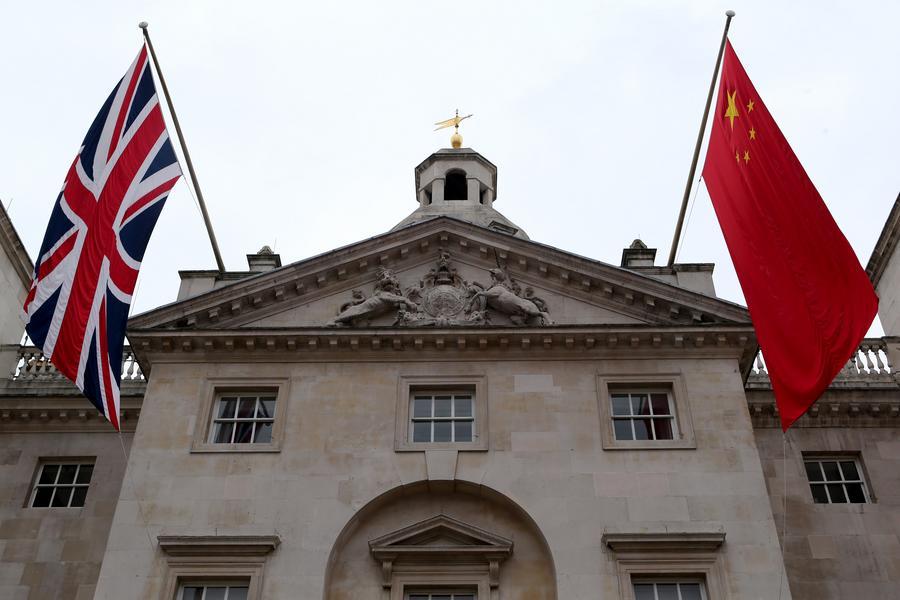
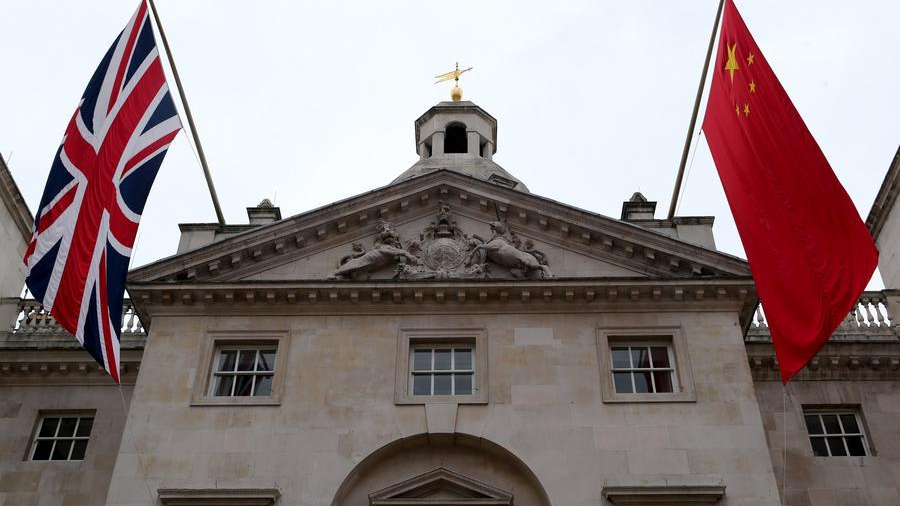
Chinese and British national flags are seen at the Horse Guards Parade in London, Britain, Oct. 17, 2015. (Xinhua/Han Yan)
Recent experience shows that cooperation with China delivers real benefits. Since last year, ministerial visits to Beijing have helped secure market access worth billions of pounds. Sectors such as finance, pharmaceuticals, creative industries and luxury goods continue to benefit from China's vast demand. China remains Britain's third-largest trading partner in goods and services and cooperation with China supports hundreds of thousands of British jobs, boosting the nation's global competitiveness.
With a population of over 1.4 billion, including more than 400 million in the middle-income bracket, China offers a consumer base unmatched by most economies. For British companies seeking long-term growth, embracing China means embracing opportunity and investing in the future.
Historically, China-Britain relations have been characterized by strong cooperation and mutual benefit. As one of the first Western countries to officially recognize the People's Republic of China, Britain has been a key early partner in fostering diplomatic and economic ties with China. Over the decades, the two nations have cultivated a mutually beneficial partnership, strengthened by major trade agreements, vibrant educational exchanges and deep cultural collaborations.
Since Starmer took office, China-Britain relations have shown signs of steady improvement. High-level exchanges have resumed, including the restart of economic, financial, and trade talks. A series of agreements in different fields demonstrates the Labour government's willingness to develop relations with China in a consistent, long-term and strategic way.
For China and Britain, the priority should be building a resilient relationship that is not easily swayed by external pressures or third-party interests. In an increasingly interconnected world, sustained cooperation offers the most reliable path to stability and shared prosperity.
As the global landscape undergoes profound change, China and Britain have every reason to keep communication open and cooperation steady. By managing differences through dialogue and expanding areas of common interest, China and Britain can contribute to international stability and development, demonstrating that cooperation, not confrontation, remains the more durable answer to a turbulent world.
 A single purchase