


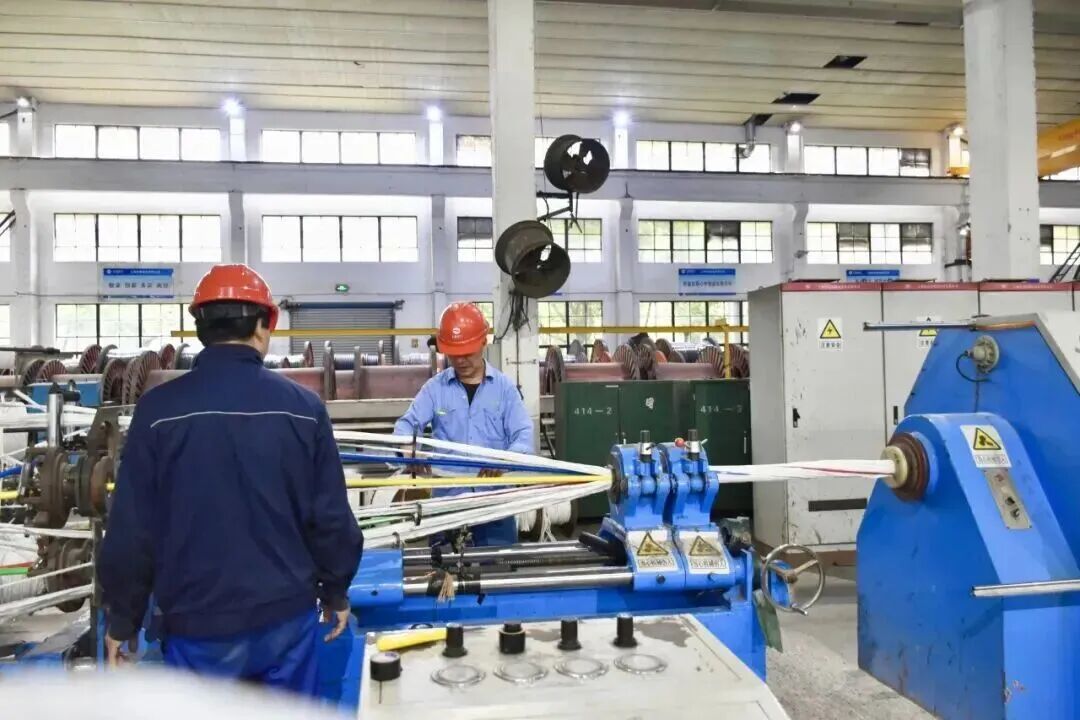
High energy consumption, intensive material use and difficulties in waste disposal are persistent challenges facing many companies in the cable industry. Shanghai Huapu Cable Co., Ltd., based in Minhang District, Shanghai, has tackled these challenges through a comprehensive transformation, earning recognition as a national-level green factory.
Identifying low-efficiency aging equipment, a low recycling rate for waste plastics and reliance on manual energy management as its three major weaknesses, the company set out clear goals for its transformation: adopting a greener energy mix, making energy management smarter, improving resource recycling and making production processes more low-carbon.
The company installed a 1,500-kilowatt distributed photovoltaic power system on the rooftops of its factory buildings. The system is expected to generate an average of approximately 1.5 million kWh of electricity annually, equivalent to saving about 460 tonnes of standard coal and reducing carbon dioxide emissions by around 1,200 tonnes each year.
Meanwhile, the company established a smart energy management system and installed intelligent data-collection terminals on key equipment and production lines to monitor parameters such as current, power, temperature and pressure in real time.
It also introduced an integrated process approach to turn clean waste plastic off-cuts generated during production into recycled pellets. These pellets are then reused in non-critical cable components, such as inner sheaths. The initiative is expected to enable the company to recycle more than 300 tonnes of waste plastics annually.
In addition, the company adopted nitrogen-protected annealing technology, replacing a steam boiler that consumed large amounts of energy and caused significant corrosion. The upgrade is expected to save approximately 150,000 kWh of electricity and 200 tonnes of water annually, with energy consumption reduced by more than 60 percent.
These upgrades have delivered tangible results in energy conservation, water efficiency and solid waste reduction. The transformation measures are expected to save more than 2 million kWh of electricity and over 3,000 tonnes of water annually, reduce the amount of waste plastic sent off-site for disposal by more than 300 tonnes, and cut carbon dioxide emissions by thousands of tonnes.
Last year, Shanghai Huapu Cable was recognized as a national-level green factory. The company is now extending its green practices across the supply chain and leveraging a smart carbon asset management platform to advance low-carbon development throughout the entire industrial chain. (Edited by Li Xueqing with Xinhua Silk Road, lixueqing@xinhua.org)
 A single purchase