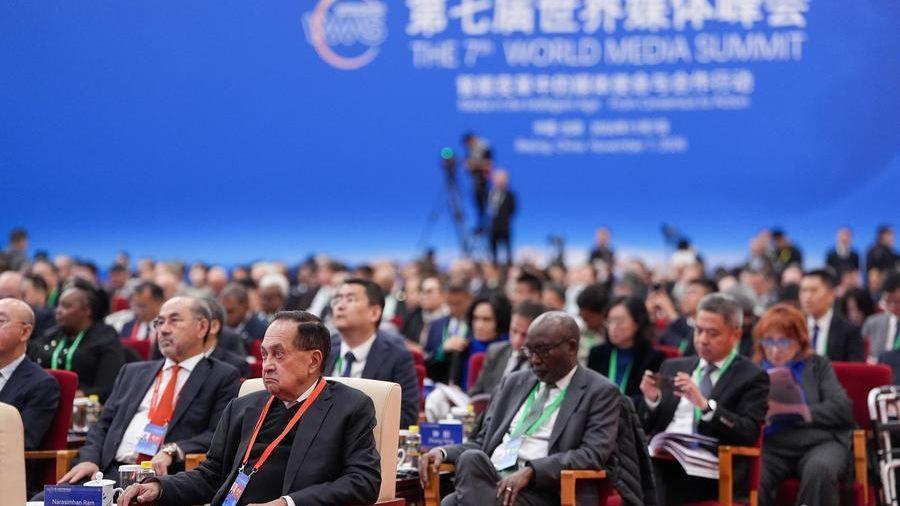



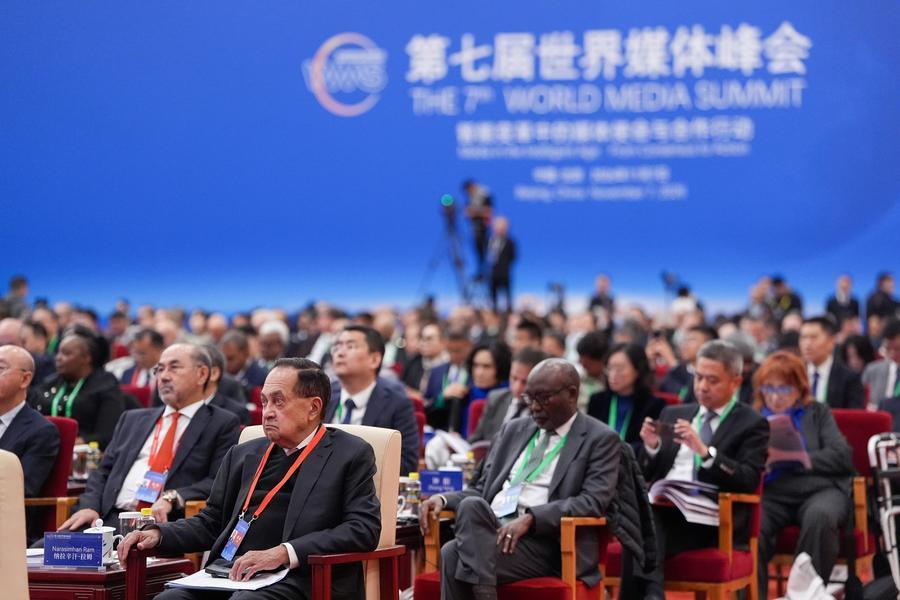
Guests attend the opening ceremony of the 7th World Media Summit in Beijing, capital of China, Nov. 7, 2026. (Xinhua/Ju Huanzong)
BEIJING, Nov. 10 (Xinhua Silk Road) -- The 7th World Media Summit Beijing Consensus, adopted at the opening ceremony of the summit on Nov. 7, calls for broader access to artificial intelligence (AI), responsible journalism and stronger international exchanges, offering a framework for putting intelligent communication to work in global cooperation.
The summit, under the theme "Media in the Intelligent Age: From Consensus to Action," brought together nearly 500 representatives from more than 300 mainstream media outlets and other organizations across 112 countries and regions.
In practice, intelligent communication can help businesses reach overseas customers, make cross-border information easier to verify and give local communities a stronger voice in international projects.
-- Turning attention into market access
To sell across borders, businesses first need to make their products understood. Videos, livestreaming and AI translation can introduce goods to unfamiliar consumers in languages they recognize. Media content thus not only offers publicity, but opens the initial conversation between sellers and buyers.
In an interview with Xinhua Silk Road, Serik Korzhumbayev, editor-in-chief of the Delovoy Kazakhstan newspaper, described how combining business reporting with short videos and social media helps Chinese companies become known to potential Central Asian partners.
"This combination helps information reach business audiences faster and makes it easier for companies and potential partners to connect," said Korzhumbayev, adding that AI is becoming increasingly useful in the process, resulting in greater speed, wider distribution, and lower barriers to communication.
The Chinese experience is particularly interesting in this regard, said Herve Azoulay, dean and professor at the Silk Road Business School in France. Digital platforms, e-commerce, digital payments and artificial intelligence technologies have profoundly transformed international trade. The ability of Chinese companies to combine technological innovation, digital platforms and international logistics to rapidly access new markets is impressive, he said.
"What I find especially significant is the opportunity this creates for small and medium-sized enterprises," said Yasiru Ranaraja, founding director of Belt and Road Initiative Sri Lanka, adding that businesses that previously lacked the resources to enter international markets can now reach global customers at a much lower cost.
Therefore, such intelligent communication technologies are not simply making cross-border trade faster, but are making global opportunities more accessible and inclusive, according to Ranaraja.
-- Protecting trust with verifiable facts
Yet the same channels can also spread misleading accounts of international cooperation. Attendees at the summit agree that accurate information, reliable sources and a proper understanding of local context are essential to avoiding misunderstandings between investors and communities.
Thomas Delage, editor-in-chief of Diplomatie Magazine in France, pointed out that cross-border fact-checking cooperation is a technical and ethical response to the challenge of disinformation, making it possible to establish a rigorous factual foundation that can be verified by all. Human oversight and editorial responsibility must remain central as AI becomes more widely used, he added.
International cooperation in this regard is important because misinformation often crosses borders faster than reliable information. By sharing verification practices, exchanging expertise, and strengthening professional standards, media organizations can help prevent misunderstandings before they escalate, according to Ranaraja.
"AI can help us identify what is false, but it is the responsibility of journalists to establish what is true," he said.
"Cooperation also helps journalists understand local context, which cannot always be captured from a distance," Korzhumbayev noted. Responsible information sharing, prompt corrections and access to original facts can strengthen trust across societies, he added.
-- Local voices turning projects into shared stories
Reliable information alone, however, does not guarantee public understanding, especially for people within the communities of foreign-invested projects, who naturally care about how investments may affect employment, services and daily lives. Meeting these concerns requires more than translating corporate announcements.
Korzhumbayev said companies need local journalists, translators and communication specialists who understand the language, media environment and public concerns of host communities.
Azoulay similarly emphasized that the success of an international investment does not rest solely on capital or technology. It depends above all on the ability to understand local realities, cultures, expectations and the needs of the population.
Ranaraja likewise stressed the importance of developing local media talent. Effective localization, he said, means more than translating messages, but requires connecting investment with local priorities and building understanding, opportunity and trust.
A complementary perspective came from Xu Fei, vice president and CMO of Xiaomi Group. Speaking at the plenary session of the summit, she outlined how connected devices could help valuable media content move beyond individual screens and language barriers, while emphasizing credibility and trust in communication.
From digital storefronts to verified reporting and locally grounded stories, these practices reflect the Beijing Consensus's emphasis on sharing technological benefits, safeguarding credibility and turning dialogue into action. When communication helps businesses connect and communities participate, it becomes part of lasting international cooperation. (Edited by Yu Huichen with Xinhua Silk Road, yuhuichen@xinhua.org)
 A single purchase