


From "leading in scale" to "quality-led transformative growth", the shift currently affecting China's auto industry was brought under the spotlight during the recent 2026 Automotive New Quality Productive Force Development Forum.
Organized by China Economic Information Service and China Certification & Inspection Group, the event, held in Jiulongpo District of Chongqing, southwest China, attracted a cohort of business representatives from the auto manufacturing and intelligent driving sectors.
As electric vehicle output and intelligent driving burgeon domestically, transformative growth instead of economy of scale remains a critical issue particularly for Chongqing, a leading auto- and motorcycle-producing city on its way to becoming a high-end player in the global value chain.
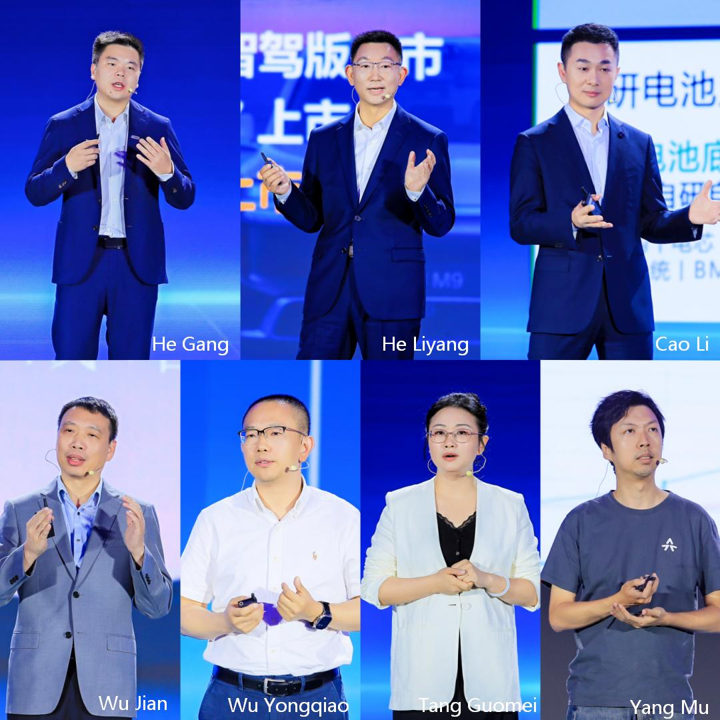
Regarding industry pain points such as high intelligent driving penetration yet low user trust, He Gang, vice president of Chongqing Changan Automobile Co., Ltd., stressed the significance of enhancing users' sense of safety.
Via its all-weather dark-room laboratory and world models for smart driving, the Chongqing-based company is improving driving stability under extreme conditions and enabling advance detection of hazardous obstacles to build a three-pronged safety system.
He Liyang, president of Seres, outlined a set of principles centered on safety and performance that the company has consistently upheld in its development, saying "safety is the utmost luxury worth pursuing."
To reduce homogeneous competition, Cao Li, senior vice president of Leapmotor, highlighted the importance of full-domain self-reliant research and manufacturing to navigate industry cycles.
With more than 65 percent of core parts developed and made by itself, the company, which owns 18 super factories, has built a closed-loop industrial cluster to keep quality, cost, and iteration efficiency fully under control.
In the face of industry controversies over powertrain technology routes, Wu Jian, a member of GAC Group's strategy committee, said that traditional overseas powertrain technology routes have limitations in terms of intelligent adaptation.
Powertrains with Chinese characteristics can only be developed by delving into technologies that adapt to local scenarios and integrate well with vehicle intelligent systems, noted Wu, adding that after 20 years of independent R&D, the company now boasts three powertrain technology series for range-extended, plug-in hybrid, and hybrid electric vehicles.
As for "going global", Wu Yongqiao, president of Bosch's intelligent driving and control system division in China, said the company's smart driving business is deeply involved in local innovation while aligning with overseas laws and regulations to facilitate the global expansion of Chinese auto companies.
To leverage technology for social good, Tang Guomei, deputy president of Sevnce Robotics Co., Ltd., said the company focuses on resolving industry security dilemmas in special scenarios.
Addressing industry dilemmas such as insufficient cognitive generalization and causal reasoning in the evolution of intelligent driving systems, Yang Mu, CTO of Chongqing Afari Technology Co., Ltd., a Chongqing-headquartered smart driving business, said the company is building a native intelligent driving base model by integrating large language models with intelligent driving models to strengthen smart vehicles' capabilities in scene understanding, logical reasoning, and risk prediction.
(Edited by Duan Jing with Xinhua Silk Road, duanjing@xinhua.org)
 A single purchase