



This photo taken on May 12, 2026 shows a city view of Praia, Cape Verde. (Xinhua/Xie Jianfei)
BEIJING/DAKAR, July 30 (Xinhua) -- As dawn breaks over a fishing pier in Praia, Cape Verde, 40-year-old Ivanilda da Veiga is already at work, loading fresh tuna onto a Chinese-made electric tricycle, and driving it toward a bustling market in the heart of the city.
A mother of five, Veiga lost the sight in one eye after an accident. About a year ago, her husband spent 145,000 Cape Verdean escudos (roughly 1,493.5 U.S. dollars) on the Chinese-made vehicle to make her work easier.
With no fuel costs, the electric three-wheeler has become her affordable and dependable work companion. All morning, Veiga shuttles back and forth between the pier and markets across the city.
Across Cape Verde, more and more households like Veiga's are turning to Chinese-made electric tricycles to support their daily life and work.
Approximately 500 km off Africa's west coast, Cape Verde is an archipelago of 10 islands with a population of 520,000. In a country with a small population and a fragmented market, Chinese-made cargo tricycles are playing a growing role in small businesses, as they are easy to handle and nimble enough to navigate narrow streets.
"The vehicle is much more practical. It can slip into alleys and makes deliveries easier," said Odair, a 35-year-old local resident who delivers goods to small grocery stores across Praia's neighborhoods on his Chinese electric tricycle. "With this job, I can feed my whole family."
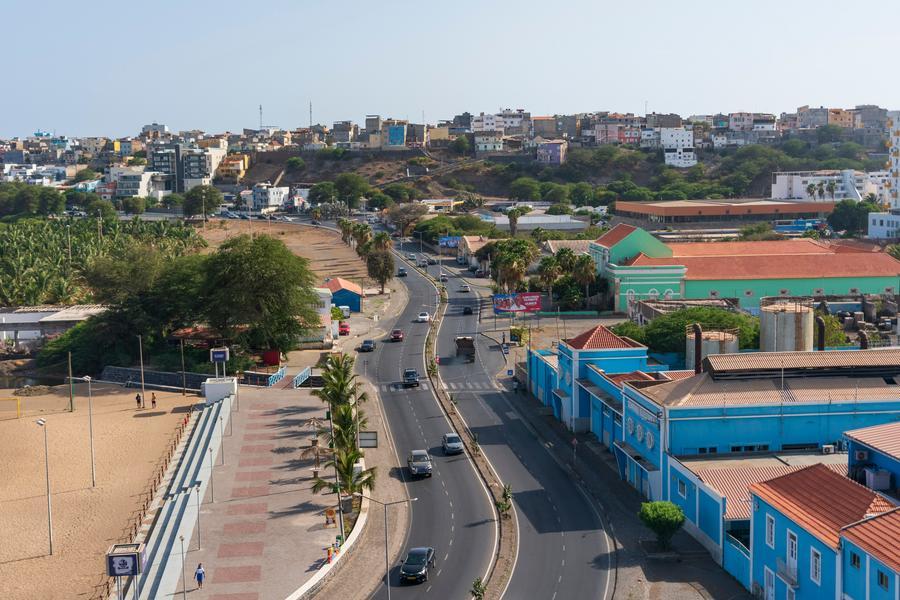
This photo taken on May 11, 2026 shows a city view of Praia, Cape Verde. (Xinhua/Xie Jianfei)
As Chinese electric tricycles become increasingly common on Cape Verde's streets, one place name keeps emerging: Fengxian County in east China's Jiangsu Province.
Just over two decades ago, Fengxian was still an agricultural area known mainly for fruit cultivation. Today, it boasts around 60 percent of China's electric tricycle market, and is home to more than 1,400 manufacturers of vehicles and components.
As China's electric tricycle hub, Fengxian is seeing strong overseas demand, with electric tricycle exports reaching 390 million yuan in the first five months of 2026, surging by 99.3 percent year on year.
Meizida, based in Fengxian, offers a vivid example. The company began selling electric tricycles to Cape Verde in 2020 through distributors. It said that shipments have grown from one or two containers a year to about five, with annual sales exceeding 200 vehicles.
"Low costs and versatility are the main reasons African customers choose Chinese electric tricycles," said Yu Baishun, Meizida's general manager. Compared with fuel-powered vehicles, he said, the tricycles stand out for lower energy costs, fewer breakdowns and easier repairs. "Compared with ordinary motorcycles, they offer greater carrying capacity and can be used for a wider range of tasks."
The company is seeing robust demand from small and micro African businesses, Yu noted, adding that electric tricycles are well suited to this market because they can be used to haul goods, commute and even serve as street stalls. "They have built irreplaceable advantages in local markets," he said.
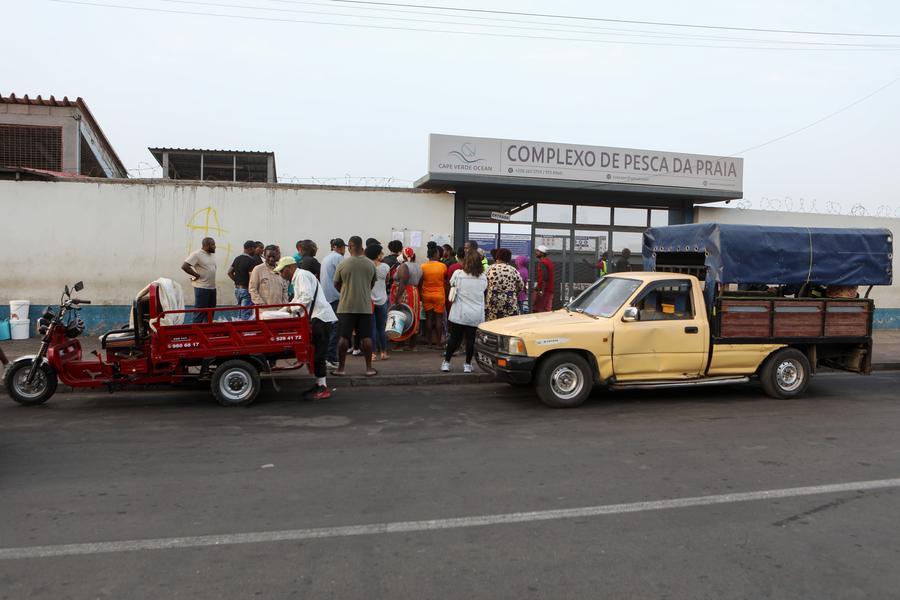
Citizens enter the Praia Fishing Complex in Praia, capital of Cape Verde, on Jan. 10, 2026. (Photo by Elton Monteiro/Xinhua)
Manufacturers like Meizida are also developing customized models, such as those with solar charging systems and audio-video entertainment units, to better adapt to local needs in everyday life.
"Nearly every type of global demand for short-distance travel can be met in China, because the domestic market is so diverse and covers almost all application scenarios," said Zhao Chen, an industry mentor at Beijing Foreign Studies University, explaining why Chinese electric tricycles are gaining popularity worldwide.
China has a complete industrial chain for electric tricycle manufacturing, and the advantage not only helps reduce costs, but also drives upgrading and innovation endeavors, Zhao said.
However, sustaining the industry's overseas momentum will not be without challenges. Zhao pointed out that regulatory requirements vary widely across countries, creating hurdles that smaller manufacturers may struggle to overcome. Localized operations often require higher standards of after-sales service, and Chinese companies will need to further strengthen their service capabilities.
Despite the challenges, industry observers remain broadly optimistic about this sector's growth prospects. They note that as global energy supplies tighten and oil prices rise, Chinese electric tricycles are expected to gain further traction in markets worldwide.
The growing overseas presence of Chinese electric tricycles also reflects the global competitiveness of China's new energy industry, said Han Jian, a business professor at Nanjing University in east China.
"Chinese manufacturing is increasingly demonstrating integrated capabilities in technology, products and services, showing strong potential for innovation and brand development," Han added.
 A single purchase