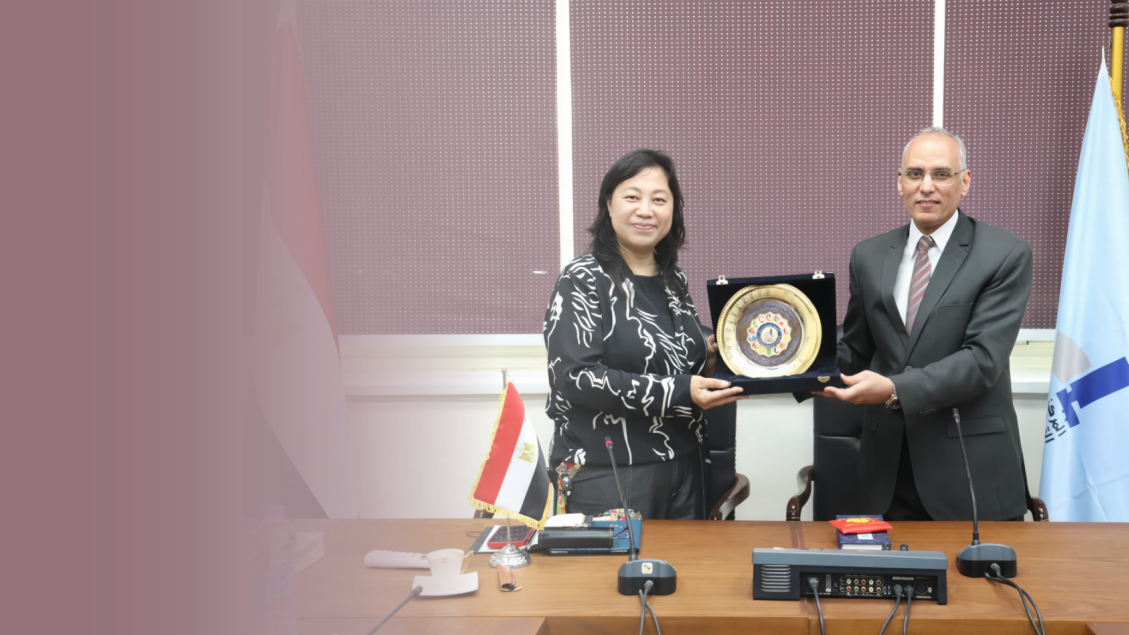



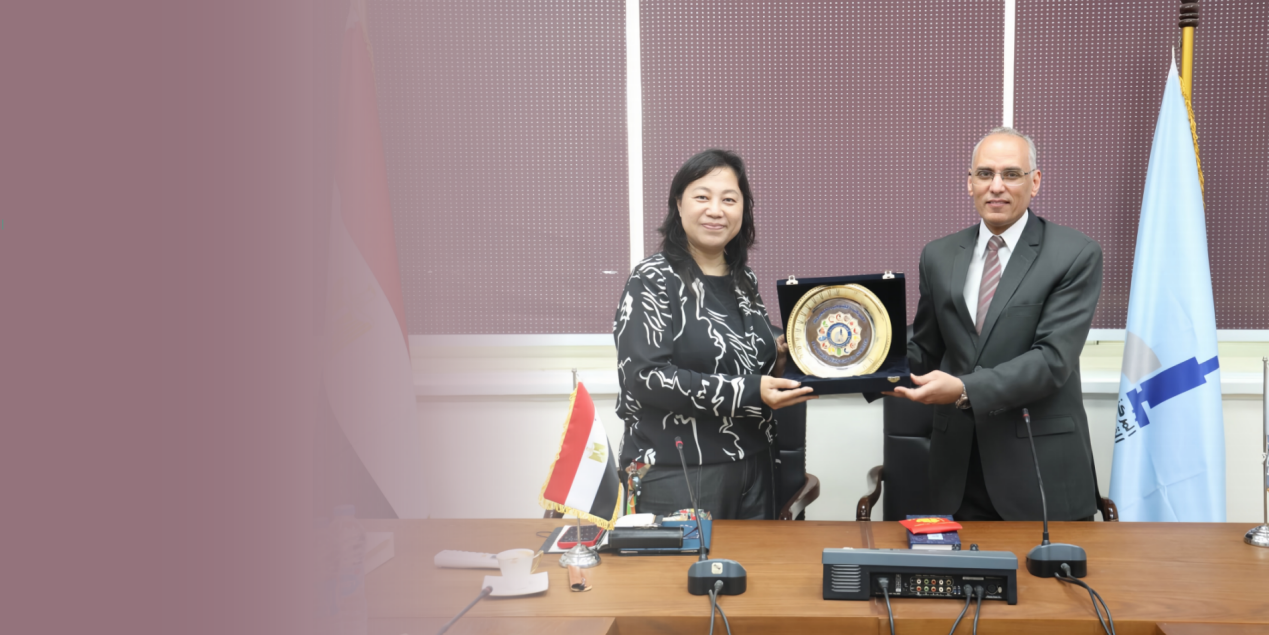
Photo shows the scene of the launching ceremony of the China-Egypt marine drug research cooperation project held in Cairo in May 2025.
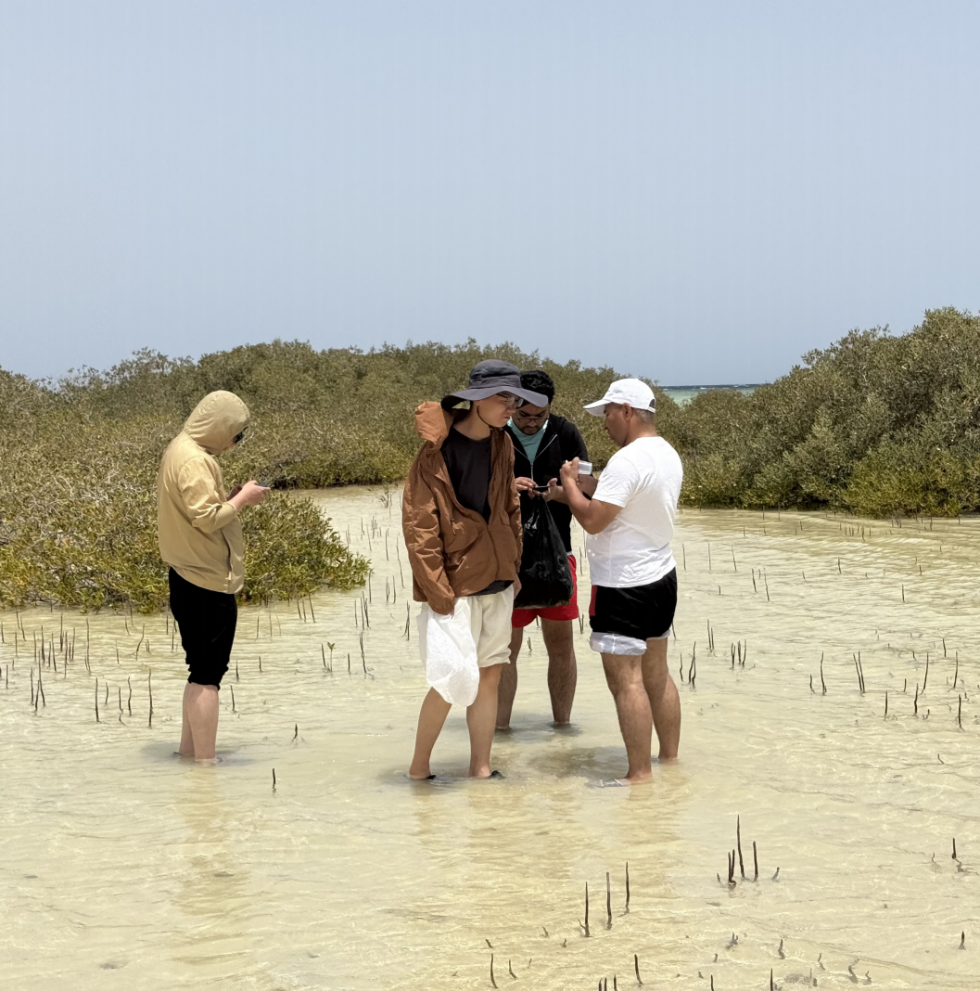
In April 2025, Chinese and Egyptian researchers collect sediment samples.
On the coast of the Red Sea, the tide slowly receded. In the mangrove wetlands exposed by the ebbing waters, Chinese and Egyptian researchers rolled up their trouser legs and waded barefoot through the seawater, carefully collecting sediment samples into containers. Hidden within what appears to be ordinary mud and sand may lie the "seeds" of future novel antimicrobial drugs.
"These sediment samples contain tens of thousands of species of microorganisms. Using China's AI screening platform, we will identify microbial strains capable of producing lead compounds for novel antimicrobial drugs and antimicrobial agents for food," said Mahmoud Emam, associate professor at the Pharmaceutical Industries Research Institute of Egypt's National Research Centre (NRC), while checking the sample serial numbers.
From a handful of sediment on the Red Sea coast to an AI-powered drug R&D platform, and from an email sent across borders to a research collaboration spanning over a decade, Chinese and Egyptian scientists are together writing a new chapter of international sci-tech and innovation cooperation.
An Email Across Continents Marks the Start of Cooperation
The story dates back to 2014, when Wang Hong, professor and head of the marine drug team at Zhejiang University of Technology (ZJUT), received an email from Emam. At the time, China's Ministry of Science and Technology had launched a program offering outstanding young scientists from Asian and African countries the opportunities to come to China for study and exchange as visiting scholars. "Bordering the Mediterranean to the north and the Red Sea to the east, Egypt is endowed with rich marine biological resources, but the R&D of marine drugs and health products is still at its early stage," Emam wrote in the email, expressing his eagerness to learn China's advanced technologies and apply them to the development of his own country's marine resources.
In January 2015, the young Egyptian scientist arrived in the Chinese city of Hangzhou as he had hoped. No one could have imagined that this exchange would become the beginning of a partnership between ZJUT and NRC that has spanned more than a decade. Since then, the research teams from both sides have continued their collaboration on marine drug development, and the R&D model has shifted from relying on accumulated experience to leveraging AI technology.
AI Increases Efficiency of Marine Drug Discovery
The ocean is a genetic treasure trove of biological resources, providing vast potential for discovering new drugs. However, identifying new marine drugs in the sea is like searching for a needle in a haystack. The process usually takes years, with low success rates.
Over the past few years, ZJUT has successively developed several AI-powered intelligent marine drug screening platforms, including PSMPA, MSanalyst and PALM-AMP, driving a paradigm shift in the R&D mode of drug lead compounds from experience-based screening to intelligent design. These platforms have markedly improved the precision and efficiency of identifying "talent" marine bacterial strains, discovering novel natural products and screening antimicrobial peptides, substantially raising the probability of finding drug lead compounds.
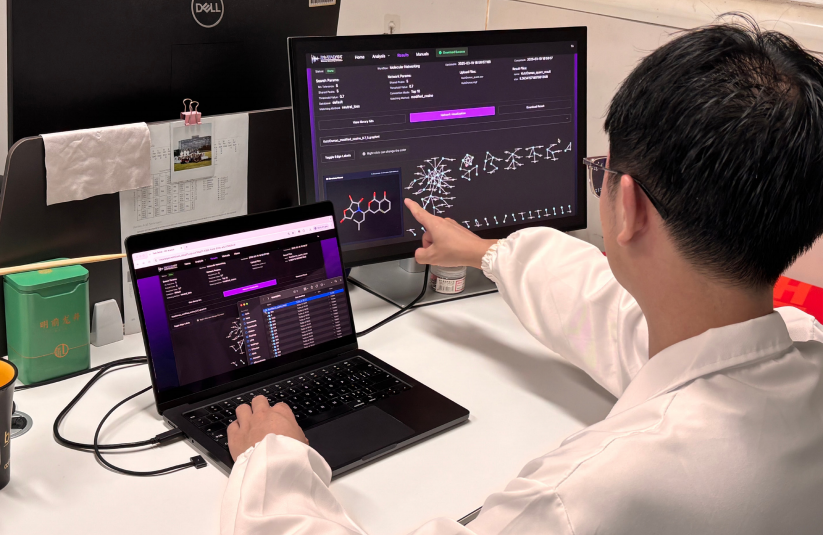
A researcher is conducting drug screening studies on the marine drug intelligent screening platform.
PALM-AMP, an AI-driven antimicrobial peptide screening model, is capable of rapidly analyzing massive genomic datasets, and can precisely predict the minimum inhibitory concentration of peptide molecules. The model has helped researchers successfully identify dozens of highly active new-type antimicrobial peptides from over 30,000 marine microbial genomes. The findings were published in the international microbiology journal Microbiome, and have been cited by leading academic journals including Nature and Science Advances.
Sherien Magdy, a researcher from Egypt's NRC who came to China for an exchange program, used the AI platform developed by the Chinese team to rapidly screen more than 30 promising antibiotic lead compound candidates and food antimicrobial agents lead compound candidates. "Work on the screening and validation of drug lead compounds that used to take two years can now be completed in a few months," she said. "Leveraging this platform to develop the microbial resources in the Red Sea has become a new direction for our collaboration."
"Treasure Hunt" in the Red Sea Promotes China-Egypt Innovative Drug R&D
In 2025, the Chinese and Egyptian research teams jointly conducted a scientific expedition along the Red Sea coast, collecting sediment samples from mangrove ecosystems. Using the intelligent marine drug screening and prediction platform, the researchers subsequently completed genome sequencing and metabolic potential analysis of more than 50 microbial strains. To date, two candidate antimicrobial drugs have entered the preclinical druggability evaluation stage.
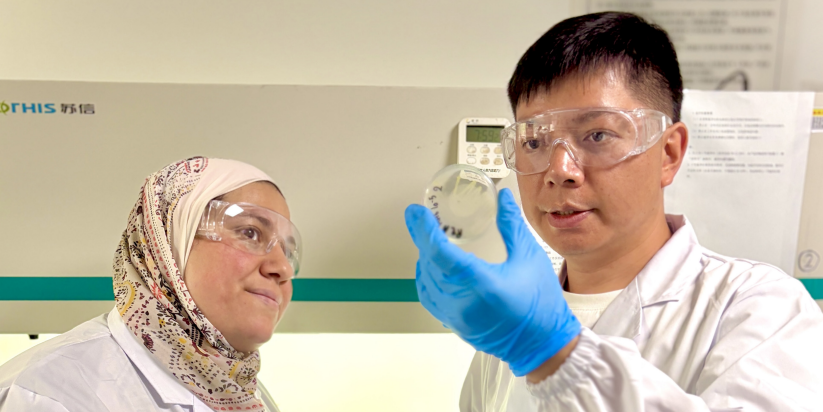
In May 2026, Chinese and Egyptian researchers conduct experimental validation of "talent" marine bacterial strains at ZJUT.
In October of the same year, NRC and ZJUT signed a scientific cooperation agreement aimed at further strengthening joint research, knowledge exchange, and innovation. "This milestone will open a new era of strategic cooperation between the two sides, helping advance innovative drug development projects and promote improvement in public health, food safety and scientific capacity in both countries," said Emam.
The two sides plan to build a cooperation platform that integrates data sharing, algorithmic collaboration, experimental validation and talent cultivation, and jointly establish a China-Egypt mangrove microbial genome database covering more than 10,000 strains, with the goal of discovering over 200 antimicrobial metabolites and identifying more than 20 candidate compounds with development potential. In addition, the two parties will explore the launch of a China-Arab AI pharmaceutical innovation alliance, working to create a cross-regional collaborative innovation network.
"What we are sharing is not just technology, but also innovative concepts and new cooperation models," said Wang Hong. AI technology is no longer merely about simple numbers and code symbols. It serves as a "fast lane" for marine drug R&D built on cloud-based big data, where millions of bioactive compounds from marine organisms await their moments of encounter with scientists in an AI-powered treasure hunt. The China-Egypt marine drug research collaboration is a valuable practice of harnessing this "fast lane" to advance international scientific cooperation. (Zhang Jian)
 A single purchase