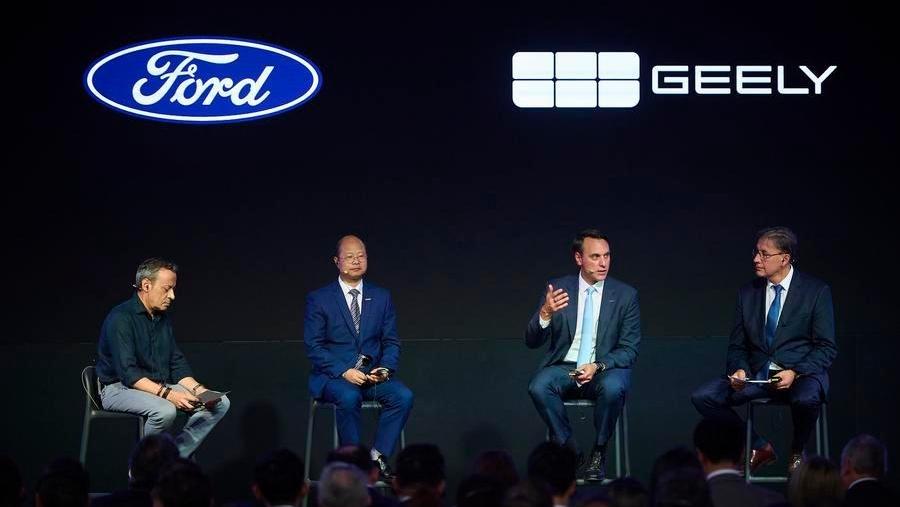



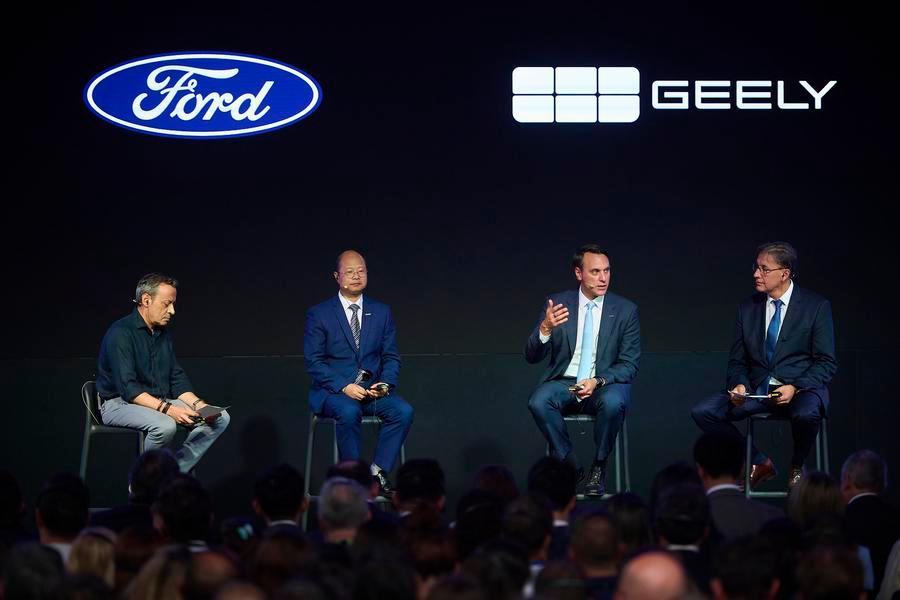
Nan Shengliang (2nd L), vice president of Geely Auto Group, and Jim Baumbick (3rd L), president of Ford Europe attend an event to announce the deal in Valencia, Spain, July 23, 2026. (Photo by Pablo Morano/Xinhua)
MADRID, July 24 (Xinhua) -- Chinese automaker Geely Auto and U.S. automaker Ford announced a new cooperation agreement in Spain on Thursday, as Chinese automotive companies continue to grow in the country in terms of vehicle sales, local production and mobility technologies.
Spanish Prime Minister Pedro Sanchez attended the event, held at Ford's Almussafes plant in Spain's coastal city of Valencia, alongside three senior cabinet members, company executives, workers and union representatives.
Geely brings technological platforms, electrification capabilities, rapid product development and global reach, while Ford contributes its knowledge of the European market, industrial capacity and brand strength, Sanchez said.
"Strategic alliances are a necessary condition to compete and to lead," he said, noting that the automotive industry is undergoing major changes driven by electrification, digitalization and global competition.
GROWING VEHICLE SALES
Chinese automakers have seen their share of Spain's passenger car market rise in recent years, supported by growing consumer acceptance and rising demand for electric and electrified vehicles.
Chinese brands registered 75,024 passenger cars in Spain during the first half of 2026, accounting for 12.3 percent of the market and marking a 50.9 percent year-on-year increase, according to industry figures reported by Spanish media outlet Europa Press.
MG, BYD and Omoda & Jaecoo accounted for most of the registrations, while other Chinese brands, including Geely and Changan, continued to expand their presence in the Spanish market.
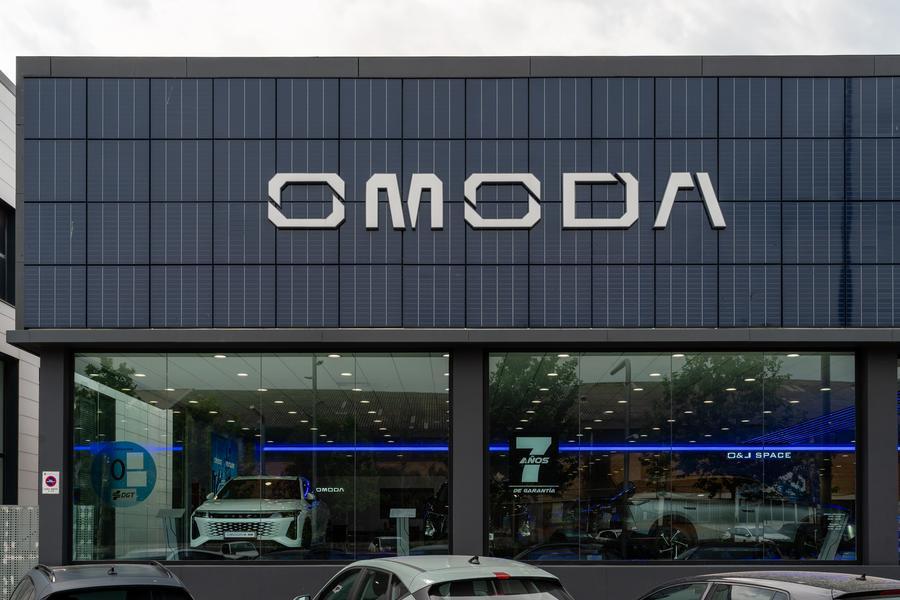
This photo taken on June 2, 2026, shows an Omoda brand store of Chinese automaker Chery in Barcelona, Spain. (Photo by Joan Gosa/Xinhua)
Consumer perceptions have also changed. A survey released last year by Spanish automotive platform Coches.net and vehicle distributors' association Ganvam found that seven out of 10 Spaniards viewed Chinese-brand vehicles favorably and would consider purchasing one.
As sales increase, some Chinese automakers are moving beyond exports and becoming involved in vehicle production in Spain.
LOCAL MANUFACTURING
The Geely-Ford agreement is the latest cooperation project involving a Chinese automaker in Spain.
At Thursday's event, Sanchez said Spain had the industrial capacity to take part in "the great transformations shaping the future of mobility."
Valencia regional president Juanfran Perez Llorca said the agreement would provide greater certainty for workers at the Almussafes plant and for companies in its supply chain. "This agreement guarantees the future of those 4,000 jobs, but it also guarantees the future of more than 15,000 indirect jobs," he said.
In Barcelona, Chinese automaker Chery has partnered with Spanish manufacturer Ebro to resume vehicle production at the former Nissan plant in the city's free trade zone. The factory has restarted production and launched a new assembly line capable of manufacturing up to five models. It is expected to reach an annual capacity of 50,000 vehicles by the end of 2026.
Chinese investment in Spain's automotive sector also includes battery production. Chinese battery manufacturer CATL and automaker Stellantis are jointly investing in a lithium iron phosphate battery plant in Zaragoza, boosting Spain's battery manufacturing capacity for its electric vehicle supply chain.
MOBILITY AND RELATED INDUSTRIES
Chinese companies are also entering other parts of Spain's mobility sector, including autonomous driving and energy storage.
Autonomous driving company WeRide announced in June that it would launch Spain's first commercial robotaxi pilot in Madrid. The project will be the company's first such deployment in Europe.
Chinese energy storage company Hithium is advancing a manufacturing project in Navarra. The company has unveiled plans to work with local partners in engineering, logistics, supply-chain development and workforce training. Regional authorities view the project as part of their efforts to strengthen Navarra's advanced industrial base.
Spain's logistics network has also played a growing role in supporting Chinese automakers. The Port of Barcelona, one of the Mediterranean's leading vehicle hubs, has become an important gateway for the import and distribution of Chinese-brand vehicles entering Spain and other European markets.
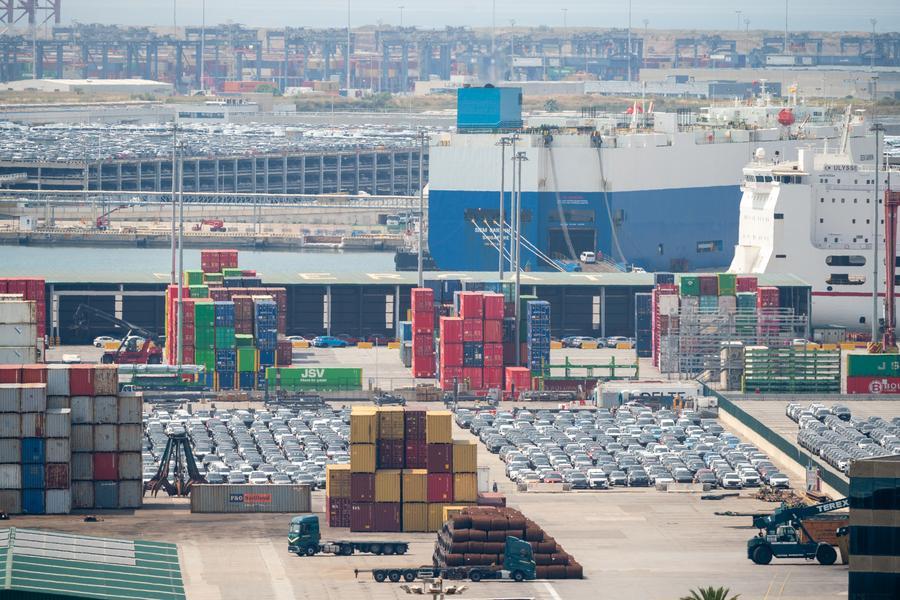
This photo taken on June 2, 2026, shows the view of the Port of Barcelona where cargo ships arrive with fleets of electric cars from China, in Barcelona, Spain. (Photo by Joan Gosa/Xinhua)
According to ICEX-Invest in Spain, the country's investment promotion agency, 97 percent of Chinese companies operating in Spain expect to maintain or expand their investment in the country, including many companies in the new-energy and automotive sectors.
 A single purchase