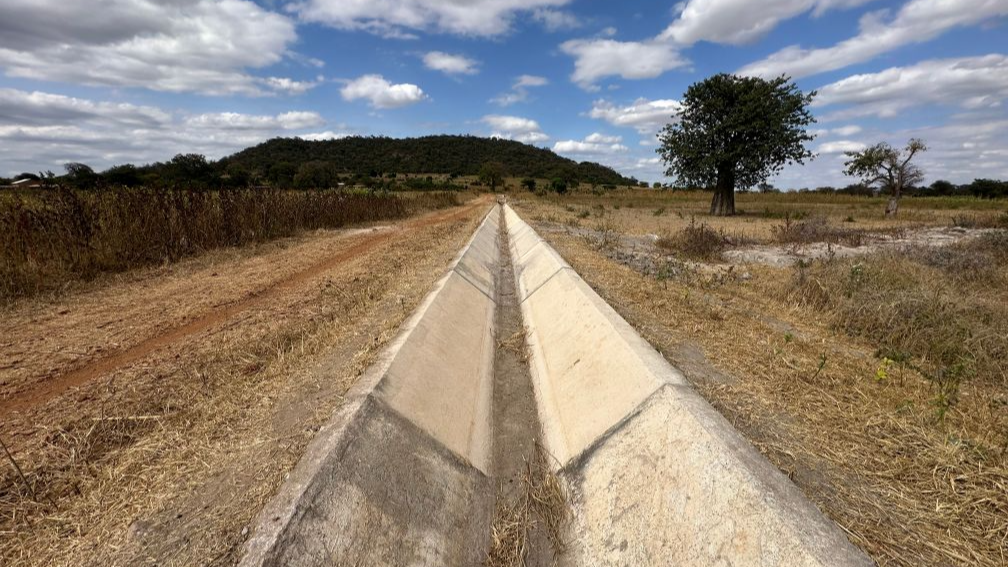



This photo taken with a mobile phone shows a completed concrete irrigation canal in Kongogo village in Dodoma, Tanzania, June 13, 2026.(Xinhua/Nurdin Pallangyo)
DODOMA, Tanzania, June 23 (Xinhua) -- For years, Shabani Saki's life hinged on the occurrence of rain. When raindrops failed to arrive on time, hunger loomed large.
A father of six and a smallholder farmer in the Kongogo village, central Tanzania, Saki has spent much of his life cultivating modest plots of land, relying entirely on unpredictable rainfall, whose harvests were never guaranteed.
But that uncertainty is now giving way to renewed hope, thanks to a Chinese-built irrigation project that is steadily reshaping both the landscape and the livelihoods of this rural community.
"In the past, when drought came, we lost everything," Saki said. "Now, with irrigation, we are assured of harvesting. This project will change our lives."
Kongogo in Bahi District in Tanzania's central region of Dodoma is home to more than 1,000 households, the majority of whom depend on agriculture for survival. Of these, more than 600 households are expected to directly benefit from the nearly completed irrigation scheme.
"Before, we cultivated small plots because we depended on rainfall," Saki explained. "Now we will farm on larger hectares. We will harvest more, and we will harvest consistently."
With the introduction of irrigation, farmers expect to harvest between 30 and 50 bags of crops from one hectare, according to Saki. "That means food security and income for our families."
As production grows, households will not only feed themselves but also generate surplus for sale. "This project will help us overcome hunger," Saki said. "With the income, we can educate our children and build better houses."
The construction phase of the project has already brought tangible benefits to the community, especially for young people.
"Many young people here have found jobs," Saki noted. "They have learned skills like construction, and others have gained different knowledge. Even if the pay is small now, it will help them in the future."
The project has created employment opportunities for around 100 workers at its peak, including both skilled and unskilled laborers. Local residents have engaged in activities such as excavation, backfilling, and general construction work.
The Kongogo irrigation project is being implemented by China Railway Jianchang Engineering Company (CRJE) (East Africa) Limited and supervised by Tanzania's National Irrigation Commission under the Ministry of Agriculture.
"In Tanzania, there is a rainy season and a dry season," said project manager Lin Chongliang. "During the dry season, farmers do not have sufficient water. This project is designed to solve that problem."
The infrastructure includes six km of main canals, nine km of secondary canals, and 14 km of access roads, forming an integrated network that will deliver water efficiently across farmland.
The system relies on gravity irrigation, allowing water from an existing dam, constructed more than a decade ago, to flow naturally to the fields without the need for pumps or fuel.
Bahati Shitobelo, a site engineer with the National Irrigation Commission, emphasized that the project represents a major step toward modernizing agriculture in the region.
"The scheme will cover about 400 hectares, mainly for rice cultivation," he said. "We expect nearly 1,000 farmers to benefit."
"During the rainy season, they will use rainwater. But during the dry season, they will continue farming using irrigation," Shitobelo explained. "This means two farming seasons instead of one."
Before the project, some farmers attempted irrigation using water pumps, but the costs were prohibitive.
"They had to buy diesel and maintain the pumps," Shitobelo said. "Most farmers could not afford that."
The new gravity-fed system eliminates these expenses. "Water will flow directly to the farms without using energy," he said. "This is more efficient and affordable for farmers."
Beyond infrastructure, the project has facilitated significant knowledge transfer between Chinese experts and Tanzanian workers.
Vicent Mayala, a local land surveyor who has worked on the project for three years, said he has gained valuable technical skills.
"I have learned how to use modern technology, including GPS, in setting out irrigation canals," he said. "This experience has improved my income and the welfare of my family."
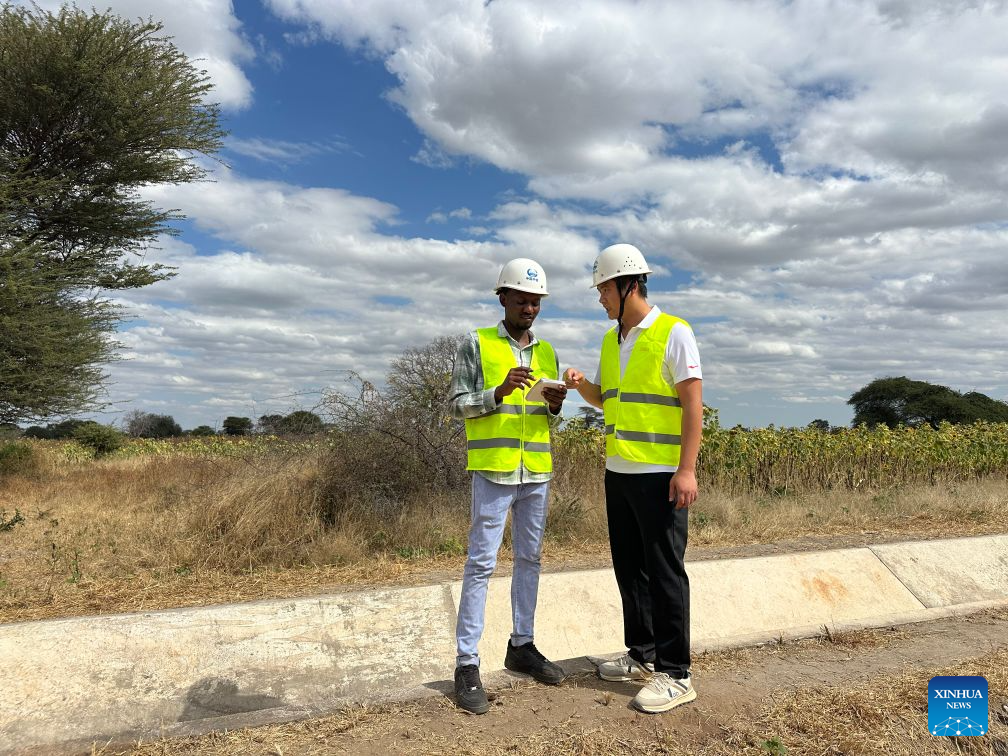
This photo taken with a mobile phone shows an engineer (R) of China Railway Jianchang Engineering Company (CRJE) communicating with a local employee at the construction site of the Kongogo irrigation project in Dodoma, Tanzania, June 13, 2026.(Xinhua/Nurdin Pallangyo)
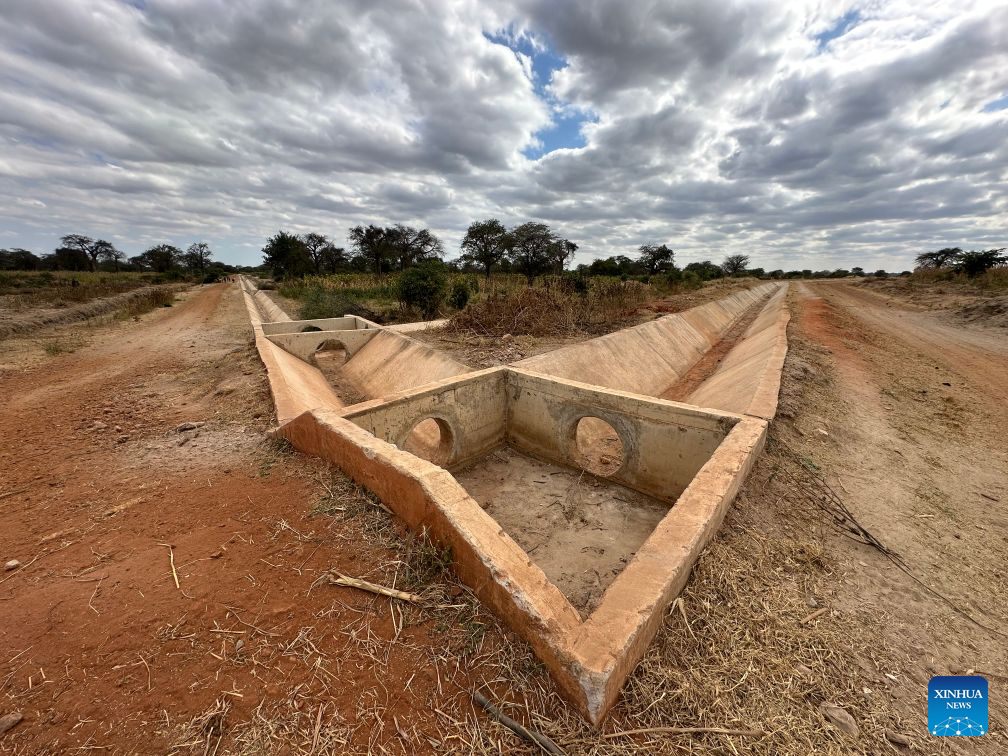
This photo taken with a mobile phone shows a diversion node of the Kongogo irrigation project implemented by China Railway Jianchang Engineering Company (CRJE) in Dodoma, Tanzania, June 13, 2026.(Xinhua/Nurdin Pallangyo)
 A single purchase