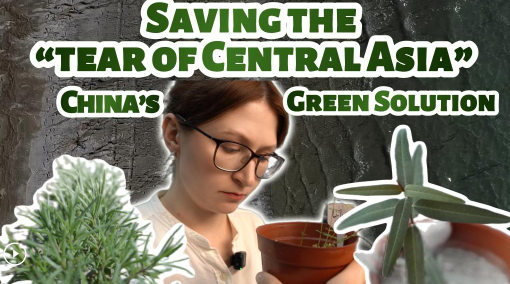
Abstract : Once the world's fourth-largest lake, the Aral Sea has lost more than 90 percent of its surface area since the 1960s, leaving behind vast salt deserts between Kazakhstan and Uzbekistan.
Once the world's fourth-largest lake, the Aral Sea has lost more than 90 percent of its surface area since the 1960s, leaving behind vast salt deserts between Kazakhstan and Uzbekistan.
Today, Chinese scientists and their Central Asian partners are working together to restore the region's fragile ecosystem, bringing new technologies and new hope to the "Tear of Central Asia."
Produced by Xinhua Global Service
You have no permission, please apply to open itYou have no permission, please apply to open it.
 A single purchase
This is paid content
Click below to buy
Buy a single article, unlock more content
Scan the QR code and push it to your mobile phone
 You've accessed an article available only to subscribers
Keyword:
Aral Sea
green solution