


Quanzhou, a coastal manufacturing hub of garments and footwear in southeast China's Fujian Province, is expanding trade in local sportswear and footwear through fashion and culture boosters.
Nowadays, the city, where around one third of the national sports clothing is produced, boasts a vibrant, competitive textile industrial cluster that pools strength not only from its manufacturing advantages, but also from new growth drivers.
Fashion, among others, is an effective growth catalyst. In March 2025, Quanzhou proposed in a 3-year action plan to craft an international fashion capital by 2027, aiming to cultivate a brand-new growth engine for local clothing and footwear sectors.
It pledged in the document to forge a unique, internationalized fashion industry ecology via enhancing strengths in fashion-related industry, design, culture, commerce, consumption and lifestyle.
With leading local producers acting in concert, cultural enablers such as elements related to the Maritime Silk Road, intangible cultural heritages and traditional culture including flower-decorated hairpins and southern Fujian traditional motifs helped local producers build their own styles.
Meanwhile, their R&D capabilities keep improving and new sportswear fabric keeps emerging together with extended product arrays in professional sports, outdoor consumption and other fields.
Such efforts helped the city evolve from a pure manufacturer of sportswear and footwear to an industry pacesetter built upon a basket of renowned garment and footwear brands such as ANTA, 361°, and PEAK.
Currently, the city has complete sub-segments for garment and shoe sectors including spinning, weaving, shoe-material production, molding, manufacturing, packaging, logistics, and marketing.
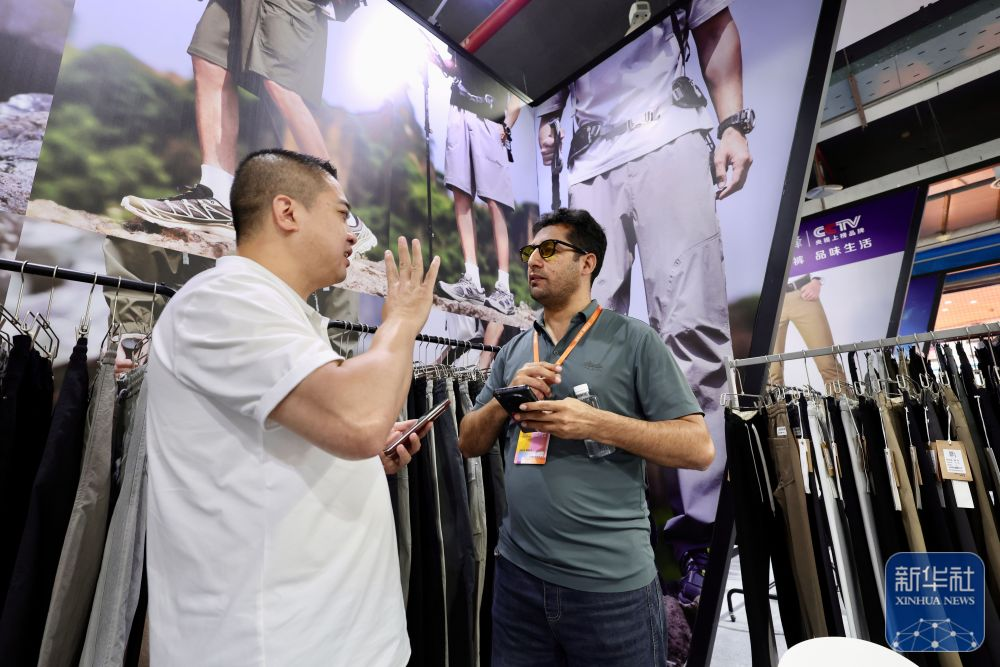
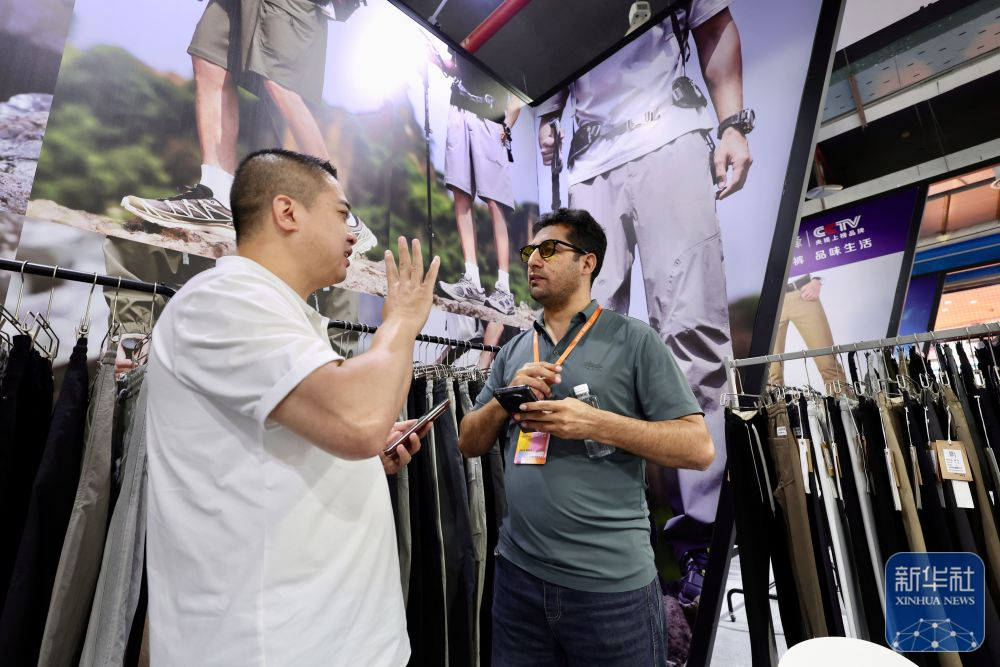
A foreign merchant talks with an exhibitor during an exhibition held in Shishi Clothing City of Quanzhou, Fujian Province in southeast China on April 18, 2026. (Xinhua/Jiang Kehong)
Under such circumstances, "Made in Quanzhou" moves at a faster pace towards export branding of local producers and cross-border e-commerce, overseas warehouses and localized operation become key growth enablers.
Since October 29, 2021, when Quanzhou Comprehensive Bonded Area started the "9610" mode designed to serve small B2C cross-border e-commerce operators, goods export mainly including shoes and garments under the mode surged notably.
Its logistics regime incorporating international liner and aviation logistics services and related cross-border trade facilitation actions also contributed much to improving its global delivery capacity and efficiency.
Together with overseas direct sales outlets, regional operation centers and localized teams put in place by local producers, Quanzhou is selling stylish sportswear and shoes to 100-plus countries and regions around the world.
(Edited by Duan Jing with Xinhua Silk Road, duanjing@xinhua.org)
 A single purchase