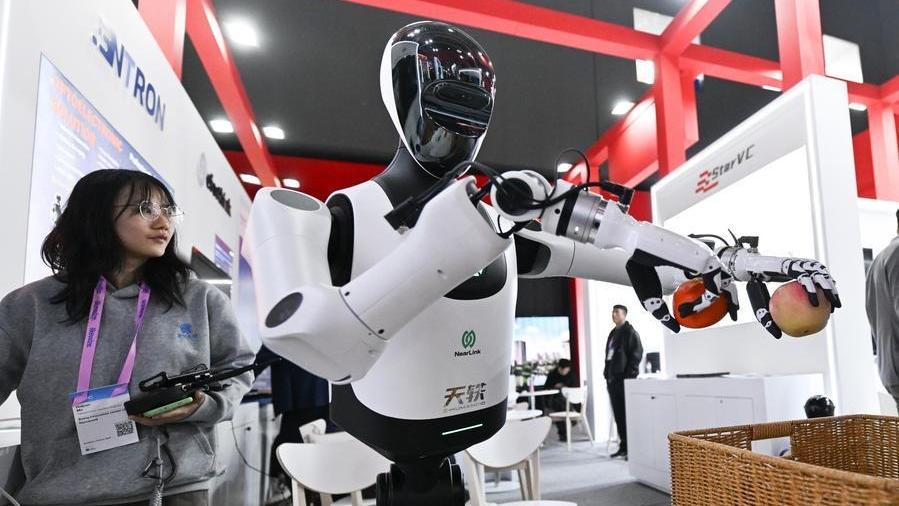




A humanoid robot made by Humanoid sorts things during the 2026 Mobile World Congress (MWC) in Barcelona, Spain, March 3, 2026. (Xinhua/Cheng Min)
"China's soft power development and the growth of Chinese brands reinforce each other," said David Haigh, chairman of the British consultancy Brand Finance, noting that they "all help one another on this journey to become global brands."
by Xinhua writer Gao Wencheng
LONDON, May 12 (Xinhua) -- Chinese brands have reached "the inflection point where they are becoming global," David Haigh, chairman of the British consultancy Brand Finance, has said.
The Chinese brand sector is "extremely exciting, very vibrant, growing very fast and focused on taking Chinese innovation around the world," Haigh said in an interview with Xinhua ahead of China Brand Day, which falls on May 10.
Haigh, also chair of the International Organization for Standardization's technical committee on brand evaluation, highlighted China's long-term policy vision.
"Unlike many other governments, the Chinese government believes in long-term policies and has relentlessly pursued innovation, design and new creation strategies," he said. "There are fantastic new products and services coming out of China that are quite different and much better than anybody else's."
Haigh noted that Chinese brands have historically been known for "fast, reliable delivery, competitive prices and high-quality production."
"China is trusted for producing good-quality products," he said. "It is no surprise that both Tesla and Apple get a large number of their products made in China because they know that China can be relied upon to do those things."

The internal structures of foldable phones are displayed at the Huawei booth during the 2026 Mobile World Congress (MWC) in Barcelona, Spain, March 3, 2026. (Xinhua/Cheng Min)
He noted that over the past decade, Chinese brands have increasingly stepped onto the global stage as the government encouraged manufacturers to expand internationally.
"The message was very clear: Chinese brands should be 'created in China,' not just 'made in China,'" Haigh said.
In his view, this shift has brought two major changes -- brand recognition and reputation building.
"People then know that it is a Chinese product or brand and that they can rely on it," he said. "Also, it doesn't have to become an input to someone else's brand."
"China has been developing the reputation of other people's brands for too long. It is now building the reputation of its own brands," he added.
According to Brand Finance's Global 500 ranking released in January, 68 Chinese brands are now among the world's 500 most valuable brands, compared with "almost none" two decades ago.
"We expect that number will continue to rise very, very rapidly," Haigh said.
Brand Finance's China 500 2026 report, released on May 9, showed the total brand value of China's top 500 brands exceeded 2.1 trillion U.S. dollars.
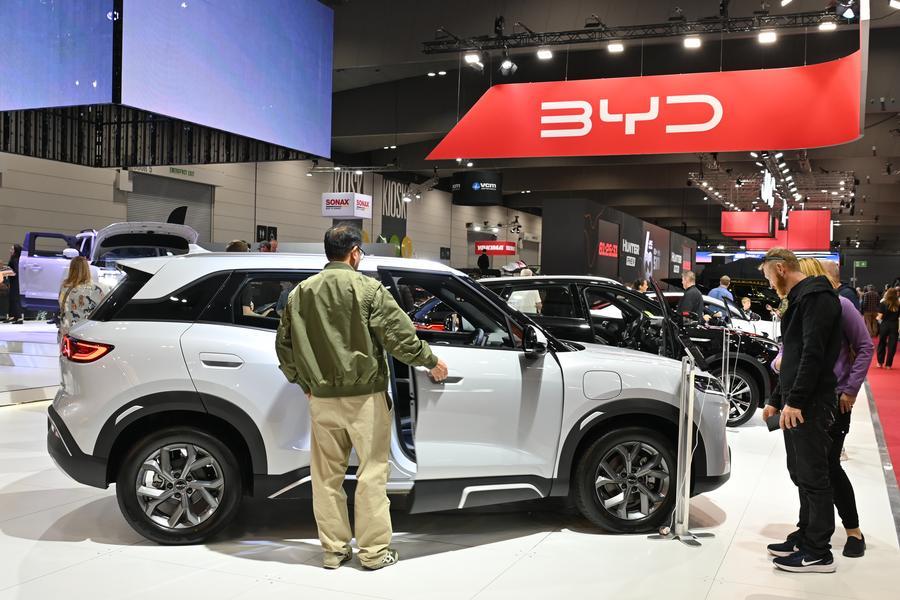
People visit the BYD stand during the 2026 Melbourne Motor Show in Melbourne, Australia, April 10, 2026. (Xinhua/Xu Haijing)
Discussing the overseas expansion of Chinese brands, Haigh cited the new energy vehicle sector as an example.
"Even though some Western markets have put up barriers and obstacles against Chinese products, it makes little difference," he said. "Chinese products are so good, so well-branded and so well-marketed that they are rapidly eating market share."
At the same time, developing markets are providing enormous opportunities for Chinese brands.
"The world is a big place and there is opportunity everywhere," he said. "South America, Africa and many parts of Asia are growing very fast."
Haigh depicted China as well-positioned to benefit from such opportunities because it has developed long-term cooperative ties with many developing countries and is widely regarded as a reliable and cost-effective partner.
Explaining the deeper logic behind brand value, Haigh referred to the principles of "like, trust and respect."
"At least 50 percent of the pulling power of brands is that people like them," he said. "You feel they are your friend. You want to be associated with them."
He believes Chinese brands already perform strongly in terms of "trust," while broader emotional connection with overseas consumers is steadily growing.
This file photo shows a logo of TikTok's Los Angeles Office in Culver City, Los Angeles County, the United States. (Xinhua)
"TikTok has made an amazing leap," he said, referring to the global influence of the Chinese platform among younger generations.
Brand Finance is also known for its research on national soft power. According to its studies, China's soft power has continued to rise in recent years, ranking first globally in indicators such as "easy to do business with" and "future growth potential."
Haigh said China's image as a tourism destination has also improved significantly, thanks to visa facilitation measures and increasing people-to-people exchanges.
"China's soft power development and the growth of Chinese brands reinforce each other," he said, noting that they "all help one another on this journey to become global brands."
 A single purchase