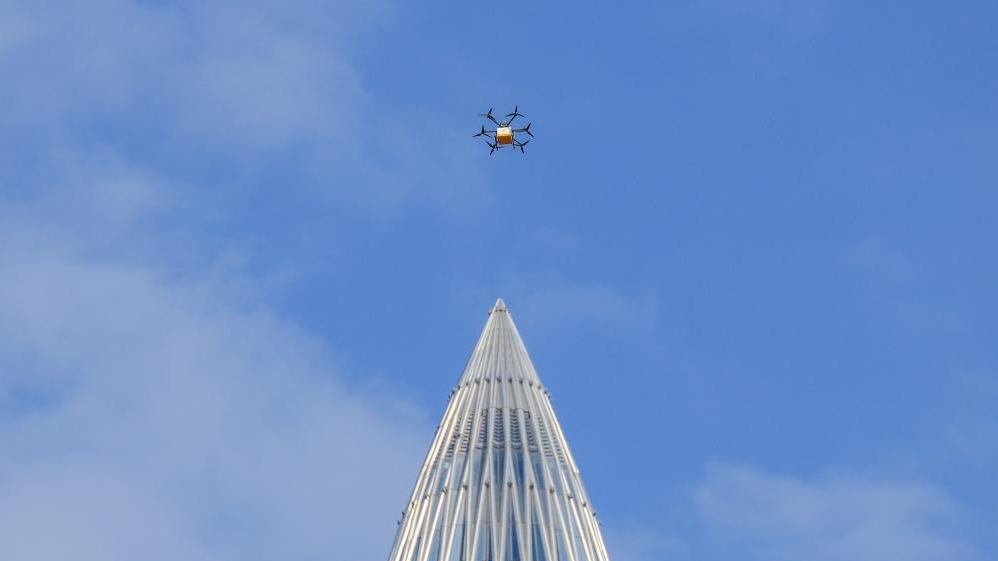



This photo taken on May 6, 2026 shows a drone delivering takeout food in Shenzhen, south China's Guangdong Province. South China's tech hub of Shenzhen now stands as a leading manufacturing base for unmanned aerial vehicles, producing 70 percent of China's consumer drones and 50 percent of its industrial drones.
The expansion of Shenzhen's low-altitude sector is fueled by the city's increasing investment in sci-tech innovation. From 2020 to 2024, Shenzhen's total R&D investment grew from 151.08 billion yuan to 245.31 billion yuan, representing an average annual growth of 12.9 percent.
China's low-altitude economy has gained substantial momentum since being recognized as a new growth driver in the 2024 government work report.
The outline of the 15th Five-Year Plan (2026-2030) calls for the healthy and orderly development of the low-altitude economy, improved precision in low-altitude airspace management, and proactive efforts to expand low-altitude consumption. (Xinhua/Mao Siqian)
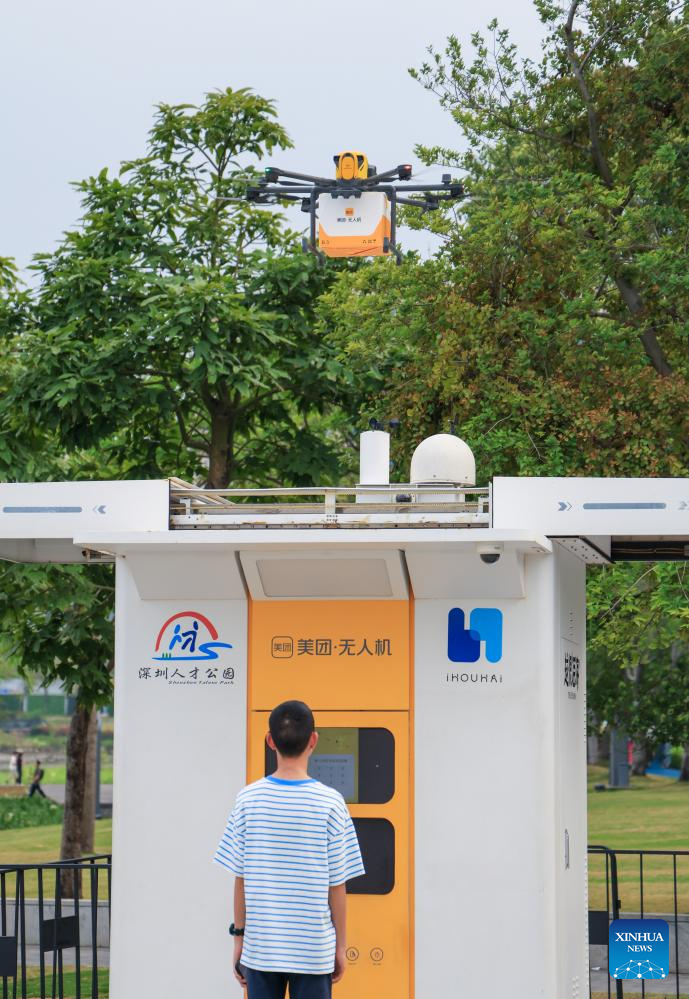
A tourist waits for takeout food delivered by a drone in front of a pickup kiosk in Shenzhen Talent Park in Shenzhen, south China's Guangdong Province, April 1, 2026. South China's tech hub of Shenzhen now stands as a leading manufacturing base for unmanned aerial vehicles, producing 70 percent of China's consumer drones and 50 percent of its industrial drones.
The expansion of Shenzhen's low-altitude sector is fueled by the city's increasing investment in sci-tech innovation. From 2020 to 2024, Shenzhen's total R&D investment grew from 151.08 billion yuan to 245.31 billion yuan, representing an average annual growth of 12.9 percent.
China's low-altitude economy has gained substantial momentum since being recognized as a new growth driver in the 2024 government work report.
The outline of the 15th Five-Year Plan (2026-2030) calls for the healthy and orderly development of the low-altitude economy, improved precision in low-altitude airspace management, and proactive efforts to expand low-altitude consumption. (Xinhua/Mao Siqian)
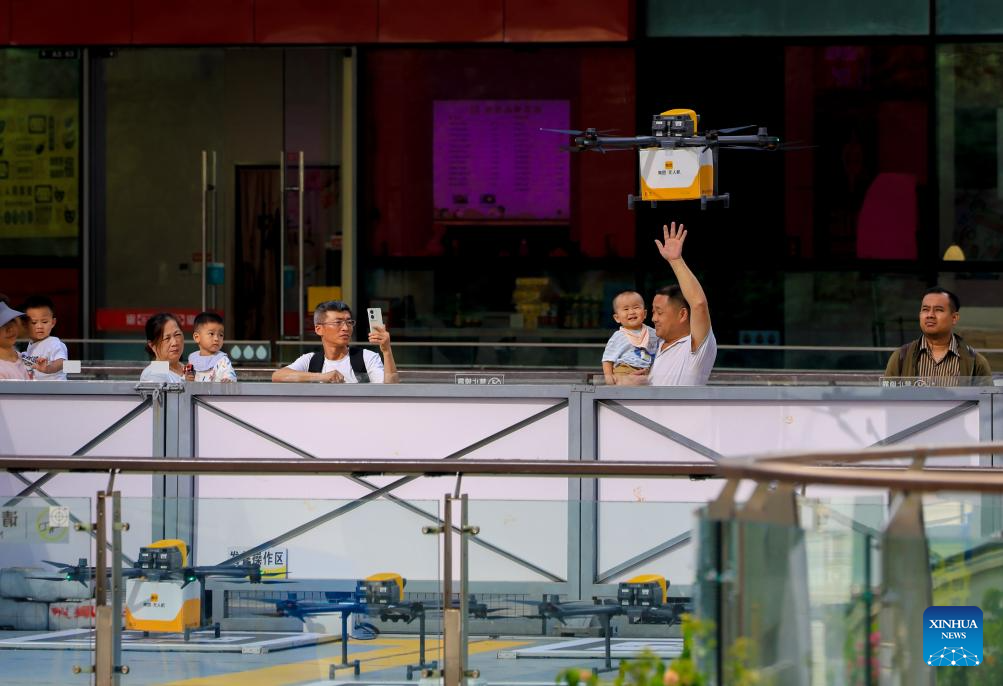
People watch a drone delivering takeout food at a drone takeoff point of Meituan, a major online lifestyle platform in China, in Shenzhen, south China's Guangdong Province, May 6, 2026. South China's tech hub of Shenzhen now stands as a leading manufacturing base for unmanned aerial vehicles, producing 70 percent of China's consumer drones and 50 percent of its industrial drones.
The expansion of Shenzhen's low-altitude sector is fueled by the city's increasing investment in sci-tech innovation. From 2020 to 2024, Shenzhen's total R&D investment grew from 151.08 billion yuan to 245.31 billion yuan, representing an average annual growth of 12.9 percent.
China's low-altitude economy has gained substantial momentum since being recognized as a new growth driver in the 2024 government work report.
The outline of the 15th Five-Year Plan (2026-2030) calls for the healthy and orderly development of the low-altitude economy, improved precision in low-altitude airspace management, and proactive efforts to expand low-altitude consumption. (Xinhua/Mao Siqian)
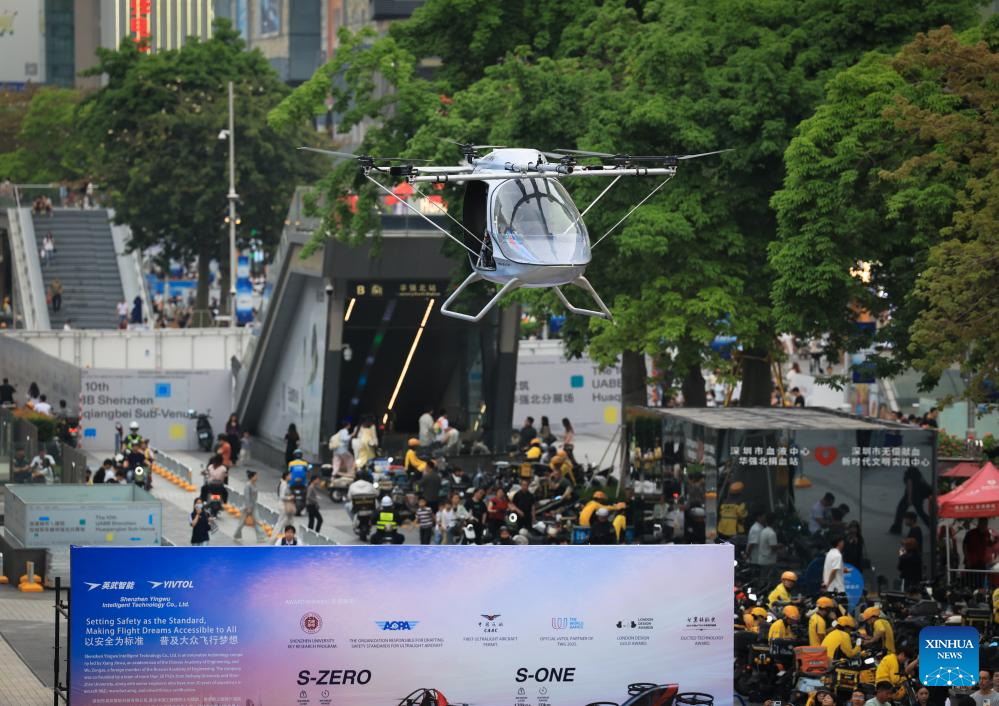
People watch a demonstration flight of Smart Drone's ultra light eVTOL on a street in Huaqiangbei of Shenzhen, south China's Guangdong Province, May 2, 2026. South China's tech hub of Shenzhen now stands as a leading manufacturing base for unmanned aerial vehicles, producing 70 percent of China's consumer drones and 50 percent of its industrial drones.
The expansion of Shenzhen's low-altitude sector is fueled by the city's increasing investment in sci-tech innovation. From 2020 to 2024, Shenzhen's total R&D investment grew from 151.08 billion yuan to 245.31 billion yuan, representing an average annual growth of 12.9 percent.
China's low-altitude economy has gained substantial momentum since being recognized as a new growth driver in the 2024 government work report.
The outline of the 15th Five-Year Plan (2026-2030) calls for the healthy and orderly development of the low-altitude economy, improved precision in low-altitude airspace management, and proactive efforts to expand low-altitude consumption. (Xinhua/Mao Siqian)
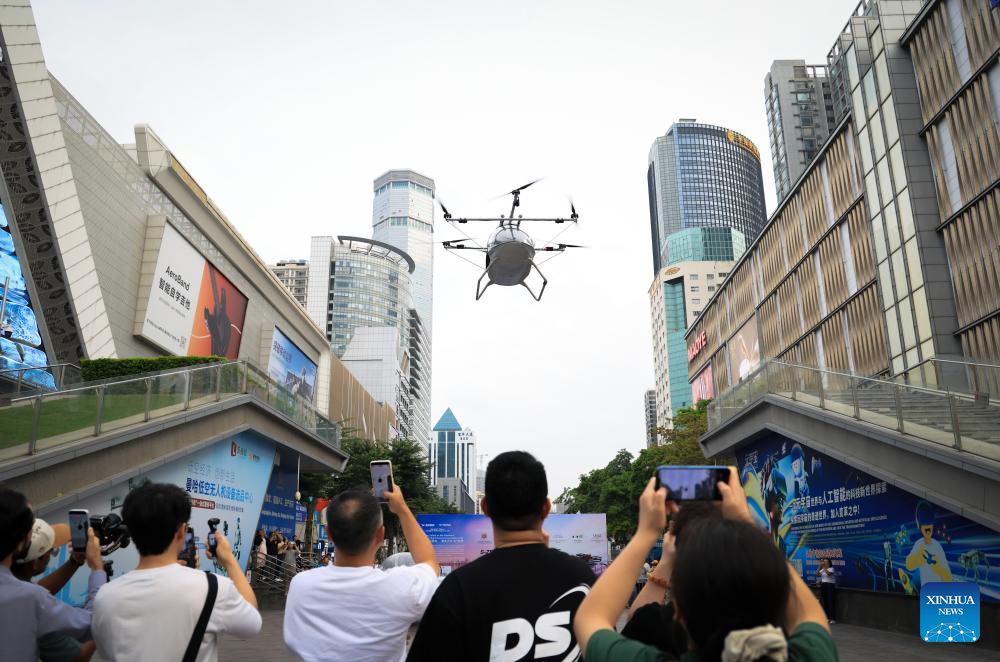
People watch a demonstration flight of Smart Drone's ultra light eVTOL on a street in Huaqiangbei of Shenzhen, south China's Guangdong Province, May 2, 2026. South China's tech hub of Shenzhen now stands as a leading manufacturing base for unmanned aerial vehicles, producing 70 percent of China's consumer drones and 50 percent of its industrial drones.
The expansion of Shenzhen's low-altitude sector is fueled by the city's increasing investment in sci-tech innovation. From 2020 to 2024, Shenzhen's total R&D investment grew from 151.08 billion yuan to 245.31 billion yuan, representing an average annual growth of 12.9 percent.
China's low-altitude economy has gained substantial momentum since being recognized as a new growth driver in the 2024 government work report.
The outline of the 15th Five-Year Plan (2026-2030) calls for the healthy and orderly development of the low-altitude economy, improved precision in low-altitude airspace management, and proactive efforts to expand low-altitude consumption. (Xinhua/Mao Siqian)
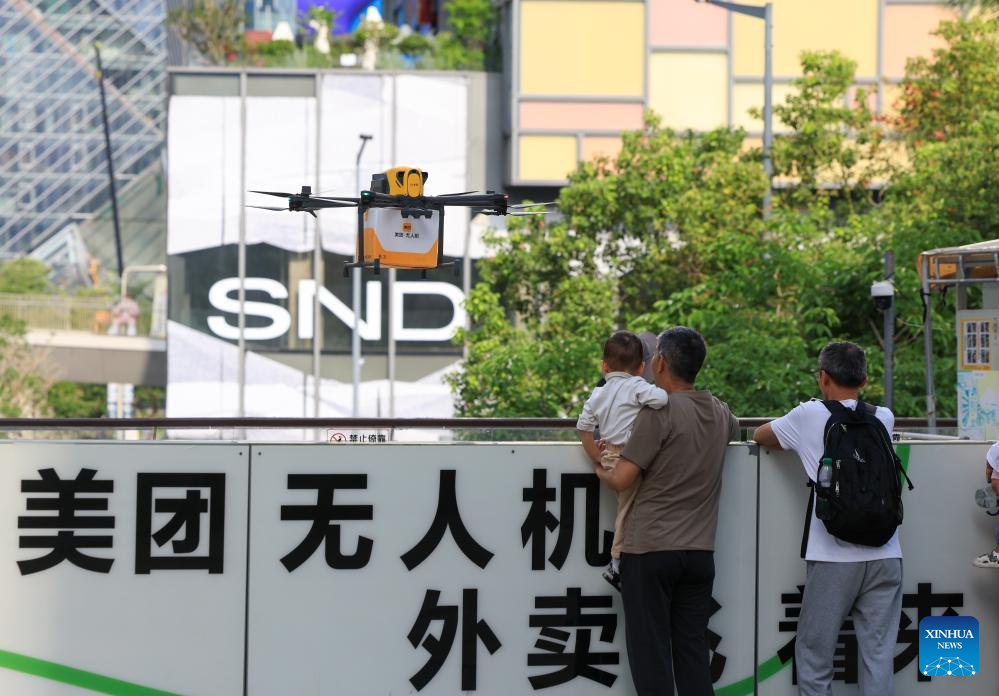
People watch a drone delivering takeout food at a drone takeoff point of Meituan, a major online lifestyle platform in China, in Shenzhen, south China's Guangdong Province, May 6, 2026. South China's tech hub of Shenzhen now stands as a leading manufacturing base for unmanned aerial vehicles, producing 70 percent of China's consumer drones and 50 percent of its industrial drones.
The expansion of Shenzhen's low-altitude sector is fueled by the city's increasing investment in sci-tech innovation. From 2020 to 2024, Shenzhen's total R&D investment grew from 151.08 billion yuan to 245.31 billion yuan, representing an average annual growth of 12.9 percent.
China's low-altitude economy has gained substantial momentum since being recognized as a new growth driver in the 2024 government work report.
The outline of the 15th Five-Year Plan (2026-2030) calls for the healthy and orderly development of the low-altitude economy, improved precision in low-altitude airspace management, and proactive efforts to expand low-altitude consumption. (Xinhua/Mao Siqian)
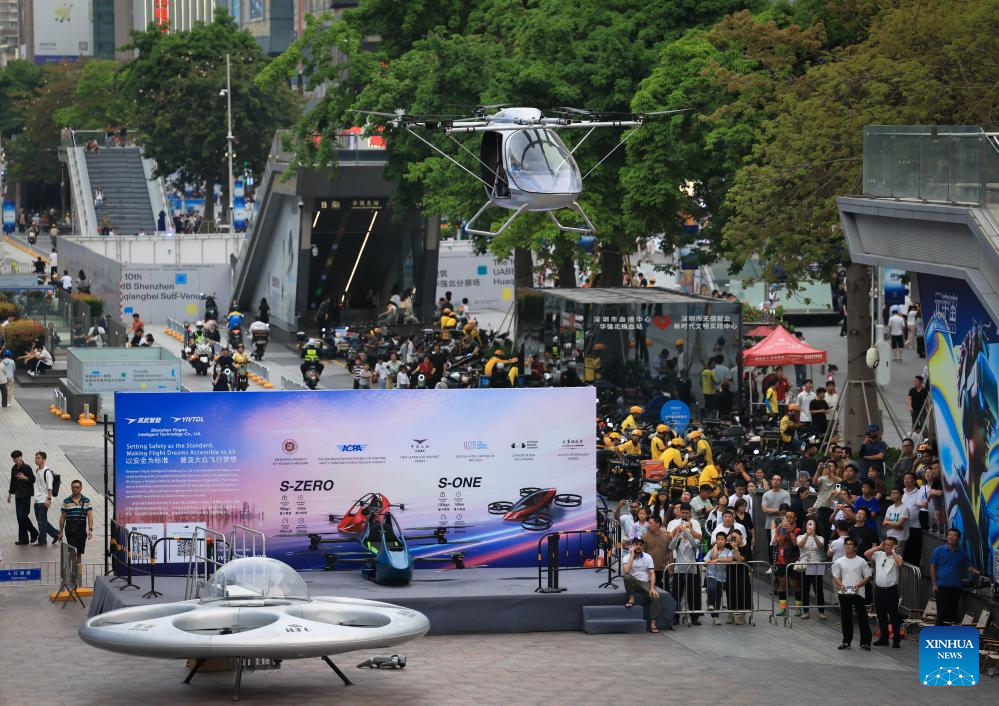
People watch a demonstration flight of Smart Drone's ultra light eVTOL on a street in Huaqiangbei of Shenzhen, south China's Guangdong Province, May 2, 2026. South China's tech hub of Shenzhen now stands as a leading manufacturing base for unmanned aerial vehicles, producing 70 percent of China's consumer drones and 50 percent of its industrial drones.
The expansion of Shenzhen's low-altitude sector is fueled by the city's increasing investment in sci-tech innovation. From 2020 to 2024, Shenzhen's total R&D investment grew from 151.08 billion yuan to 245.31 billion yuan, representing an average annual growth of 12.9 percent.
China's low-altitude economy has gained substantial momentum since being recognized as a new growth driver in the 2024 government work report.
The outline of the 15th Five-Year Plan (2026-2030) calls for the healthy and orderly development of the low-altitude economy, improved precision in low-altitude airspace management, and proactive efforts to expand low-altitude consumption. (Xinhua/Mao Siqian)
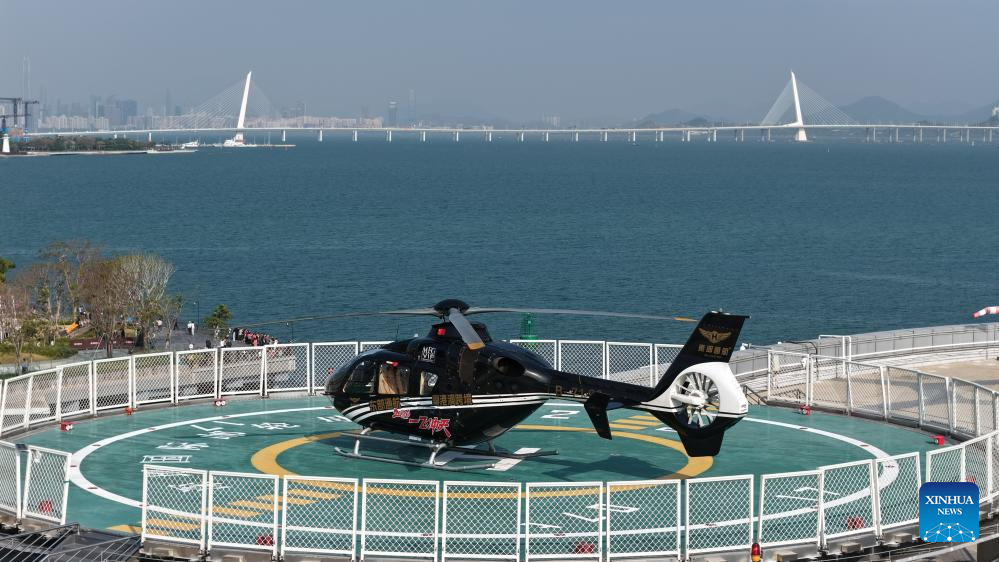
This photo taken on Feb. 22, 2026 shows a helicopter from Heli-Eastern, a low-altitude general aviation carrier and helicopter service provider, parking on the helipad of Shenzhen international cruise home port in Shenzhen, south China's Guangdong Province. South China's tech hub of Shenzhen now stands as a leading manufacturing base for unmanned aerial vehicles, producing 70 percent of China's consumer drones and 50 percent of its industrial drones.
The expansion of Shenzhen's low-altitude sector is fueled by the city's increasing investment in sci-tech innovation. From 2020 to 2024, Shenzhen's total R&D investment grew from 151.08 billion yuan to 245.31 billion yuan, representing an average annual growth of 12.9 percent.
China's low-altitude economy has gained substantial momentum since being recognized as a new growth driver in the 2024 government work report.
The outline of the 15th Five-Year Plan (2026-2030) calls for the healthy and orderly development of the low-altitude economy, improved precision in low-altitude airspace management, and proactive efforts to expand low-altitude consumption. (Heli-Eastern/Handout via Xinhua)

A drone show is staged over Shenzhen Talent Park in Shenzhen, south China's Guangdong Province, March 12, 2026. South China's tech hub of Shenzhen now stands as a leading manufacturing base for unmanned aerial vehicles, producing 70 percent of China's consumer drones and 50 percent of its industrial drones.
The expansion of Shenzhen's low-altitude sector is fueled by the city's increasing investment in sci-tech innovation. From 2020 to 2024, Shenzhen's total R&D investment grew from 151.08 billion yuan to 245.31 billion yuan, representing an average annual growth of 12.9 percent.
China's low-altitude economy has gained substantial momentum since being recognized as a new growth driver in the 2024 government work report.
The outline of the 15th Five-Year Plan (2026-2030) calls for the healthy and orderly development of the low-altitude economy, improved precision in low-altitude airspace management, and proactive efforts to expand low-altitude consumption. (Shenzhen Talent Park/Handout via Xinhua)
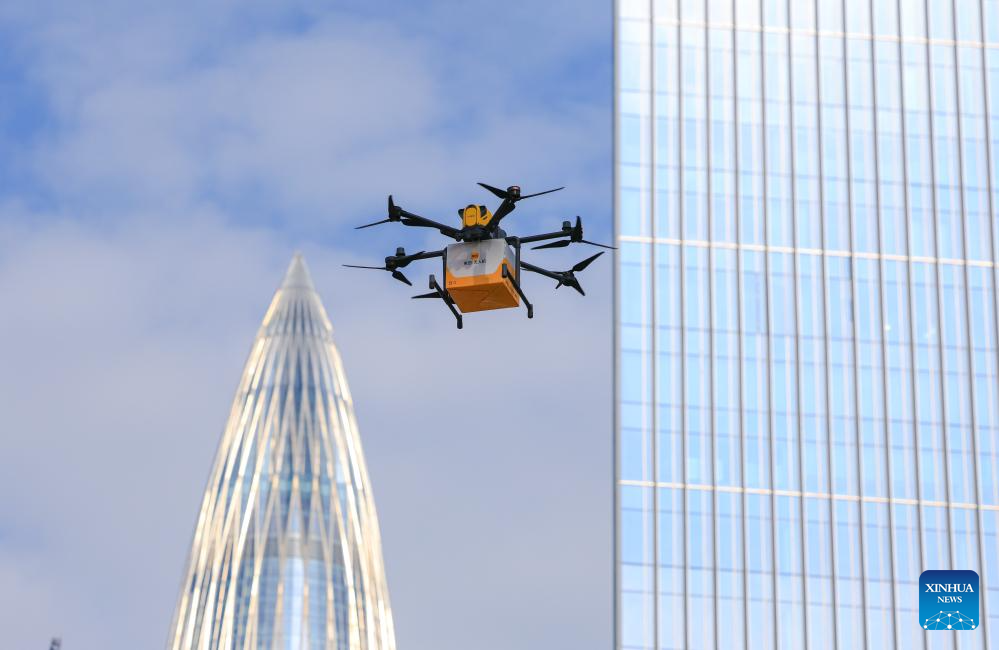
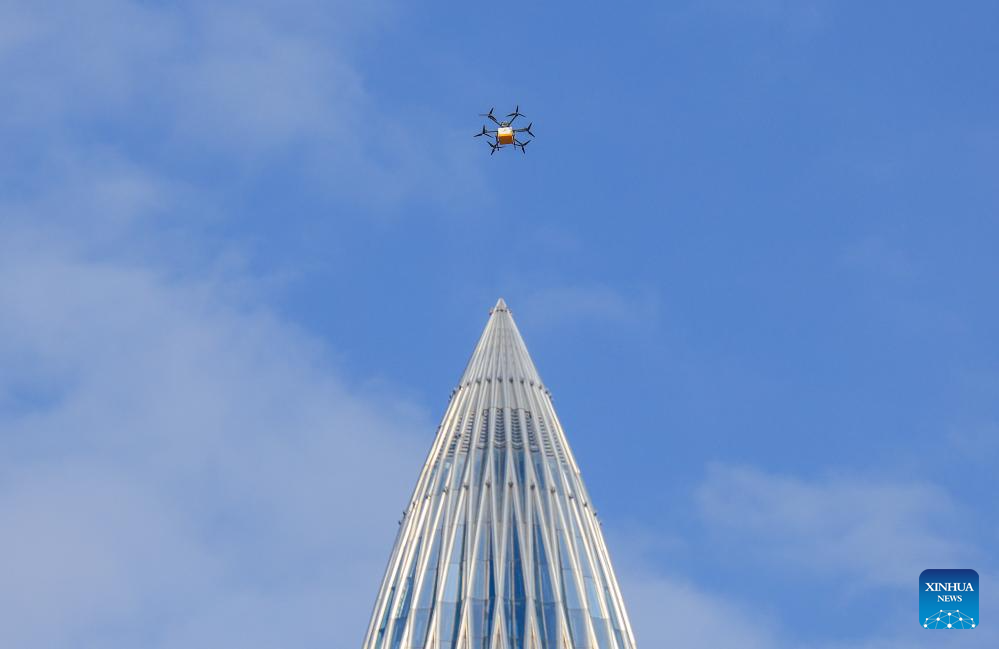
This photo taken on May 6, 2026 shows a drone delivering takeout food in Shenzhen, south China's Guangdong Province. South China's tech hub of Shenzhen now stands as a leading manufacturing base for unmanned aerial vehicles, producing 70 percent of China's consumer drones and 50 percent of its industrial drones.
The expansion of Shenzhen's low-altitude sector is fueled by the city's increasing investment in sci-tech innovation. From 2020 to 2024, Shenzhen's total R&D investment grew from 151.08 billion yuan to 245.31 billion yuan, representing an average annual growth of 12.9 percent.
China's low-altitude economy has gained substantial momentum since being recognized as a new growth driver in the 2024 government work report.
The outline of the 15th Five-Year Plan (2026-2030) calls for the healthy and orderly development of the low-altitude economy, improved precision in low-altitude airspace management, and proactive efforts to expand low-altitude consumption. (Xinhua/Mao Siqian)
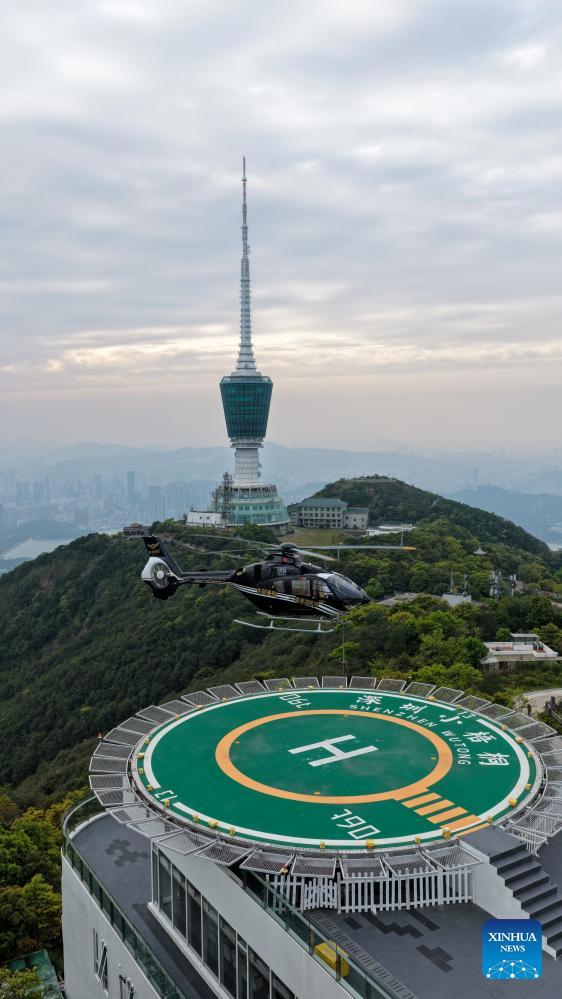
This photo taken on March 17, 2026 shows a helicopter from Heli-Eastern, a low-altitude general aviation carrier and helicopter service provider, flying on the low-altitude tour route linking downtown Shenzhen and the outskirts Wutong Mountain, in Shenzhen, south China's Guangdong Province. South China's tech hub of Shenzhen now stands as a leading manufacturing base for unmanned aerial vehicles, producing 70 percent of China's consumer drones and 50 percent of its industrial drones.
The expansion of Shenzhen's low-altitude sector is fueled by the city's increasing investment in sci-tech innovation. From 2020 to 2024, Shenzhen's total R&D investment grew from 151.08 billion yuan to 245.31 billion yuan, representing an average annual growth of 12.9 percent.
China's low-altitude economy has gained substantial momentum since being recognized as a new growth driver in the 2024 government work report.
The outline of the 15th Five-Year Plan (2026-2030) calls for the healthy and orderly development of the low-altitude economy, improved precision in low-altitude airspace management, and proactive efforts to expand low-altitude consumption. (Heli-Eastern/Handout via Xinhua)

People watch a drone show at Shenzhen Talent Park in Shenzhen, south China's Guangdong Province, March 12, 2026. South China's tech hub of Shenzhen now stands as a leading manufacturing base for unmanned aerial vehicles, producing 70 percent of China's consumer drones and 50 percent of its industrial drones.
The expansion of Shenzhen's low-altitude sector is fueled by the city's increasing investment in sci-tech innovation. From 2020 to 2024, Shenzhen's total R&D investment grew from 151.08 billion yuan to 245.31 billion yuan, representing an average annual growth of 12.9 percent.
China's low-altitude economy has gained substantial momentum since being recognized as a new growth driver in the 2024 government work report.
The outline of the 15th Five-Year Plan (2026-2030) calls for the healthy and orderly development of the low-altitude economy, improved precision in low-altitude airspace management, and proactive efforts to expand low-altitude consumption. (Shenzhen Talent Park/Handout via Xinhua)
 A single purchase