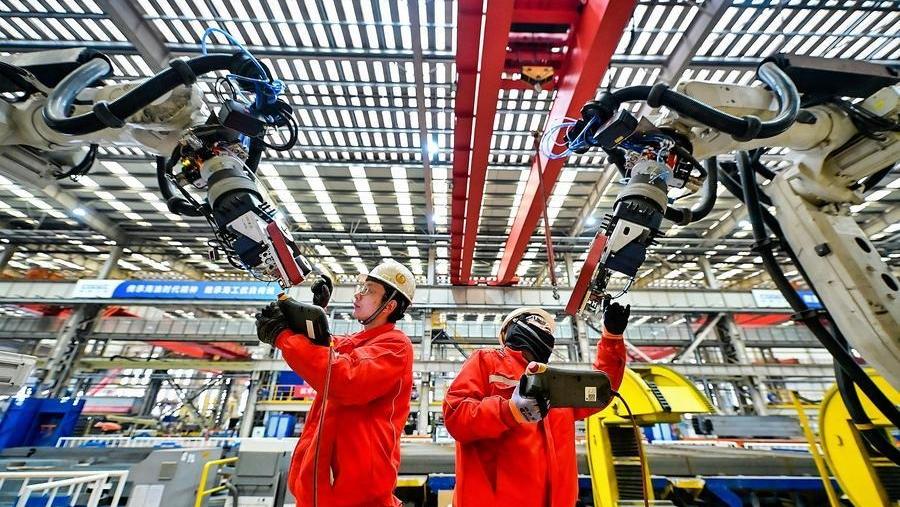



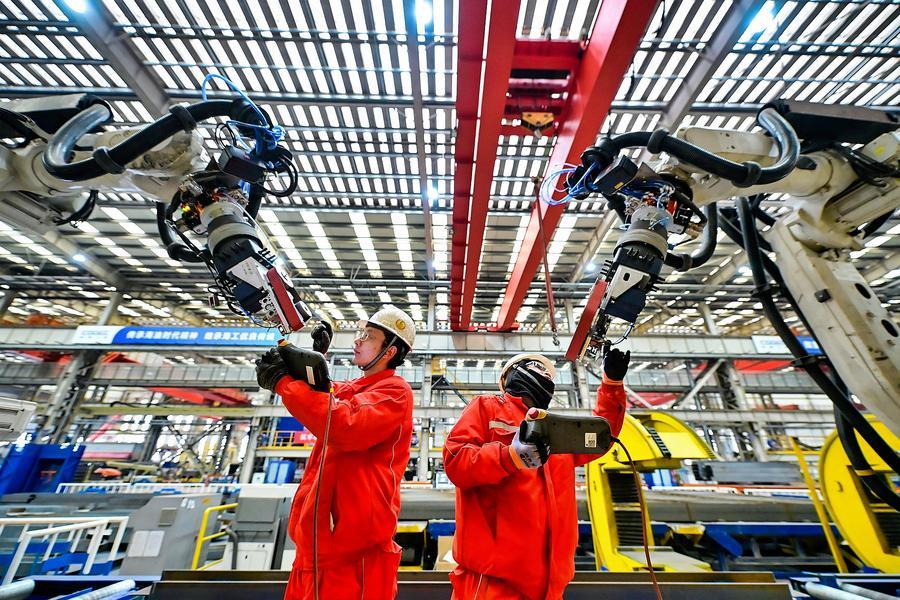
Workers operate robots at an offshore oil and gas platform at the Binhai New Area, in north China's Tianjin on Jan. 29, 2026. (Photo by Du Penghui/Xinhua)
Many international experts view China's approach as an effective blend of efficient state governance and market-economy elements, including support for entrepreneurship and protection of investors' and private property rights, a Kazakh expert said.
ASTANA, March 11 (Xinhua) -- China's achievements over the past decade can be described as "exceptionally successful," reflecting the strength of a governance model that combines long-term strategic planning with market mechanisms, said Rakhim Oshakbayev, director of Kazakhstan's "TALAP" Center for Applied Research.
Many international experts view China's approach as an effective blend of efficient state governance and market-economy elements, including support for entrepreneurship and protection of investors' and private property rights, Oshakbayev said in an interview with Xinhua.
"This has produced impressive results," he said, citing not only industrial development and China's position as one of the world's leading manufacturing and exporting economies, but also rapid improvements in people's well-being.
Referring to World Bank data, Oshakbayev said China has lifted around 800 million people out of poverty over recent decades, commending it as an unprecedented achievement in human history.
He also highlighted China's sustained investment in innovation, noting that research and development spending has amounted to about 2.8 percent of GDP in 2025, helping integrate scientific and technological advances into industrial development and economic modernization.
Amid rising protectionism globally, Oshakbayev said China has played an important role in supporting free trade and multilateral cooperation, not least by upholding the rules-based international trading system, opposing tariff wars and unilateral restrictions, and promoting open markets and stable global supply chains.
Looking ahead to China's 15th Five-Year Plan (2026-2030), he expects continued emphasis on technological upgrading, including broader use of artificial intelligence, automation and digitalization across industries to boost productivity and competitiveness.
Oshakbayev also praised China's progress in green development and renewable energy, depicting the country as a key driver of the global energy transition and a major supplier of clean-energy technologies.
He expressed optimism that China's future development will further promote inclusive globalization and shared prosperity and that broader international cooperation will help advance the building of a community with a shared future for humanity.
 A single purchase