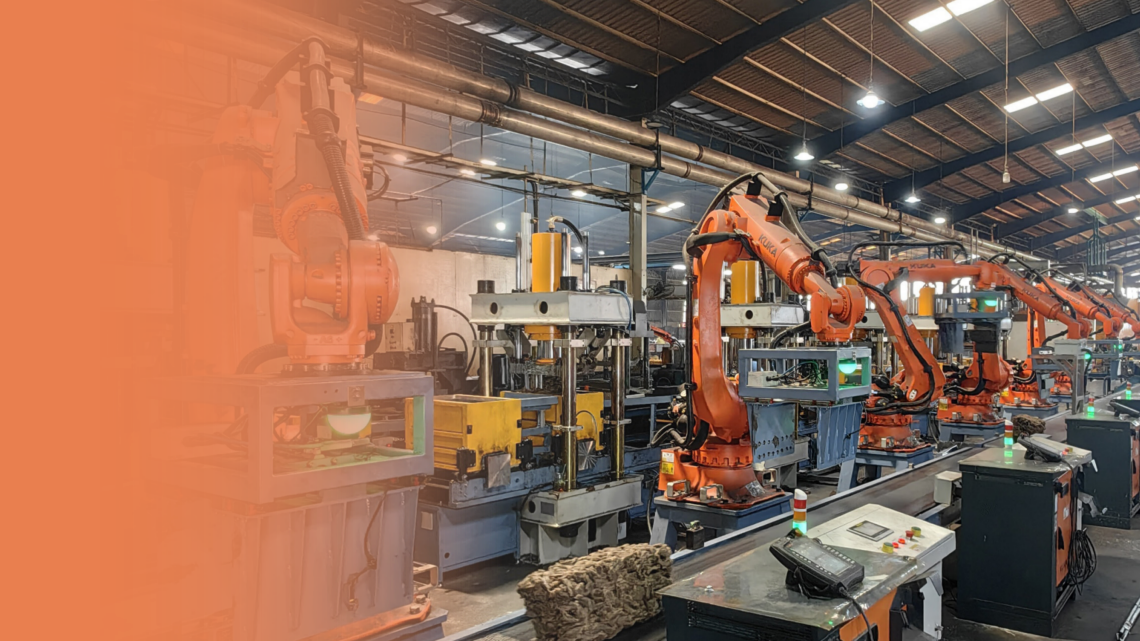



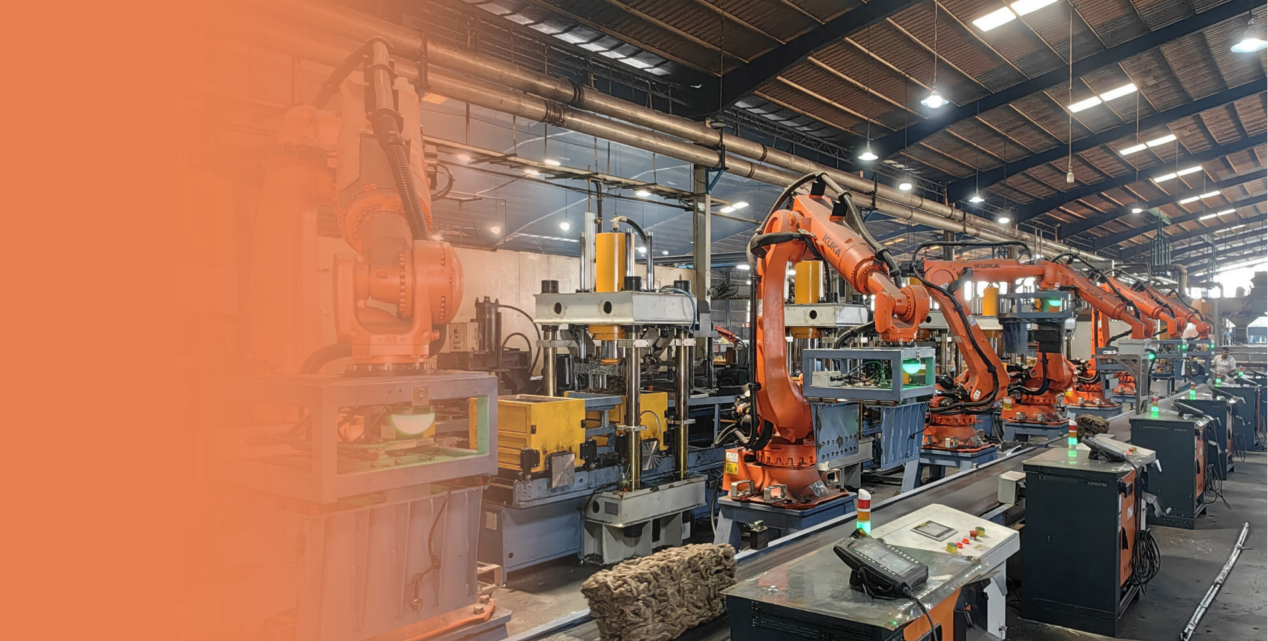
An intelligent natural rubber processing solution is deployed at a Malaysian enterprise.
In the semi-automated workshop of Malaysia's largest natural rubber processor, the traditional production mode was once highly labor-intensive. Today, Guangdong Ruobo Intelligent Robot Co., Ltd., leveraging its own small-model AI algorithms and high-precision servo drive control system, is custom-building smart factories for rubber enterprises in Malaysia, quietly initiating a smart manufacturing revolution across the agricultural and industrial sectors in Malaysia.
Using AI to Conquer Irregular Rubber Block Handling Challenges
Natural rubber is an indispensable raw material for manufacturing tires, medical tubing and even aerospace components. Yet, certain processing stages in the rubber industry have long depended on labor-intensive manual work. In Malaysia, the rubber industry is grappling with rising labor costs.
Seng Fong Holdings Berhad, a natural rubber processor with an annual output of roughly 200,000 tonnes, accounting for over 20% of Malaysia's national rubber exports, has been no exception. "In the past, the latter half of our production line — from the drying kiln all the way through to packaging — was basically all manual," said Er Hock Lai, the company's chairman. "After finding Guangdong Ruobo and conducting in-depth discussions, we soon decided to cooperate. We met in 2024, and the first upgraded production line went into operation in January 2025. It took just 10 months."
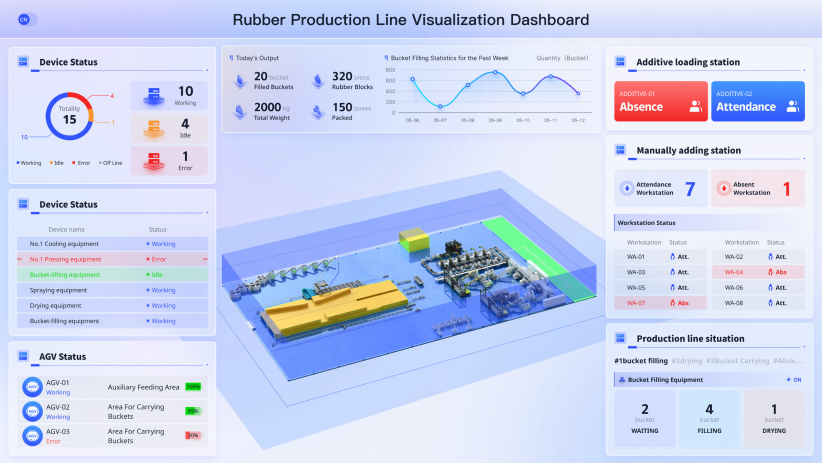
The digital central control management platform for the rubber production line.
Li Lanyun, founder of Guangdong Ruobo Intelligent Robot Co., Ltd., compares the popular large AI models on the market to liberal arts students who are adept at handling language and images, but likens his company's independently developed small-model AI to a science student, built specifically for precise control and concrete task execution by robots operating in dynamic, non-standardized physical environments.
"Our core technology has two parts. The first is the robot's drive and control algorithm, the 'cerebellum' of the robot that governs the precision and fluidity of its movements; the second is the AI algorithm, the 'cerebrum' that is responsible for perception, decision-making and planning," Li explained, adding that these two sets of fully self-developed foundational algorithms allow Ruobo to achieve a seamless closed loop from underlying logic to user application.
To tackle the challenge of irregularly shaped rubber blocks in processing, the project team deployed 3D cameras and laser scanning equipment along the production line, paired with its AI algorithm, giving the robotic arms "eyes" and a "brain." The system identifies in real time the shape, position and estimated weight of each complex-shaped rubber block, and then autonomously determines how to grasp 35 kilograms of rubber for compression molding.
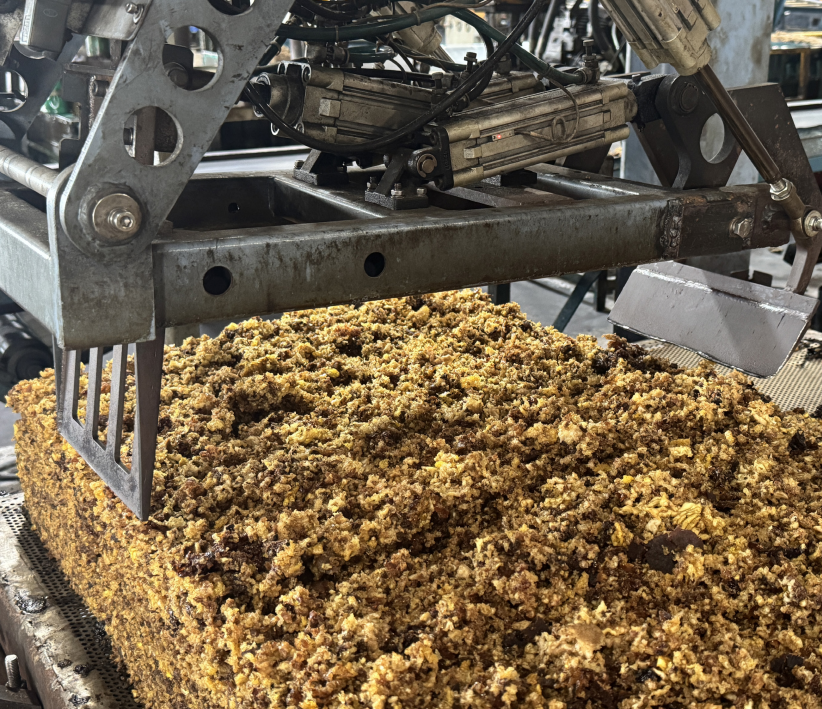
An AI-powered production line automatically transfers semi-finished rubber blocks between workstations.
Accelerating Smart Transformation in Rubber Processing: From One Production Line to Multiple Production Lines
At the start of 2025, the first upgraded production line became operational in Malaysia. The labor costs on the line fell by 20% to 30%. "Now, beyond the essential operators, it's enough to have another two or three engineers to supervise the production line. Overall factory management efficiency has improved dramatically. The production capacity and product quality of the entire line have taken a qualitative leap," Er Hock Lai said. With the success of the first line's upgrade, Seng Fong promptly initiated upgrades on the second and third lines.
The Malaysian government has explicitly designated AI, robotics and automation as priority areas for the digital transformation and resource optimization of the rubber industry. Chinese AI solutions are now being integrated into a broad range of manufacturing scenarios, helping drive local industrial upgrading.
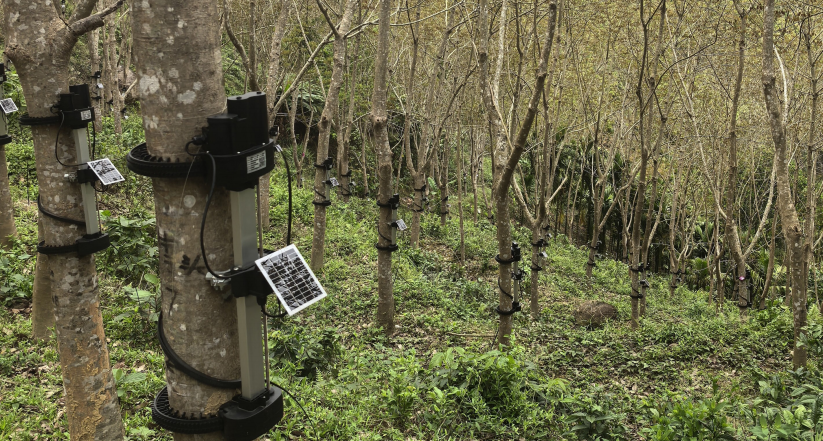
The natural rubber plantations where the automated tapping machines have been deployed.
Expanding the Business Scope from Smart Rubber Processing to Diverse Applications
It is learned that small-model AI technology has already been deployed in Malaysia across several projects, with intelligent rubber processing, automated rubber tapping and smart industrial park management projects all running steadily. The project team is also working to crack the challenge of making an unmanned rubber tapper to tackle the labor shortage in the tapping process. From palm cultivation, durian farming and harvesting, product traceability and deep processing, to intelligent poultry farming, small-model AI technology is rapidly extending into a wide range of industrial applications.
"The traditional industrial robot market is saturating, and humanoid robots are still searching for their use scenarios. Our approach is to solve customers' most pressing problems at one-tenth of the cost," said Li Lanyun.
From tackling challenges in rubber processing to empowering industrial upgrading, China's small-model AI technology is writing a vivid chapter in the transformation of traditional manufacturing — and the path of AI empowerment is growing ever broader. (Meng Yingru)
 A single purchase