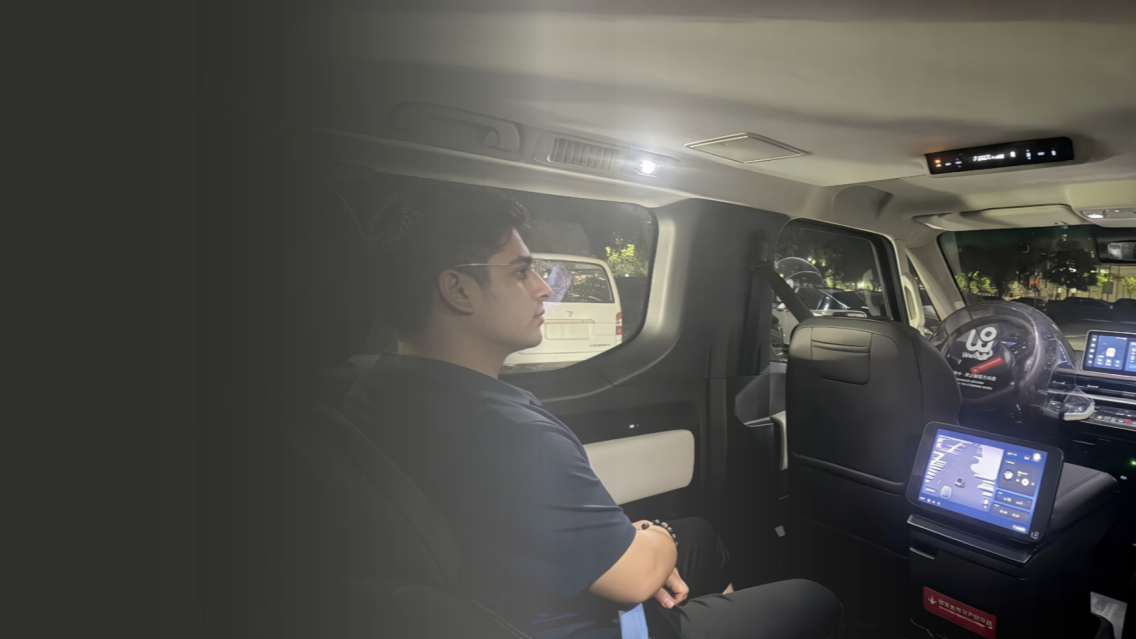



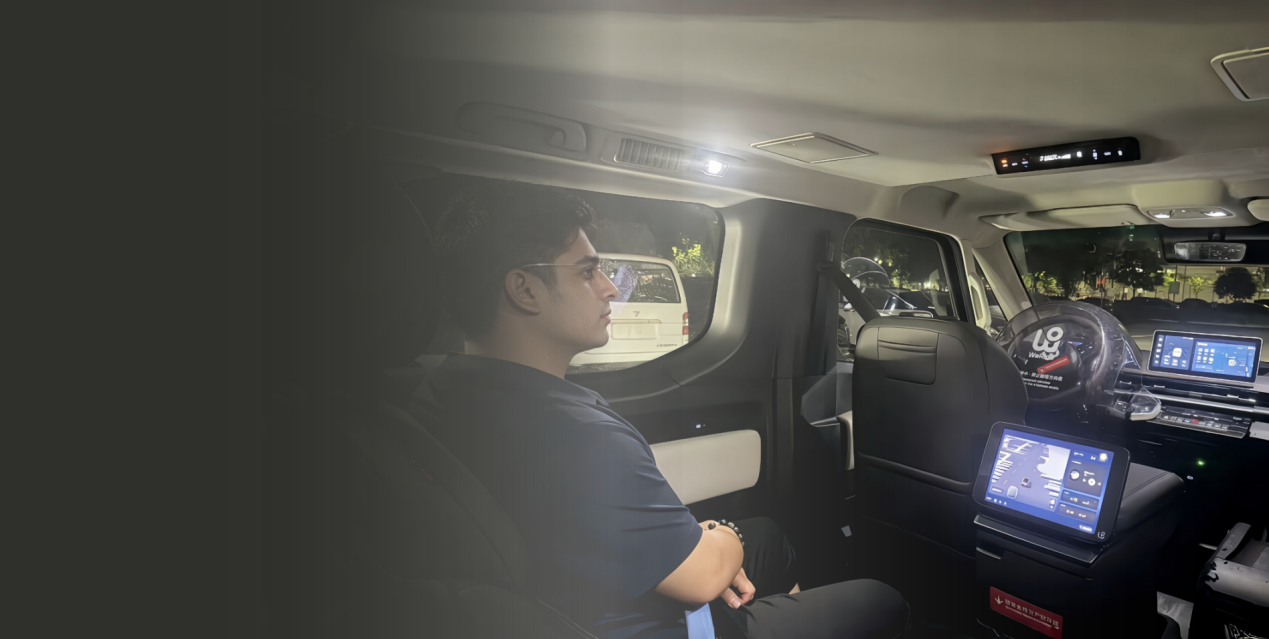
A passenger is riding in an autonomous vehicle.
Under the scorching sun of the Arabian Peninsula, a web of modern urban roads stretches in every direction. Along busy city streets, an autonomous driving vehicle weaves through traffic with ease. It operates entirely on its own, precisely avoids pedestrians, changes lanes in an orderly fashion, and navigates nimbly through the flow of cars. This is not a scene from a science fiction film, but a real scene of urban transportation in today's United Arab Emirates (UAE).
Behind this scene lies a remarkable journey: China's homegrown Level 4 autonomous driving technology has traveled across mountains and seas to take root in the Arabian Peninsula, bringing residents here an experience of smart mobility.
"AI + Mobility": Empowering Autonomous Driving in the UAE
This cross-border cooperation perfectly demonstrates the two countries' complementarity, as China's technological strengths snugly meet the UAE's needs for transformation. The UAE has long stood at the forefront of digital transformation and placed technological innovation and smart transportation among its core development priorities, with autonomous driving serving as a key to building cities of the future and improving public services.
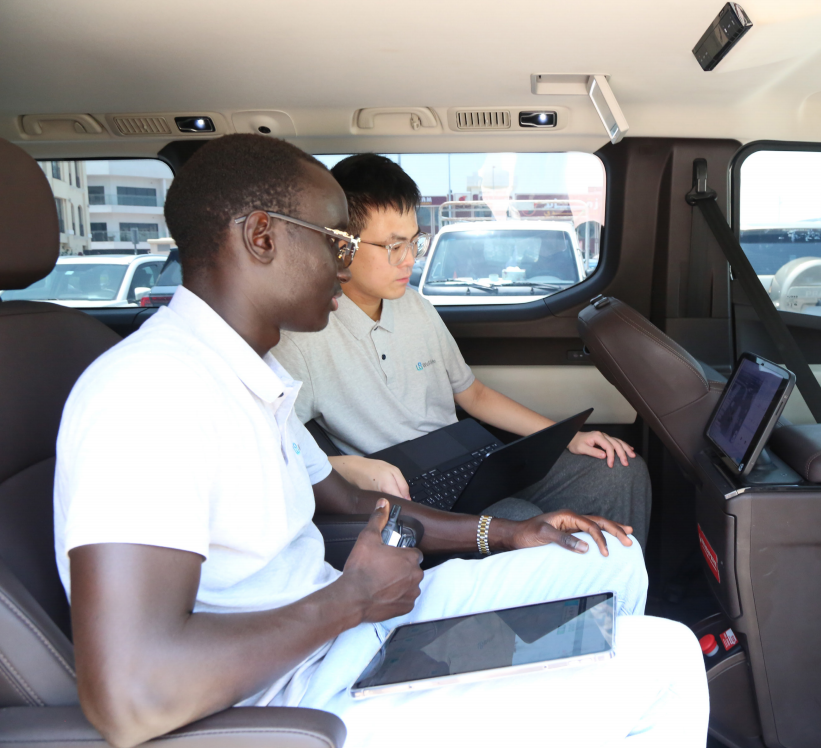
A Chinese engineer and a local safety supervisor carry out technological testing together inside a car. (Photo provided by Wen Xinnian)
In 2021, Abu Dhabi's Integrated Transport Centre launched a city-wide autonomous driving pilot program, seeking mature and reliable technological solutions from around the globe. In the same year, the full-stack Level 4 autonomous driving technology developed by Guangzhou-based autonomous driving company WeRide proved a precise match for the region's core needs, making it one of the first Chinese autonomous driving companies to put its technology into practice in the UAE.
The Chinese team started operations in the UAE with its technology, experience, standards, utmost sincerity and solid technological strength, helping it earn profound recognition. In July 2023, the UAE government granted the Chinese company the Middle East's first national license for autonomous driving road operation covering all areas and all vehicle types, permitting it to test and operate on public roads across all of the UAE's emirates. In October 2025, the UAE awarded the company the city-level Level 4 fully driverless commercial license, meaning that a safety attendant was no longer needed inside the vehicle and that its vehicles truly realized driverless autonomous operation.
"Expanding the operating area of Robotaxi service marks an important milestone in Abu Dhabi's journey toward realizing its vision for a smarter and safer mobility system," said Abdulla Hamad AlGhfeli, acting director general of the Integrated Transport Centre. "We are working to extend the deployment of autonomous driving vehicles to high-density areas such as Al Reem and Al Maryah islands, in order to provide a safer and more efficient travel experience."
Iterative Technology Breakthroughs for Autonomous Driving in Complex Environments
Every step forward for Chinese autonomous driving technology in the UAE has been steeped in the team's sweat and perseverance day after day, and the extreme environment was one of the challenges they faced. From April to October each year, local temperatures frequently exceed 40 degrees Celsius, with surface temperatures approaching 70 degrees Celsius. Under such conditions, ordinary onboard sensors and computing platforms can fail to work. Frequent sandstorms can also obscure sensor perception, affecting positioning and recognition accuracy. On top of this, local traffic and travel habits and the road-sign system differ from those in China, and the AI algorithms had once struggled to adapt to the unfamiliar conditions.
To address these challenges, the Chinese team plunged headlong into the blazing sun, working shoulder to shoulder with local technologists to build tailored solutions. They not only solved the problem of vehicles being unable to run stably and continuously in high-temperature conditions, but also achieved centimeter-level positioning accuracy in sandstorms. Through thousands of field tests, they adapted the vehicles to local traffic rules and travel habits, ultimately integrating the autonomous driving technology seamlessly with desert urban scenarios.
While refining the technology, the Chinese team also served as a member of the infrastructure, regulations and pilot acceleration working group under Abu Dhabi's Smart and Autonomous Systems Council, taking full part in the formulation and refinement of key standards for local autonomous-driving road infrastructure, safety norms and operational oversight, and helping advance the standardized and sustainable development of the city's smart transportation system.
Integrating with Uber to Achieve Commercial Deployment of Robotaxi Services
Technological R&D and iteration have ultimately transformed into a pleasant travel experience. In December 2024, Robotaxi was formally integrated into the Uber platform. In November 2025, the commercial operation of fully driverless Robotaxi service was launched in Abu Dhabi, enabling local residents to experience the mobility revolution brought by AI technology. In March 2026, the project team rolled out its fully driverless Robotaxi commercial service in Dubai.
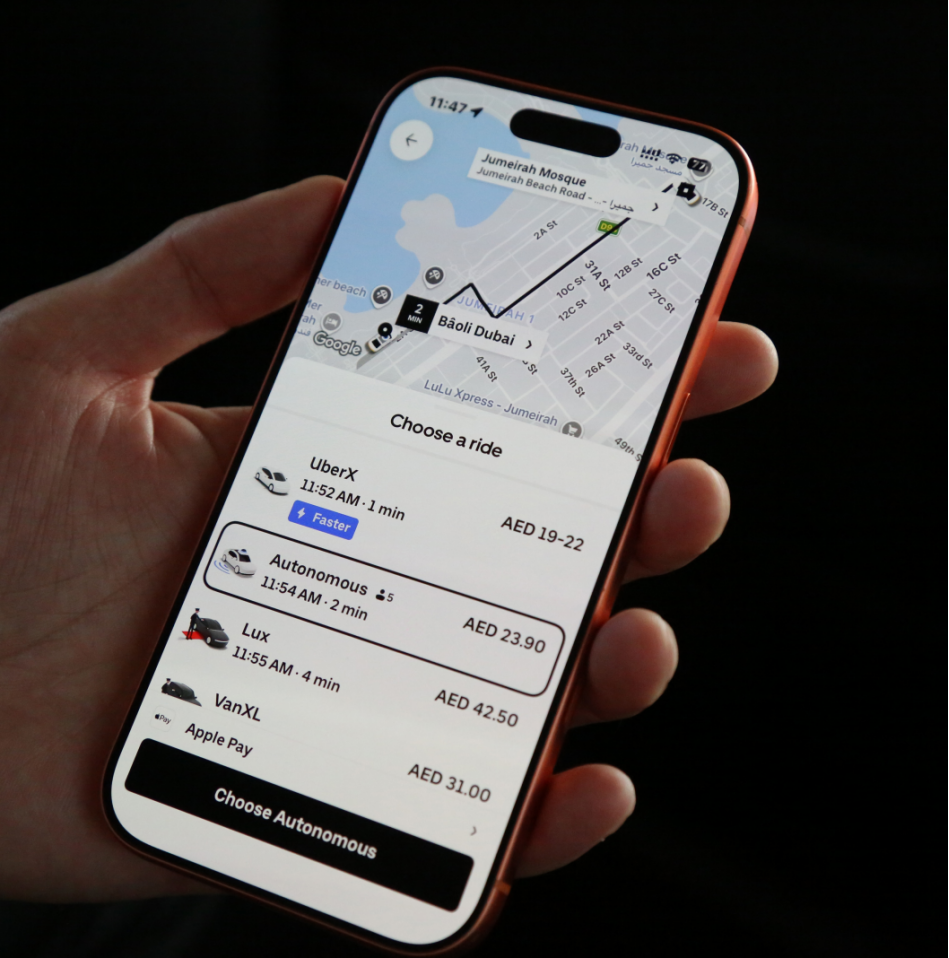
A user hails a Robotaxi using the Uber app. (Photo provided by Wen Xinnian)
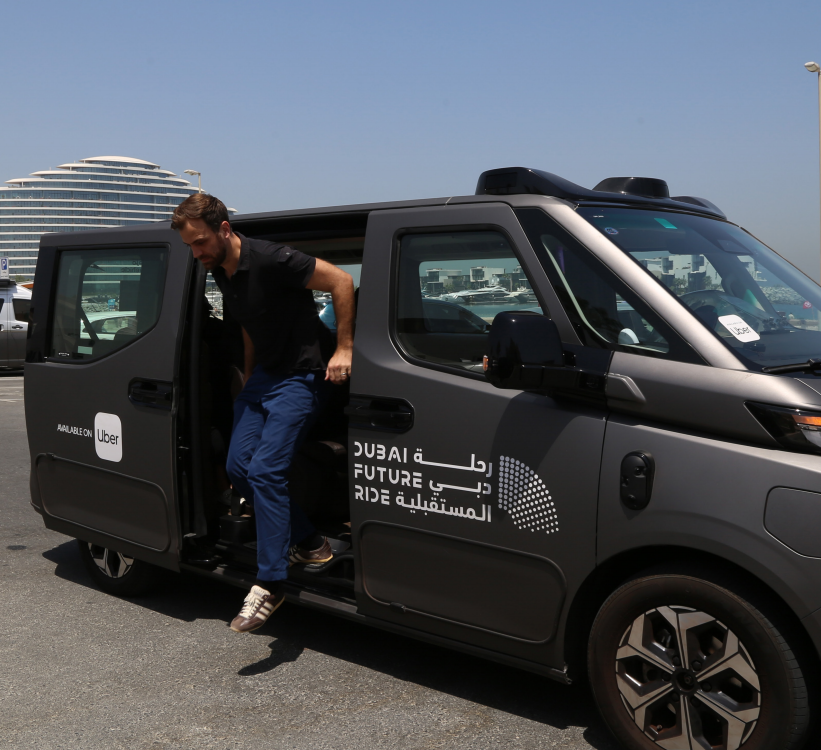
In June 2026, a passenger rides in an autonomous driving vehicle Robotaxi. (Photo provided by Wen Xinnian)
Mohamad Jardaneh, in charge of Uber's autonomous driving mobility business in the Middle East, said: "We've seen some great engagement from riders in Abu Dhabi since the launch of the Robotaxi service. Now, we hope to make autonomous mobility accessible to even more residents."
Since regular operations began, the autonomous driving fleet's services have filled gaps in transport capacity during holidays, effectively making up for shortfalls in urban transit capacity. They have greatly enhanced the convenience and efficiency of travel for both residents and visitors, becoming an important complement to the city's public transportation system.
After taking a ride in a Robotaxi, a local resident said: "At first I was a little scared, but the car performs so well that it makes me feel very safe. Hailing a ride is convenient every time, as I just need to set the starting point and destination in the app. It's so easy."
Today, on the streets of Abu Dhabi and Dubai, people are truly feeling the changes that AI technology has brought to their lives. For local residents, autonomous driving taxis offer a more convenient and efficient travel option, while foreign tourists do not need to worry about language or routes as a single tap is all it takes to reach the city's major attractions. At the same time, intelligent algorithms optimize driving routes, sharply reducing energy consumption and exhaust emissions and thereby contributing to low-carbon development. In the future, as more application scenarios take shape, China's autonomous driving solutions will deepen partnerships with more nations to jointly unfold a brand-new landscape of global smart mobility. (Zhang Luxi)
 A single purchase