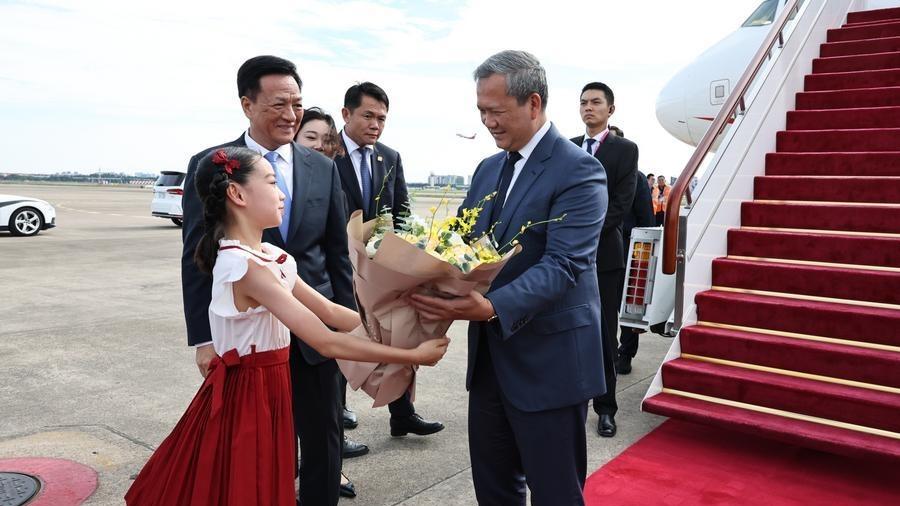



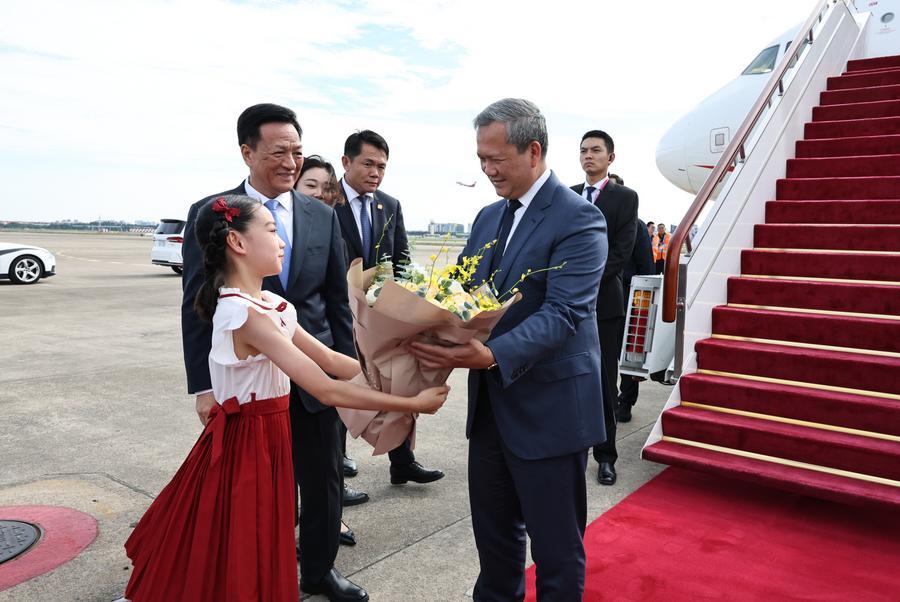
Cambodian Prime Minister Hun Manet, who is in China to attend the 2026 World AI Conference and High-Level Meeting on Global AI Governance, arrives in Shanghai, east China, July 16, 2026. (Xinhua/Fang Zhe)
by Joseph Matthews
As Cambodia and China mark 68 years of diplomatic relations, their bilateral relationship has evolved significantly.
Established on July 19, 1958, through the historic engagement of the previous generations of leaders of the two countries, bilateral relations have withstood changing international dynamics.
By sharing weal and woe, both sides have forged an ironclad friendship that remains a precious asset for both nations and their peoples.
What began as early diplomatic solidarity has transformed into a robust economic partnership and, ultimately, an unbreakable ironclad friendship.
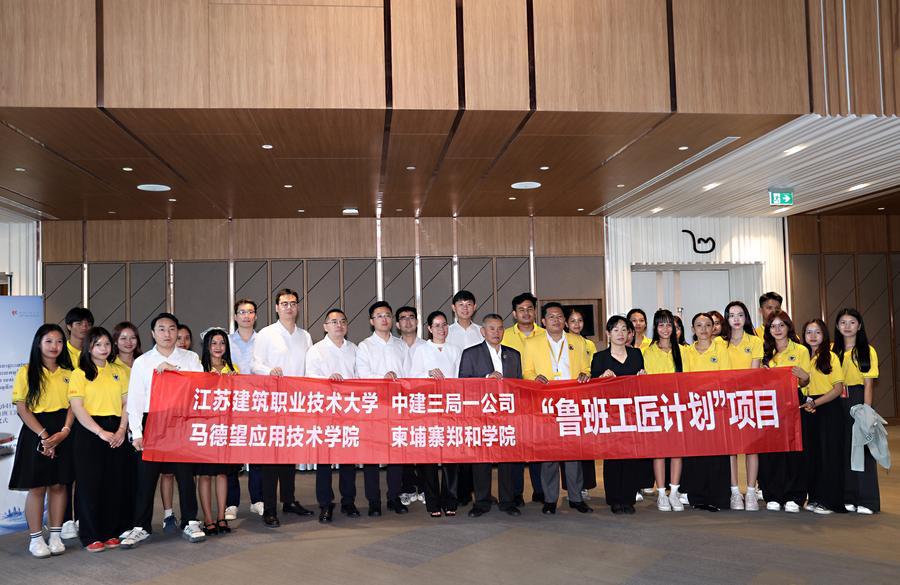
College representatives and students pose for a group photo during the Luban Construction Workshop College's 2026 academic program opening ceremony in Phnom Penh, Cambodia on June 29, 2026. (by Phearum/Xinhua)
The concept of an ironclad friendship signifies a mutual commitment to preserving strategic stability and providing core support, regardless of global geopolitical evolution.
Both nations have consistently adhered to the Five Principles of Peaceful Coexistence, multilateralism, and close coordination within regional frameworks like the ASEAN-China mechanisms and the Lancang-Mekong Cooperation.
Cambodia became an early partner in the China-proposed Belt and Road Initiative (BRI) following its launch in 2013. Under the BRI and complementary bilateral agreements, economic cooperation between the two countries has facilitated major infrastructure and trade projects in three main areas: the industrial development corridor, transport and connectivity, and trade integration.
Centered around the Sihanoukville Special Economic Zone, the industrial development corridor helps transform Cambodia's coastal Preah Sihanouk province into a premier manufacturing and export hub.
As a result of infrastructure cooperation, major expressways, deep-sea ports, international airports, hydropower plants, key bridges and national roads have been built in Cambodia.
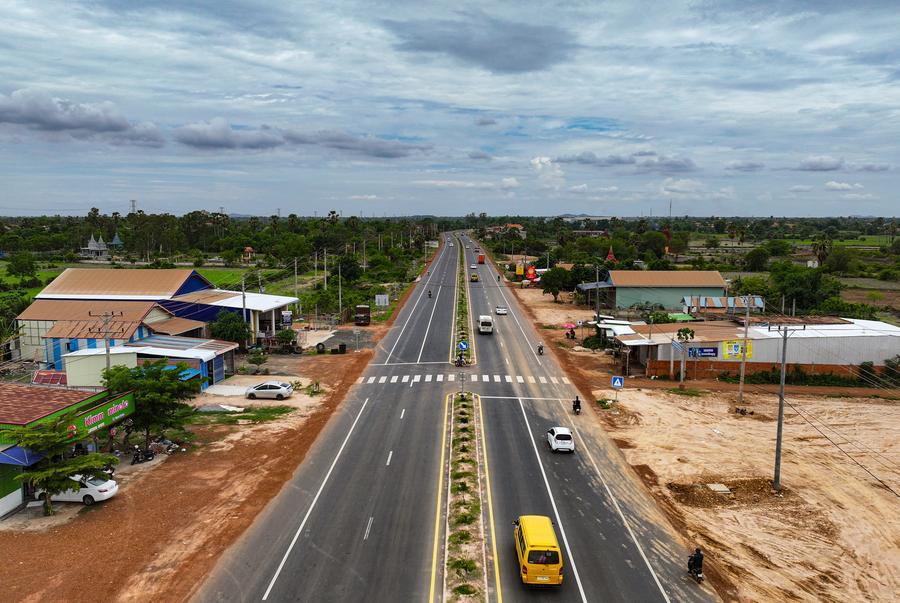
An aerial drone photo taken on May 29, 2026 shows a section of National Road 7 in Kampong Cham province, Cambodia. (Photo by Nitola/Xinhua)
Concurrently, the China-Cambodia Free Trade Agreement and the Regional Comprehensive Economic Partnership have granted Cambodian goods greater access to the Chinese market, making China Cambodia's primary trading partner and a main source of foreign direct investment.
Beyond the BRI, the bilateral partnership was further underpinned by the "Diamond Hexagon" cooperation framework, which has boosted engagement in six priority areas: politics, production capacity, agriculture, energy, security, and people-to-people exchanges.
The framework continues to inject strong momentum into building an all-weather Cambodia-China community with a shared future in the new era to a higher level.
Moving forward, the cooperation between the two countries will continue to deepen. Besides relying on high-level political rapport, relations are increasingly embedded in institutionalized, multi-sectoral integration designed for long-term durability.
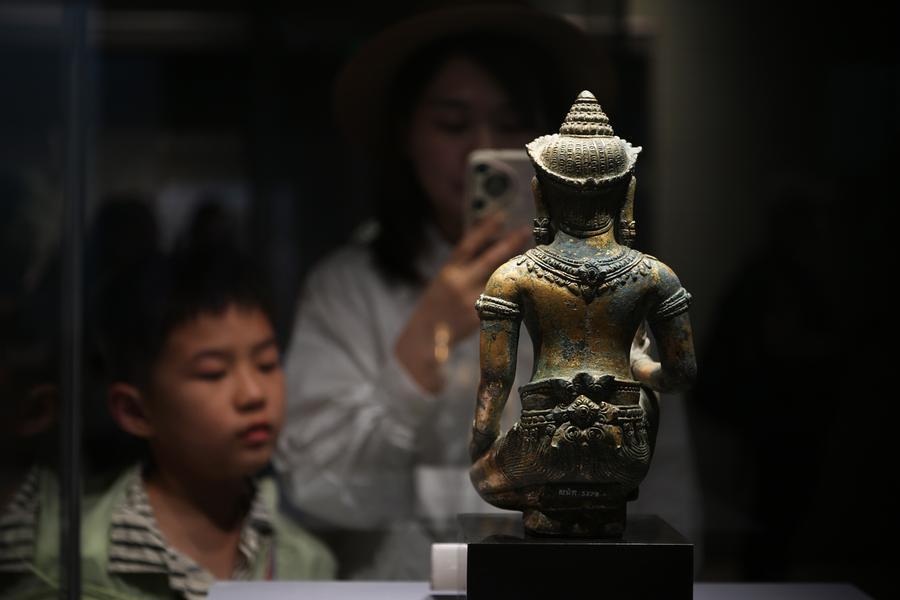
Visitors watch a piece of cultural relics during an exhibition displaying treasures from Cambodia at Shanxi Museum in Taiyuan, north China's Shanxi Province, June 5, 2026. (Xinhua/Hu Qiusi)
The 68-year relationship between the two Asian countries has reached a new high, characterized by an ironclad friendship and a deeply rooted and mutually beneficial community with a shared future.
Editor's note: Joseph Matthews is a senior professor at the BELTEI International University in Phnom Penh, Cambodia.
The views expressed in this article are those of the author and do not necessarily reflect those of Xinhua News Agency.
 A single purchase