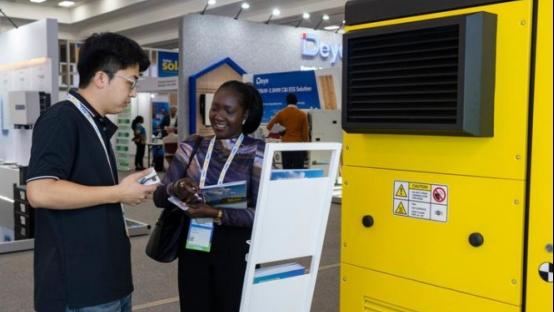



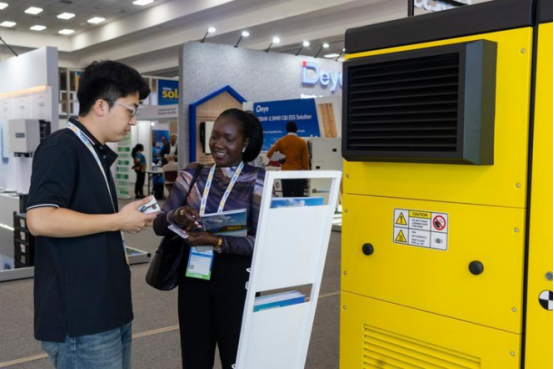
A visitor learns about products at the booth of Sicon Chat Union Electric Co., Ltd. during Intersolar Africa 2026 in Nairobi, Kenya, Feb. 3, 2026. (Xinhua/Xie Jianfei)
Africa stands at a critical turning point in its economic development journey. For decades, many African economies have relied heavily on the export of raw materials, with limited domestic industrial capacity to transform these resources into higher-value goods. This structure has constrained job creation, slowed technological advancement, and left economies vulnerable to global price fluctuations. Today, however, new opportunities are emerging to reshape this trajectory, one of the most significant being the Belt and Road Initiative (BRI).
The BRI represents a bold vision of global connectivity and shared development. Through investments in infrastructure, trade networks, and industrial cooperation, it has opened new pathways for African countries to accelerate industrial growth. For Africa, where infrastructure gaps have long hindered economic transformation, the BRI offers not just funding, but a framework for building the foundations of industrialization.
-- Africa's industrial challenge
Industrialization has long been recognized as a key driver of sustainable economic growth. Yet, across much of Africa, structural barriers continue to limit progress. One of the most pressing challenges is inadequate infrastructure. Poor road networks, limited rail connectivity, inefficient ports, and unreliable electricity supply all increase the cost of doing business and discourage industrial investment.
In countries like Nigeria, these challenges are particularly evident. Despite abundant natural resources, the lack of sufficient energy infrastructure and refining capacity has meant that crude oil is often exported, only to be re-imported as refined products. This reflects a broader issue across the continent: the inability to move up the value chain.
Additionally, access to long-term financing remains limited, and institutional inefficiencies often complicate large-scale industrial projects. These challenges highlight the need for strategic partnerships that can provide both capital and technical expertise areas where the BRI has begun to play an important role.
-- Understanding the BRI
Proposed by China in 2013, the BRI is a global development strategy aimed at enhancing connectivity through infrastructure development, trade facilitation, and investment cooperation. It spans multiple regions, including Asia, Europe, and Africa, and focuses on building networks that enable smoother flows of goods, services, and capital.
For African countries, participation in the BRI has translated into increased access to financing for critical infrastructure projects. More importantly, it has encouraged deeper economic cooperation, fostering partnerships that go beyond traditional aid models and instead emphasize mutual development and shared growth.
-- How BRI supports industrial growth in Africa
The impact of the BRI on Africa's industrial landscape can be understood through several key channels which are:
· Infrastructure development
Infrastructure is the backbone of industrialization, and this is where the BRI has had its most visible impact. Across Africa, Chinese-supported projects have contributed to the construction of railways, highways, ports, and power plants. These developments reduce transportation costs, improve logistics efficiency, and create a more conducive environment for manufacturing.
For example, modern railway systems have significantly reduced travel time between major cities and ports, enabling faster movement of goods. Improved port facilities have also enhanced trade capacity, allowing African countries to better integrate into global supply chains.
· Investment and financing
One of the major constraints to industrial growth in Africa has been limited access to capital. The BRI addresses this gap by providing financing for large-scale projects that might otherwise be difficult to fund. These investments often come with long-term perspectives, supporting projects that contribute to sustained economic development.
This influx of capital has enabled governments to undertake ambitious infrastructure and industrial projects, laying the groundwork for broader economic transformation.
· Industrial parks and manufacturing zones
Another important contribution of the BRI is the development of industrial parks and special economic zones. These areas are designed to attract both local and foreign investors by offering improved infrastructure, streamlined regulations, and access to markets.
Countries like Ethiopia have leveraged such zones to build thriving manufacturing sectors, particularly in textiles and other light industry. These developments not only create jobs but also facilitate knowledge transfer and skill development, which are essential for long-term industrial growth.
· Technology and skills transfer
Beyond physical infrastructure, the BRI also promotes the exchange of knowledge and technology. Through partnerships with Chinese firms, African workers and professionals gain exposure to new production techniques, management practices, and technological innovations.
This transfer of skills is critical for building local capacity and ensuring that industrial growth is sustainable. Over time, it empowers African countries to become more self-reliant and competitive in the global economy.
-- Case studies across Africa
Across the continent, the influence of the BRI can be seen in various projects that are shaping industrial development.
In Nigeria, investments in transportation and energy infrastructure are gradually improving the business environment. While challenges remain, these projects signal a shift toward addressing long-standing bottlenecks that have limited industrial expansion.
In Ethiopia, industrial parks developed with foreign collaboration have transformed the country into a growing manufacturing hub. These parks have attracted global companies, created thousands of jobs, and positioned Ethiopia as a key player in Africa's industrial future.
Similarly, in Kenya, major railway projects have enhanced connectivity between inland regions and coastal ports, facilitating trade and supporting industrial activities. These examples demonstrate how strategic infrastructure investments can unlock broader economic potential.
-- Key Belt and Road projects driving industrial growth in Africa
Across Africa, the impact of the BRI can be clearly observed through several important infrastructure and industrial projects. These projects not only enhance connectivity but also create the foundation for long-term industrial development.
One of the most prominent examples is the Mombasa-Nairobi Standard Gauge Railway in Kenya, which connects the country's largest port to its capital city. This railway has significantly reduced travel time and transportation costs, improving the efficiency of goods movement and strengthening Kenya's position as a regional trade hub. By facilitating faster and more reliable logistics, it directly supports industrial activity and export growth.
The Ethiopia-Djibouti standard gauge railway plays a crucial role in linking Ethiopia, one of Africa's fastest-growing industrial economies to the Port of Djibouti. As a landlocked country, Ethiopia relies heavily on this railway for access to international markets. The project has enhanced trade capacity and supported the expansion of industrial parks, making it a cornerstone of the country's manufacturing ambitions.
In Nigeria, the Abuja-Kaduna Railway represents a major step toward modernizing the nation's transport infrastructure. As the first standard-gauge railway in the country, it has improved passenger mobility and reduced reliance on road transport. This development not only enhances economic activity between key cities but also contributes to broader efforts to strengthen Nigeria's industrial base.
Another significant project in Nigeria is the Lagos Rail Mass Transit Blue Line, an urban rail system designed to ease congestion in one of Africa's largest and busiest cities. By improving urban mobility, the project enhances productivity, reduces travel time, and creates a more efficient environment for businesses and industrial operations.
Beyond transport infrastructure, the Eastern Industrial Zone in Ethiopia highlights the role of the BRI in promoting manufacturing and industrialization. This industrial park has attracted both local and foreign investment, creating employment opportunities and enabling the production of export-oriented goods. It represents a shift toward value-added production, which is essential for sustainable economic growth in Africa.
These projects demonstrate how strategic investments under the BRI are not only improving infrastructure but also laying the groundwork for Africa's industrial transformation.
-- My perspective as an international student in China
As an international student studying in China, my understanding of the BRI has evolved beyond theoretical concepts into something much more tangible and meaningful. Living and studying in an environment where the BRI is actively discussed and implemented has given me a unique perspective on its potential.
What stands out most to me is the emphasis on connectivity not just in terms of infrastructure, but also in people-to-people exchanges. The BRI is not only about building roads and railways; it is also about building relationships, sharing knowledge, and fostering mutual understanding.
Coming from Nigeria, I see firsthand how initiatives like the BRI can create opportunities for countries to overcome long-standing developmental challenges. The focus on infrastructure, industrialization, and cooperation aligns closely with the needs of many African economies. It offers a pathway for transforming natural resource wealth into sustainable economic growth.
At the same time, my experience in China has shown me the importance of planning, discipline, and long-term vision in achieving development goals. These are lessons that can be valuable for African countries as they engage with global initiatives like the BRI.
Overall, I view the BRI as a positive and forward-looking framework, one that, if effectively implemented, can significantly contribute to China-Africa collaboration in industrial transformation and development in Africa.
-- Conclusion
Africa's journey toward industrialization is both necessary and urgent. By addressing critical infrastructure gaps, providing investment, and fostering knowledge exchange, the BRI has the potential to serve as a catalyst for industrial growth across the continent.
However, the success of this transformation will depend on how these opportunities are managed. With strong governance, strategic planning, and a clear focus on long-term development, African countries can leverage the BRI to build resilient, diversified, and industrialized economies.
In this context, the BRI is more than just a development pathway, it is a bridge toward a future where Africa can fully realize its economic potential.
Editor's Note: This article is written by Firi Prince from Nigeria, who is now studying at the Belt and Road School at Beijing Normal University. The views expressed in this article are those of the author and do not necessarily reflect the positions of the Belt and Road Portal or Beijing Normal University.
 A single purchase