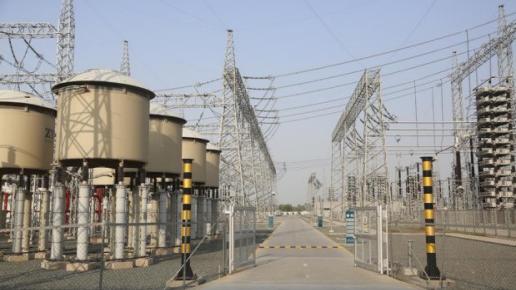



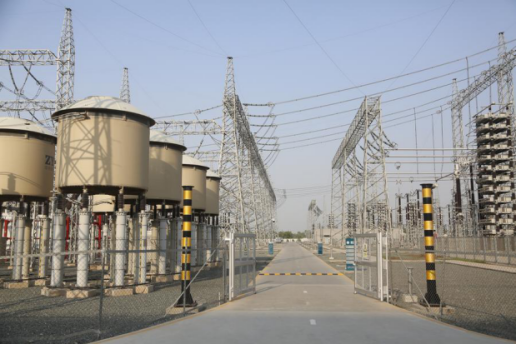
This photo taken on July 3, 2023 shows a view of the ±660kV Matiari-Lahore high-voltage direct current (HVDC) transmission project under the China-Pakistan Economic Corridor (CPEC) on the outskirts of Lahore, Pakistan. (Xinhua/Ahmad Kamal)
Being an MBA Student at Beijing Normal University (BNU) in China, I have attended lectures delivered by top-tier professors and leaders of their respective countries. Many of them once served as heads of governments coming from different parts of the world, like Kyrgyzstan, Serbia, Poland, and Bosnia and Herzegovina, teaching us leadership skills through their own particular experiences. Through this program, I expected to gain finance, economics, and management-related skills, but here, in addition to those skills, I also learned about leadership qualities, China's economic transformation, as well as Chinese language and culture. It has proven to be a truly remarkable journey of learning guided by a variety of brilliant professors.
As a Muslim living in China, my main concern before coming to China was the availability of halal food and access to Mosques. Here I found out that halal food can be found not only at university canteens, but also in many halal restaurants. Also, the Mosques here are fully functional. The reality is totally different from what is portrayed through Western media that practicing Islam is difficult in China. Here, I also enjoyed a lot of sporting and recreational facilities, like playing football and other sporting activities, along with my fellow international students. The Chinese are very friendly, cooperative, and welcoming people; that is the reason I was able to make Chinese friends.
In China, all the regions are rapidly growing in terms of infrastructure development and economic activities. This is the reason why China has brought more than 800 million out of poverty and also eradicated extreme poverty throughout the whole country. China conducts macro-fiscal redistribution to balance the development between more developed regions and other areas. This kind of policy should also be adopted in Pakistan for removing poverty and the development of underdeveloped regions.
China and Pakistan have a long history of friendly relations, and this year marks the 75th anniversary of Pakistan-China diplomatic relations. Pakistan-China friendship enhanced when both countries built the China-Pakistan Economic Corridor (CPEC) in 2013. That initiative changed the whole economic landscape of Pakistan and provided Pakistan with immense economic benefits. CPEC is a flagship project of China's Belt and Road Initiative (BRI). BRI is a global initiative proposed by China to promote infrastructure and economic development. It is proven to be a game-changing initiative not only for the economic development, but also for people-to-people and cultural exchange as well. The so-called debt trap narrative of the Western media is just built on false accusations that have been readily nullified through the successes of the BRI. In fact, the loans provided through BRI are mostly low to zero-interest loans directed towards infrastructure development in host countries.
China's investments significantly helped Pakistan to overcome its energy crisis that had existed before. The most important part was the rapid deployment and construction of those projects. The next phase of those projects is directed towards clean and green energy generation and investments in Pakistan's outdated transmission network infrastructure.
Working in the energy sector, I know the fact that China is a global leader in renewable energy, and it is helping towards the green energy transition throughout the world.
I used to be surprised by the fact that, while global enterprises were struggling with issues such as the high costs and relatively low efficiency of renewable energy equipment like solar panels and wind turbines, China came up with the solutions to those problems. Again, during my time in BNU, I got my answer that China was able to bring this revolutionary change because of the competition existing within Chinese corporations and an immense amount of research & development spending. These two factors are also primarily contributing to China's manufacturing industry to remain globally competitive, not just in renewable energy, but also in other sectors as well. Using the technological competence of China, Pakistan can significantly improve energy access in the underdeveloped region of Balochistan, and create job opportunities for the local people.
The Chinese industry in every sector is advancing in a swift manner, like the IT & AI, renewable energy, new energy vehicles, modern manufacturing, and now also in semiconductor chips. The investments and cooperation in each of the mentioned sectors, and especially in the energy sector and the mining & processing of rare earths, can be of utmost importance. The collaboration between Chinese and Pakistani enterprises in these sectors can be very fruitful for both nations. China's industry is developing at a rapid pace, and industry and agriculture have formed a complementary relationship. Pakistan is also a major agricultural country with abundant fertile arable land. Cooperation between the two countries in new technologies for boosting agricultural output will surely create a win-win situation.
Editor's Note: This article is written by Shayan Ali Siddiqui from Pakistan, who is now studying at the Belt and Road School at Beijing Normal University. The views expressed in this article are those of the author and do not necessarily reflect the positions of the Belt and Road Portal or Beijing Normal University.
 A single purchase