


As the global green transition enters a critical stage of "delivering on commitments and translating ambition into concrete action", South-South cooperation has become one of the most dynamic driving forces in international development. During the 30th session of the Conference of the Parties to the United Nations Framework Convention on Climate Change (COP30), the BRI International Green Development Coalition (hereinafter referred to as "BRIGC") organized a series of high level activities focused on South-South cooperation, green innovation, and green finance. These efforts showcased the latest practices of China and the Global South in deepening green cooperation and injected new momentum into global climate governance.
Opening a New Chapter Through Dialogue: South-South Collaboration Reunites in Belém
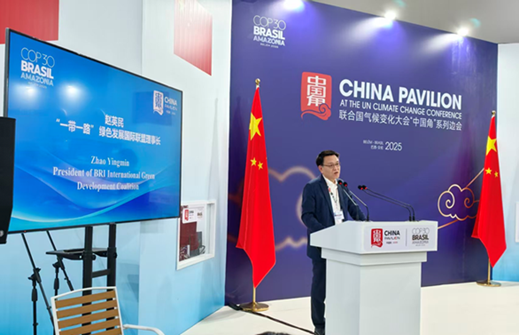
Belém became the center of global attention in November. Ministers from developing countries and leaders of international organizations gathered at the China Pavilion. On November 10, BRIGC, together with the Foreign Environmental Cooperation Center (FECO) of the Ministry of Ecology and Environment and the National Center for Climate Change Strategy and International Cooperation, co-hosted the High-Level Forum on South-South Cooperation on Climate Change, one of the highlights of this year's conference. Huang Runqiu, Minister of Ecology and Environment, André Corrêa do Lago, President of COP30, and other distinguished guests delivered remarks. Li Gao, Head of the Chinese Delegation and Vice Minister of Ecology and Environment, and Liu Zhenmin, China's Special Envoy for Climate Change, co chaired the forum. Zhao Yingmin, President of BRIGC, attended the event.
Huang Runqiu opened the forum by noting that climate change is a grave challenge faced by all humanity. In the face of headwinds in global climate governance caused by certain countries withdrawing from multilateral processes, strengthening South-South cooperation is critical for advancing global climate governance and fully implementing the United Nations Framework Convention on Climate Change and its Paris Agreement. As a responsible developing country, China has been committed to promoting South-South cooperation on climate change by implementing flagship initiatives such as the Africa Solar Belt Program, the China Clean Stove Initiative, and the Early Warning Initiative, and by developing low carbon demonstration zones and capacity building cooperation to help developing countries effectively address climate challenges.
André Corrêa do Lago, President of COP30, Ana Toni, Executive Director of COP30, Selwin Hart, Special Adviser to the UN Secretary General on Climate Action and Just Transition, Noura Hamladji, Deputy Executive Secretary of the UNFCCC, and Kitty van der Heijden, Deputy Executive Director of UNICEF, delivered remarks at the forum. They emphasized that South-South cooperation, with China as a leading contributor, is becoming an important driving force for the global green transition and expressed their willingness to continue strengthening practical cooperation with China in climate action.
Zhao Yingmin outlined three key areas for future cooperation: first, bridging the "green divide" by building an inclusive and equitable transition framework, second, fostering new drivers of green development through innovation, and third, deepening practical cooperation to jointly shape a fair, rational, and mutually beneficial global climate governance system.
From Conceptual Exchange to Mechanism Alignment: National Platform Cooperation Takes a Key Step Forward
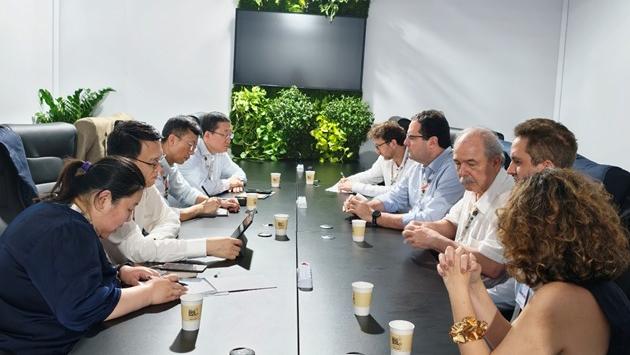
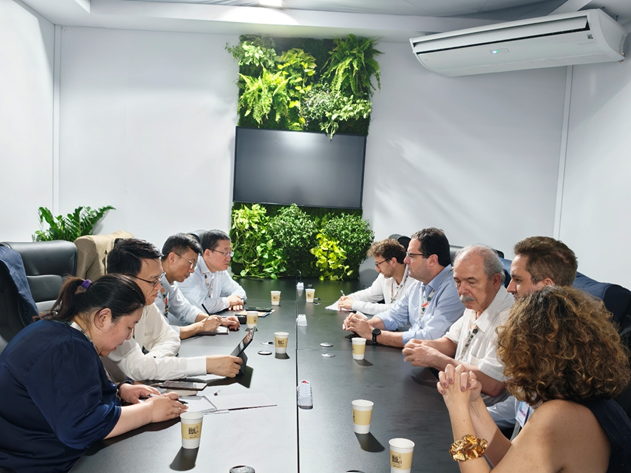
The following day, a meeting focused on platform alignment was held in Belém. Zhao Yingmin, President of BRIGC, met with Aloizio Mercadante, President of the Brazilian Development Bank (BNDES). The two sides plan to jointly promote the alignment between the Green Investment and Finance Partnership (GIFP) and the Brazil Climate and Ecological Transformation Investment Platform (BIP), the country platforms of China and Brazil, and to explore cooperation mechanisms, policy coordination, and joint project development. This engagement is not only an exchange between two institutions but also signifies the linkage between the Belt and Road Initiative and Brazil's national development strategies in advancing green transformation, setting a new model for South-South climate cooperation.
During the conference, significant progress was also made in the development of country platforms worldwide. Thirteen countries, including Cambodia, Colombia, India, and Rwanda, announced the launch of their Green Climate Fund National Platforms and the establishment of a Country Platform Hub as a global support mechanism. This milestone indicates that the country platform architecture is taking shape more rapidly, with developing countries shifting from a project based approach to a strategy driven framework.
From Exploration to Practice: Launch of the Global Green Case Collection
If country platforms represent a "structural upgrade", the Global Call for Green Development Best Practices jointly launched by BRIGC and the United Nations Office for Project Services (UNOPS) marks a shift toward the institutionalized consolidation and sharing of global green transition experiences.
On November 11, at the UN Pavilion, BRIGC and UNOPS jointly announced the launch of the Global Call for Green Development Best Practices. The initiative aims to systematically identify and promote green development achievements worldwide, building a repository of replicable and scalable cases that can serve as references for all countries, particularly developing nations, in their green transition. The launch event was attended by Jorge Moreira da Silva, United Nations Under Secretary General and Executive Director of UNOPS, Ana Toni, COP30 Executive Director, and Zhao Yingmin, President of BRIGC.
Jorge Moreira da Silva emphasized that "global green action has now entered the implementation stage." He noted that the collaboration aims to establish a global repository of practical cases that can be replicated and promoted across countries. Ana Toni, COP30 Executive Director, highly commended the initiative, stating that it aligns with the inclusive, collaborative, and innovation driven spirit advocated by the COP30 Action Agenda.
BRIGC announced that the two sides will jointly develop a Global Green Development Best Practices Repository and establish a new cooperation model linking international organizations with multilateral platforms. This mechanism will create institutional pathways for technology deployment and finance matching, turning green development concepts into measurable outcomes.
Strengthening Synergy in Green Finance: Hong Kong's Role as a Connector Becomes More Prominent
Finance is a crucial driver of the green transition
At the side event "Converging Innovation in Hong Kong: Forging a Resilient City and a Global Green Finance Hub", Zhao Yingmin, President of BRIGC, delivered a keynote speech. Tse Chin-wan, Secretary for Environment and Ecology of the Hong Kong Special Administrative Region, also attended the event and delivered remarks.
The Green Investment and Finance Partnership (GIFP), jointly launched by BRIGC and 16 partner institutions, including the Infrastructure Financing Facilitation Office of the Hong Kong Monetary Authority and HKEX, received significant attention during the conference. Its value lies not only in the scale of financing it mobilizes but, more importantly, in its role in directing green capital precisely to sectors that most urgently need support for green transformation.
BRIGC emphasized that Hong Kong enjoys the unique advantage of being "supported by the motherland and connected to the world" and should play a pivotal role in advancing Belt and Road cooperation and green finance collaboration. BRIGC stands ready to leverage Hong Kong's financial strengths and resource base to jointly develop demonstrative green projects and welcomes more institutions to join GIFP in advancing the implementation of the sustainable development agenda.
From Platforms to Action: Accelerating the Development of the Green Silk Road Cooperation Framework
On November 12, BRIGC, together with the Foreign Environmental Cooperation Center (FECO) of the Ministry of Ecology and Environment and the Secretariat of the China Council for International Cooperation on Environment and Development (CCICED), co-hosted the thematic side event "Promoting Green Innovation and Cooperation to Jointly Build the Green Silk Road" at the China Pavilion. Li Gao, Head of the Chinese Delegation and Vice Minister of Ecology and Environment, Jorge Moreira da Silva, United Nations Under Secretary General and Executive Director of UNOPS, Simon Stiell, Executive Secretary of the Secretariat of the United Nations Framework Convention on Climate Change, and Zhao Yingmin, President of BRIGC, attended the event and delivered remarks. Amjad Abdulla, Director General of the Ministry of Tourism and Environment of the Maldives and Tse Chin-wan, Secretary for Environment and Ecology of the Hong Kong Special Administrative Region, also attended the meeting.
Li Gao emphasized that China has built the world's largest clean power generation system and carbon market, and that through the green Belt and Road Initiative, China is sharing green development opportunities with partner countries. Jorge Moreira da Silva noted that BRIGC serves as an important platform for driving green transition. Simon Stiell stated that South-South cooperation represented by the BRI International Green Development Coalition, an initiative proposed by Chinese leaders, is a key engine for advancing global low carbon transformation, demonstrating the achievements that can be realized when countries share technologies, financial resources, and expertise. Zhao Yingmin introduced that BRIGC has established three major platforms — green finance, technology, and big data services — which support Belt and Road partner countries through investment and financing cooperation, expert networks, and data driven services. Tse Chin-wan, Secretary for Environment and Ecology of the Hong Kong Special Administrative Region, noted that the Hong Kong SAR Government will sign a memorandum of cooperation with the Ministry of Ecology and Environment to jointly develop the Belt and Road Green Development Hong Kong Cooperation Platform, promoting the exchange of environmental technologies and solutions among Belt and Road countries.
During the event, BRIGC presented the evolving cooperation framework for building the Green Silk Road. The framework is supported by three pillars — green finance, green technology, and big data — complemented by multilateral cooperation mechanisms and implemented through concrete projects. Structured around a "platform + mechanism + project" approach, the side event provided a clear demonstration of the achievements and potential of joint efforts between China and developing countries in advancing the Green Silk Road, as well as BRIGC's ability to translate ideas into practical action.
Mobilizing Diverse Partnerships: Expanding Strategic Cooperation Networks
During the conference, Zhao Yingmin, President of BRIGC, held bilateral meetings with Selwin Hart, Special Adviser to the UN Secretary General on Climate Action and Just Transition, Simon Stiell, Executive Secretary of the Secretariat of the United Nations Framework Convention on Climate Change, and Kim Sang-Hyup, President of the Global Green Growth Institute (GGGI). They exchanged in depth views on strengthening South-South cooperation on climate change.
Selwin Hart noted that China has completed its energy transition at a pace far exceeding that of developed countries, offering a new development model for the Global South. He invited BRIGC to participate in work related to the United Nations' support for developing countries in formulating implementation pathways for their Nationally Determined Contributions (NDCs). Simon Stiell stated that the Secretariat attaches great importance to its cooperation with BRIGC and stands ready to support BRIGC's active participation in UN led global climate actions, with a view to enhancing the capacity and engagement of developing countries in addressing climate change. Kim Sang-Hyup emphasized that the international community widely recognizes China's leadership in global climate governance, and that BRIGC is becoming a key force in driving green transition and strengthening South-South cooperation. GGGI expressed strong support for BRIGC's initiatives, with both sides set to deepen collaboration in joint research, project implementation, and engagement in multilateral platforms to advance carbon market development and green technology cooperation in the Asia Pacific region.
In addition, BRIGC representatives were invited to participate in side events such as "Forests, Agriculture and the Green Economy in the Global South" and "Canal Organisations Facilitate Low-Carbon Development and Resilience of Cities," further expanding BRIGC's partnership network and deepening cooperation across a growing range of topics.
Conclusion
During COP30, BRIGC demonstrated systemic progress across multiple areas. Cooperation on national platforms, collaboration with international organizations, the promotion of green innovation, and financial empowerment are increasingly shaping BRIGC's core strengths in advancing the green Belt and Road Initiative and cooperation with the Global South.
Looking ahead, BRIGC will continue to serve as an action platform, cooperation hub, and knowledge center, deepening collaboration with global partners and supporting developing countries in advancing green and low carbon transition. It will contribute further wisdom and strength to the building of a fair, rational, and mutually beneficial global climate governance system.
 A single purchase